‘Provision to protect corrupt’ SC's Justice Nagarathna says on section 17A of PC Act
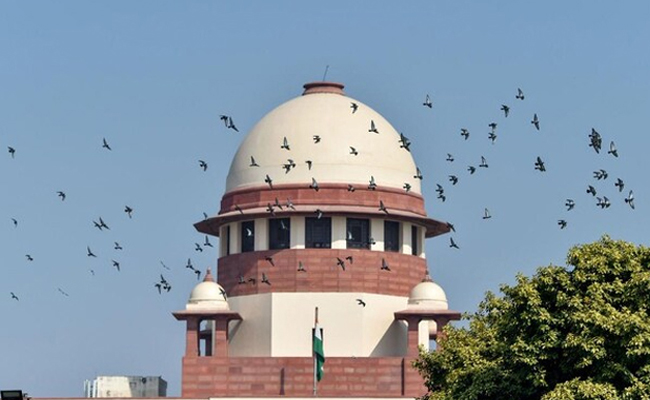
New Delhi (PTI): The Supreme Court on Tuesday delivered a split verdict on the constitutional validity of a 2018 provision of the anti-graft law which mandates prior sanction for initiating a probe against a government servant in a corruption case.
While Justice BV Nagarathna said Section 17A of the Prevention of Corruption Act is unconstitutional and needs to be struck down, Justice KV Viswanathan held the provision as constitutional while stressing on the need to protect honest officers.
Section 17A of the Prevention of Corruption Act, 1988, introduced in July 2018, bars any “enquiry or inquiry or investigation” against a public servant for recommendations made in discharge of official duties without prior approval from the competent authority.
The top court's judgement came on a PIL filed by NGO 'Centre for Public Interest Litigation' (CPIL) against the validity of amended section 17A of the Prevention of Corruption Act.
Requirement of prior sanction is contrary to the Prevention of Corruption Act, forecloses inquiry and protects corrupt, Justice Nagarathna said.
ALSO READ: Snag hits Akasa Air Pune-Bengaluru flight ahead of departure; airline deplanes passengers
"Section 17A is unconstitutional and it ought to be struck down. No prior approval is required to be taken... The requirement of prior sanction is contrary to the object of the Act, and it forecloses inquiry and protects the corrupt rather than seeking to protect the honest and those with integrity who really do not require any protection," Justice Nagarathna said.
Justice Viswanathan said striking down section 17A will be akin to throwing the baby out with the bath water and the “cure will be worse than the disease”.
"Section 17A is constitutionally valid subject to the condition that the sanction must be decided by the Lok Pal or the Lokayukta of the State...
"The safeguard of this provision will strengthen the hands of honest officers but also ensure that the corrupt are brought to book. It will guarantee that the administrative machinery attracts the best talent for the service of the nation,"Justice Viswanathan said.
The case will now be placed before Chief Justice of India Surya Kant for forming a larger bench to hear the matter for a final decision.
"Having regard to the divergent opinions expressed by us, we direct the Registry to place this matter before the Chief Justice of India for constituting an appropriate bench to consider the issues which arise in this matter afresh," the bench said.
Advocate Prashant Bhushan, appearing for the NGO, had argued that the provisions crippled the anti-corruption law as sanctions were not usually forthcoming from the government, which was the ‘competent authority’.
Solicitor General Tushar Mehta had appeared for the Union government.
Let the Truth be known. If you read VB and like VB, please be a VB Supporter and Help us deliver the Truth to one and all.
UP: 11 killed in multi-vehicle crash in Mirzapur
Mirzapur (UP) (PTI): Eleven people were killed in a multi-vehicle accident on Wednesday in Dramandganj area here, police said.
SP Aparna Rajat Kaushik said that information about the accident was received at around 8.30 pm.
The collision occurred on a route descending from Dramandganj valley towards the Lasoda area, where a vehicle lost control and crashed.
Preliminary investigation suggests that a truck coming from behind possibly rammed into another truck after suffering a brake failure.
A car got trapped between the two trucks during the collision. In the sequence of events, another vehicle was also hit and caught fire, she said.
Police teams and fire brigade personnel rushed to the spot immediately upon receiving the information, according to Kaushik.
With the assistance of local residents, rescue and relief operations were launched without delay, she said.
"So far, 11 deaths have been reported, and efforts are underway to establish the identities of the victims," the SP said.
Police personnel remain deployed at the site, and efforts are ongoing to restore traffic movement on the affected route.
According to initial information, one of the trucks involved bears a Bihar registration number, while the other is registered in Madhya Pradesh.
Among the cars involved, one is from Sonbhadra district and another from Mirzapur district, the SP said.
A detailed probe is on in the matter.