SC grants bail to filmmaker Vikram Bhatt in cheating case
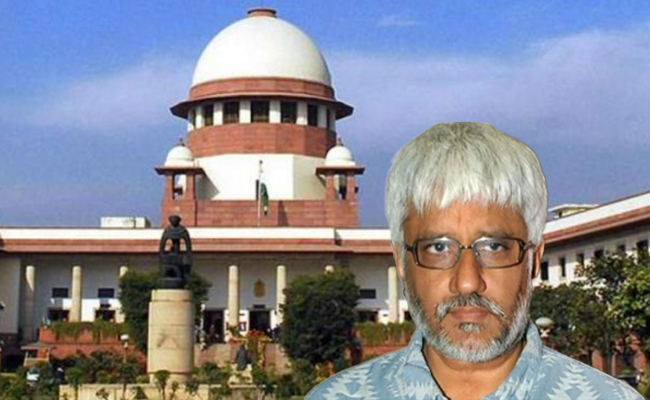
New Delhi (PTI): The Supreme Court on Thursday granted bail to filmmaker Vikram Bhatt in a multi-crore rupees cheating case lodged in Rajasthan.
A bench of Chief Justice Surya Kant and Justices Joymalya Bagchi and Vipul M Pancholi also regularised the interim bail granted earlier to Bhatt's wife Shwetambari Bhatt in the case.
Shwetambari Bhatt was granted interim bail on February 13.
Earlier on January 31, the Rajasthan High Court had rejected their bail applications in the cheating case.
ALSO READ: Parents fear uncertainty after Karnataka govt rules out age limit relaxation for Class 1 admission
They were arrested in Mumbai and brought to Udaipur in December last year.
While granting bail to both, the top court asked the parties to make efforts for arriving at an amicable solution through mediation.
Complainant Ajay Murdia, founder of Indira IVF and Fertility Centre and a resident of Udaipur, has alleged in his complaint that Bhatt and his wife induced him to invest over Rs 30 crore in a biopic of his late wife, promising high returns.
Vikram Bhatt was arrested after Murdia filed a complaint of cheating and criminal breach of trust against the filmmaker, his wife and others, alleging that funds taken in the name of a film project were misappropriated.
The complaint has alleged that funds to the tune of Rs 30 crore were misappropriated. The complaint alleged that the Bhatts prepared fake bills under various names and got money transferred from the complainant.
The money was supposed to be for making films for the complainant, but was allegedly deposited into the accused's own accounts and used by them.
Apart from Vikram and his wife, Udaipur-based Dinesh Kataria and Bhatt's manager, Mehboob Ansari, were also arrested by Rajasthan Police on December 7, 2025.
Let the Truth be known. If you read VB and like VB, please be a VB Supporter and Help us deliver the Truth to one and all.
Karnataka School Edu Dept prohibits children from being made to dance to obscene songs
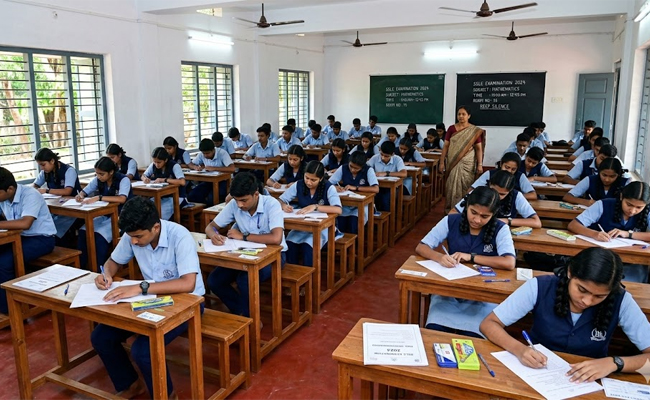
Bengaluru (PTI): The Karnataka School Education Department has issued a circular strictly prohibiting children from being made to dance to obscene songs in educational and cultural programmes.
It stated that such dances would negatively impact students' mental health and moral values. It will create indiscipline and harm the sanctity of education.
"All the Deputy Directors (Administration) of the state's School Education Department have been asked to take strict measures to prevent children or students from dancing to obscene songs in all government, aided and unaided schools in the state," the office of the commissioner of the School Education Department said in a recent circular.
"If it is found that children are being made to dance to obscene songs, appropriate action will be taken against the headmaster or management of such school," it added.
The department also listed certain measures in this regard, which include: strictly prohibiting children from being made to dance to obscene songs during educational and cultural programmes; selecting songs that are inspiring, positive, instilling national pride in children and reflecting the greatness, dignity, values, culture, and morality of the state.
Stating that the school headmaster and management are responsible for selecting songs and dances for cultural programmes, it said, they should also ensure that students wear decent clothes in dance or cultural programmes.