SC refuses to entertain fresh PIL on rising pollution levels in Delhi, others cities
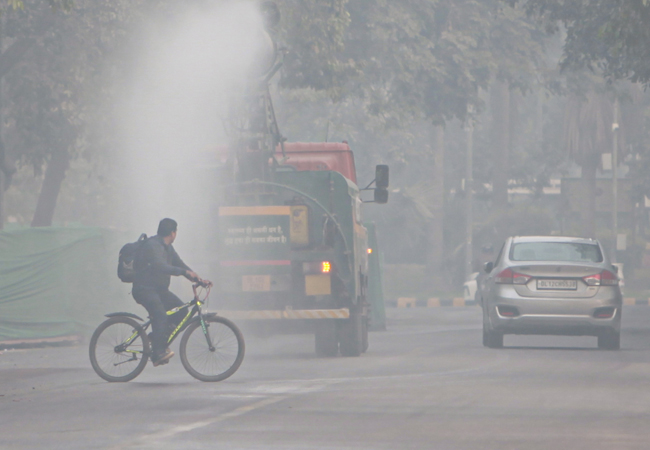
New Delhi (PTI): The Supreme Court on Tuesday refused to entertain a fresh PIL by a wellness expert seeking urgent judicial intervention to tackle a "persistent and systemic failure" in addressing the country's rising air pollution levels.
The top court, however, allowed holistic health coach Luke Christopher Coutinho to withdraw the PIL and file an intervention plea in a pending case filed by environmentalist M C Mehta on pollution.
"The petitioner seeks liberty to withdraw the plea to file an intervention in pending proceedings in the MC Mehta case," the CJI said.
The court is scheduled to hear the main plea on pollution on Wednesday.
Coutinho had filed the plea on October 24 and made the Centre, Central Pollution Control Board (CPCB), Commission for Air Quality Management (CAQM), several Union ministries, NITI Aayog, and the governments of Delhi, Punjab, Haryana, Uttar Pradesh, Bihar, and Maharashtra as parties.
The plea said the current air pollution crisis has reached proportions of a "public health emergency", violating citizens' fundamental right to life and health under Article 21 of the Constitution.
The plea sought declaration of air pollution as a national public health emergency and formulation of a time-bound national action plan.
"The National Clean Air Programme (NCAP), launched in 2019 with the target of reducing particulate matter by 20–30 percent by 2024 (subsequently extended to 40 percent by 2026), has not met its modest objectives. As of July 2025, official data reveals that only 25 of the 130 designated cities have achieved a 40 per cent reduction in PM₁₀ levels from the 2017 baseline, while 25 other cities have in fact seen an increase," it said.
Similar violations are cited in the plea for Kolkata and Lucknow, among others.
The plea sought a direction to make NCAP targets binding with "statutory force, including clear timelines, measurable indicators, and enforceable penalties for non-compliance".
In Delhi alone, 2.2 million schoolchildren have already suffered irreversible lung damage, as confirmed by government and medical studies, the plea alleged.
The plea also submits that air quality monitoring systems are inadequate.
It also sought setting up a National Task Force on Air Quality and Public Health chaired by an independent environmental health expert.
It sought immediate curbs on crop residue burning, including farmer incentives and sustainable alternatives besides phasing out high-emitting vehicles and promoting e-mobility and public transport.
The plea sought strict enforcement of industrial emission norms with real-time monitoring and public disclosure.
Let the Truth be known. If you read VB and like VB, please be a VB Supporter and Help us deliver the Truth to one and all.
Oath-taking ceremony of first BJP govt in Bengal on May 9; Modi, Shah likely to attend
Kolkata (PTI): The oath-taking ceremony of the first BJP government in West Bengal will be held at Brigade Parade Ground here on May 9, marking the saffron camp’s arrival in power in a state after decades on the political fringes.
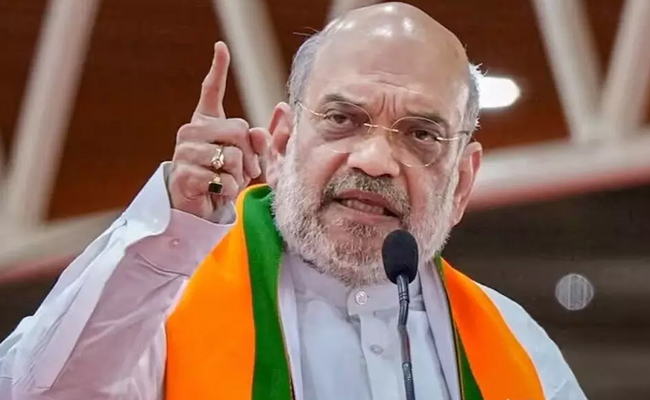
The ceremony, scheduled to begin at 10 am, is expected to witness the presence of Prime Minister Narendra Modi, Union Home Minister Amit Shah, BJP president Nitin Nabin, several Union ministers and chief ministers of BJP- and NDA-ruled states, party sources said.
“The new BJP government will take oath on May 9 at 10 am at Brigade Parade Ground,” state BJP president Samik Bhattacharya announced on Wednesday.
Even as the BJP leadership kept its cards close to the chest on the chief ministerial face, Leader of the Opposition Suvendu Adhikari has emerged as a frontrunner in internal discussions after cementing his position as the party’s principal mass leader in Bengal politics.
Adhikari, once among Mamata Banerjee’s closest lieutenants and a key architect of the TMC’s rural expansion in districts such as Purba Medinipur, crossed over to the BJP ahead of the 2021 assembly elections and went on to defeat Banerjee in Nandigram in one of Bengal’s fiercest political battles.
Five years later, he again found himself at the centre of Bengal’s political churn by beating Banerjee in her own turf at Bhabanipur by over 15,000 votes.
Other names for the CM post doing the rounds include Bhattacharya, Union minister Sukanta Majumdar and former Rajya Sabha MP Swapan Dasgupta, though party insiders indicated that the leadership was inclined towards projecting a “bhumiputra” face rooted in Bengal’s linguistic and cultural ethos.
During the campaign, Shah repeatedly asserted that the BJP’s chief minister in Bengal would be a “son of the soil”, born and educated in the state, in an attempt to blunt the TMC’s sustained attack that the BJP represented an “outsider” political culture alien to Bengal’s social and intellectual traditions.
The BJP bagged 207 of the 294 assembly seats in the recently concluded elections, ending the Trinamool Congress’s uninterrupted 15-year rule and scripting the saffron party’s biggest breakthrough in a state where it once struggled to open its electoral account.
Significantly, the swearing-in ceremony will be held on the 25th day of Baisakh in the Bengali calendar — observed across the state as Rabindra Jayanti, the birth anniversary of Rabindranath Tagore — lending the event a deeper cultural symbolism.
According to BJP leaders, the choice of the date is aimed at embedding the party’s historic rise within Bengal’s cultural imagination and countering the long-standing perception battle over identity and belonging.
Over the last decade, the BJP has steadily attempted to appropriate and reinterpret icons of Bengal’s cultural nationalism — from Tagore and Swami Vivekananda to Netaji Subhas Chandra Bose and Syama Prasad Mookerjee — as part of a broader ideological effort to expand its emotional and political footprint in the state.
Party insiders said the leadership was also conscious of the need to balance Bengal’s competing regional aspirations while choosing the chief ministerial face, with discussions also taking place around whether greater representation should be accorded to north Bengal, a region where the BJP has made substantial electoral gains over successive elections.
A meeting of the newly elected BJP MLAs has been convened on May 8 evening, party sources said, though the leadership remained tight-lipped over the final choice.
The Brigade Parade Ground ceremony is expected to mark not merely a transfer of power, but a defining moment in Bengal’s political history, the culmination of the BJP’s long ideological and organisational march from the margins to the centre of power in a state that had for decades resisted the saffron surge seen elsewhere in India.