SC refuses to entertain plea against movie 'Hamare Baarah', permits withdrawal of petition
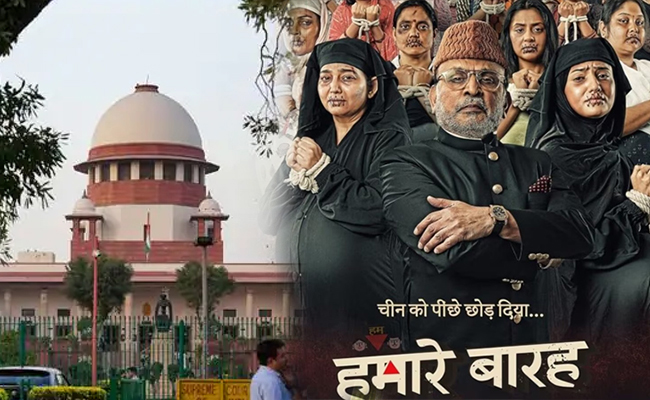
New Delhi (PTI): The Supreme Court on Friday refused to entertain a plea challenging certain alleged controversial dialogues and scenes in Annu Kapoor-starrer movie 'Hamare Baarah'.
The Bombay High Court had on June 19 allowed the release of the movie after its makers agreed to delete certain objectionable portions.
The matter came up for hearing on Friday before a vacation bench of justices Vikram Nath and S V N Bhatti, which allowed the petitioner to withdraw the plea.
"By this writ petition, I have challenged certain controversial dialogues and scenes in the picture," the counsel appearing for the petitioner said.
The top court said a similar petition had come up before it last week.
It said the Bombay High Court has allowed the release of the movie and the petitioner can challenge that order.
"The high court has examined it and thereafter, the high court has allowed the movie to be screened. Now, if you are still aggrieved, challenge it," the bench said.
The petitioner's counsel said he had filed the plea in the apex court on June 7 but it could not be listed earlier.
"We are not inclined to hear this matter on merits today," the bench observed.
"Let us follow the procedure which is consistent with our system," it said, adding the high court had seen the movie and asked for expunging few scenes and dialogues.
"If you seek leave and file an appeal (against high court order), then it would be correct for this court to examine your independent grounds… ," the bench said.
The counsel then urged the bench that he be allowed to withdraw the petition.
The bench allowed the withdrawal of plea with liberty to file a fresh petition assailing the correctness of the high court judgment.
While hearing a separate plea on June 13, the top court had stayed the June 14 release of the movie after taking note of allegations that the film was derogatory to the Islamic faith and married Muslim women.
The bench had stayed the screening of the film till disposal of the petition by the high court.
The film got embroiled in a legal battle after a bunch of petitions were filed in the high court claiming that it was derogatory towards the Islamic faith and the Muslim community.
A division bench of the high court had viewed the film and suggested certain changes to it which both the makers and the petitioners agreed to.
The high court had said the makers shall make the necessary changes and then release the movie.
Let the Truth be known. If you read VB and like VB, please be a VB Supporter and Help us deliver the Truth to one and all.
Man arrested with Rs 2.54-crore heroin in Mumbai

Mumbai (PTI): Police have arrested a man and seized over 500 grams of heroin worth Rs 2.54 crore in the illicit market from him in Mumbai, officials said on Friday.
The police's Anti-Narcotics Cell (ANC) made the drug seizure in Santacruz in the western suburbs. The operation was conducted by the Kandivali unit of the ANC on Thursday as part of a special crackdown against drug trafficking in the area, they said.
Acting on specific inputs, an ANC team conducted a raid in Santacruz (East) and intercepted a man. During a search, the team recovered 508 grams of high-grade heroin from his possession, an official said.
The seized contraband, a highly addictive, opioid drug derived from morphine, is estimated to be worth Rs 2.54 crore in the international market, he informed.
Following the seizure, a case was registered against the man under relevant sections of the Narcotic Drugs and Psychotropic Substances (NDPS) Act, 1985, and he was formally placed under arrest in the early hours of Friday.
The police are currently investigating the source of the drug and trying to identify the intended recipients of the consignment, he said.