SC refuses to stay Indu Malhotra's appointment as apex court judge
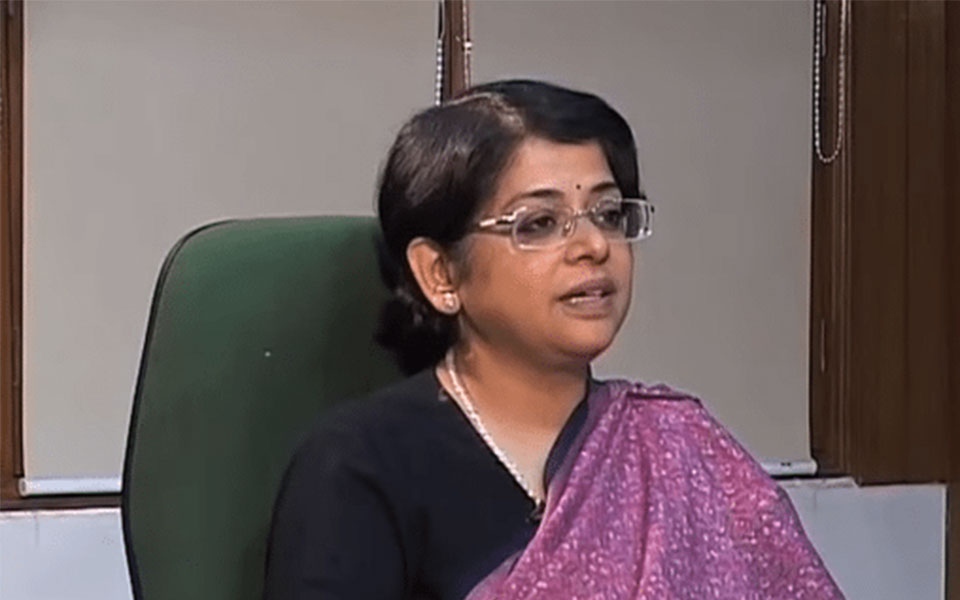
New Delhi, April 26: The Supreme Court on Thursday refused to stay appointment of senior woman lawyer Indu Malhotra as an apex court judge on the issue of its second recommendation not being accepted, saying the government could send back a judge's name for reconsideration.
A bench of Chief Justice Dipak Misra, Justice A.M. Khanwilkar and Justice D.Y Chandrachud made the observation on a plea of senior advocate Indira Jaising who demanded that Malhotra be not sworn in as the apex court judge and the government be directed to recommend the name of Uttarakhand High Court Chief Justice K.M. Joseph as well.
Lawyers filing a petition to seek stay of appointment of a member of the bar is "unimaginable, unthinkable, inconceivable and, to say the least, never heard of", said the bench, adding that government is "well within its right to send back the recommendation for reconsideration"."
"Constitutional propriety demands that the warrant of appointment of Indu Malhotra be implemented."
The Central government has asked the top court collegium to reconsider its recommendation for the elevation of Justice K.M. Joseph as a judge of the Supreme Court, but cleared the appointment of senior lawyer Indu Malhotra.
Referring to the government's decision, Jaising told the bench that it cannot be done and either both names should have been recommended or rejected.
Reiterating that the government is within its right to send back a name for reconsideration, the court said that when such a reference comes, the Collegium will deal with it in accordance with Supreme Court judgments and the Constitution.
The advocate sought urgent hearing of the plea, which the apex court denied.
Jaising told the court that more than 100 lawyers have signed the petition and question the decision of Centre to "cherry pick" names recommendeded for appointment as apex court judges.
The signatories have also agreed to a resolution seeking urgent convening of Supreme Court Bar Association meeting to discuss the issues arising from the controversy over judge appointments.
Let the Truth be known. If you read VB and like VB, please be a VB Supporter and Help us deliver the Truth to one and all.
Siddaramaiah backs TN CM's call for renewed discourse on Centre-State relations
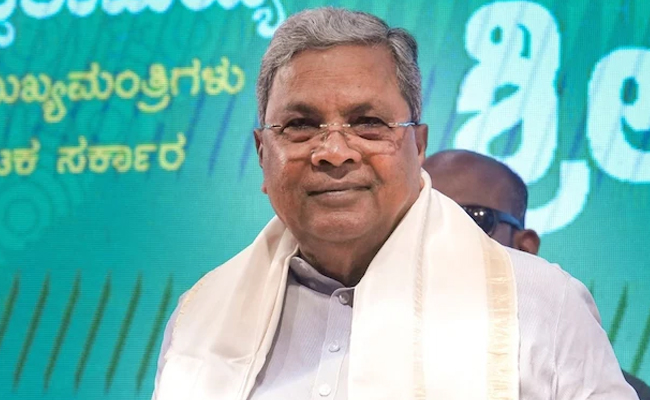
Bengaluru (PTI): Karnataka Chief Minister Siddaramaiah has written to his counterpart in Tamil Nadu, M K Stalin, expressing the state's strong support for a renewed national discourse on Centre–State relations.
Siddaramaiah said he will urge the union government to provide an institutional platform - such as a revitalised Inter-State Council - for all states to deliberate and restore balance in our federal structure.
Taking to social media platform 'X', the Karnataka CM said federalism is not a political demand - it is part of the basic structure of our Constitution.
"Over the years, increasing centralisation in fiscal and legislative matters has disturbed the delicate balance envisioned by our Constitution makers. States must have the authority and fiscal space to fulfil the responsibilities entrusted to them. India’s strength lies in cooperative federalism, constitutional trust, and respect for diversity," he said.
He assured that Karnataka stands ready to engage constructively in strengthening India’s democratic and federal framework.
Siddaramaiah has written to the TN CM in response to Stalin's letter dated February 20, 2026, forwarding Part 1 of the report of the high-level committee on Union-State relations.
In his letter dated March 2, Siddaramaiah acknowledged and appreciated the initiative taken by the Tamil Nadu government in initiating the report, which seeks "constitutional correction".
Noting that the questions raised in the report go to the heart of India's constitutional morality, the chief minister said federalism was not an act of administrative convenience but a structural guarantee against concentration of power.
"Over the decades, however, a phenomenon of incremental centralisation has altered the federal balance through expansive interpretations of the Concurrent List, conditional fiscal transfers, centrally designed schemes with diminishing State flexibility, and procedural bottlenecks in governor's assent," Siddaramaiah said in the letter.
He claimed that what was intended as cooperative federalism has increasingly resembled "coercive federalism".
In the letter, Siddaramaiah said Karnataka shares many of the concerns articulated in the committee's report.
"We have consistently emphasised that fiscal federalism must align authority with responsibility. Articles 268 to 281, read with the role of the Finance Commission under Article 280 and the GST framework under Article 279A, cannot operate in a manner that dilutes the fiscal sovereignty of States. The doctrine of subsidiarity, that governance should occur at the most immediate level consistent with efficiency, is not alien to our constitutional design; it is implicit within it," he added.
He stressed that Karnataka, like Tamil Nadu, has been vocal in asserting the legitimate constitutional space of states, whether in matters of language policy, education, public health, fiscal devolution, or legislative autonomy.
"These are not sectional claims; they are constitutional claims. They arise from a principled commitment to pluralism, diversity, and democratic accountability," the letter stated.
At this juncture, Siddaramaiah said it is imperative that all states, irrespective of political affiliations, join hands in constructive federal dialogue. Federal renewal cannot be a solitary endeavour of one or two States; it must emerge as a collective articulation.
"The objective, as your letter rightly emphasises, is not to weaken the union but to right-size it, to ensure that national energy is concentrated on genuinely national priorities, while states are trusted with spheres constitutionally entrusted to them," he added.
In this regard, he further stated that it would be both appropriate and necessary for the union government to provide an institutional platform for all states to deliberate upon these questions.
"Whether through a revitalised Inter-State Council under Article 263, a special conclave of Chief Ministers, or a structured constitutional review dialogue, the union must facilitate a forum where states can place their recommendations formally, transparently, and deliberatively. The absence of such structured engagement has contributed to the perception that cooperative federalism has receded from lived practice," he added.