SC rejects plea over hoardings 'prohibiting' entry of pastors in Chhattisgarh villages
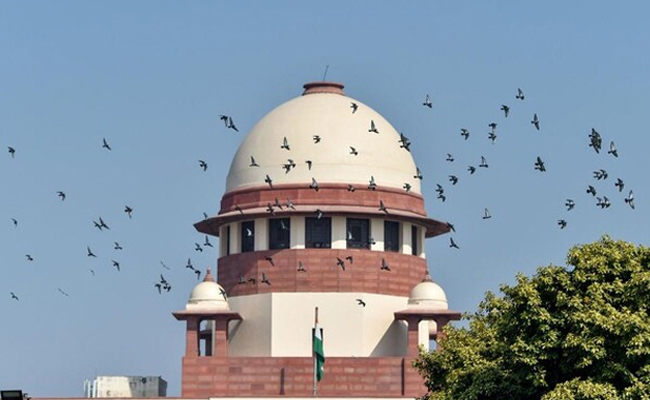
New Delhi (PTI): The Supreme Court on Monday dismissed a plea challenging the Chhattisgarh High Court order in a matter pertaining to hoardings which allegedly prohibit entry of pastors and converted Christians in some villages in the state.
The high court had in October last year disposed of two separate pleas seeking removal of such hoardings.
While referring to an apex court verdict, the high court had observed that installation of hoardings for preventing forcible conversion by way of allurement or fraudulent means cannot be termed as unconstitutional.
A plea challenging the high court's order came up for hearing before a bench of Justices Vikram Nath and Sandeep Mehta on Monday.
ALSO READ: SC questions Centre over transcripts of videos in Sonam Wangchuk detention case
Senior advocate Colin Gonsalves, appearing for the petitioner, referred to a separate matter relating to alleged attacks on pastors which is pending before the top court.
Solicitor General Tushar Mehta said the plea before the high court was limited but the petitioner has now added several new facts and documents in the petition filed in the apex court.
After hearing the submissions, the bench dismissed the petition.
The high court had noted in its order that the petitioners before it were raising the alleged issue of segregation of Christian community and their religious leaders from the mainstream village community.
The petitioners had claimed before the high court that authorities had circulated a format of resolution in Kanker district instructing the Gram Panchayat to pass resolution in the name and style "Hamari Parampara Hamari Virasat".
They alleged that the real intention of circulating this circular to the Gram Panchayat was to instruct them to pass resolution prohibiting entry of Christian pastors and the so called converted Christians in the village.
The petitioners had claimed before the high court that at least eight villages of Kanker district had erected hoardings which say that entry of pastors and "converted Christians" was prohibited in the village.
The counsel appearing for the state had argued in the high court that the petitioners had filed the pleas merely on the basis of apprehension that the hoardings
were being erected at the instance of government authorities.
The high court had directed the petitioners to avail the statutory remedy before approaching the court.
"Further, in case the petitioners have any apprehension that they would be restrained from entering their villages or any threat perception exists, they may seek protection from the police," the high court had said, while disposing of the pleas.
Let the Truth be known. If you read VB and like VB, please be a VB Supporter and Help us deliver the Truth to one and all.
PM must resign when TMC wins Bengal: Derek O'Brien
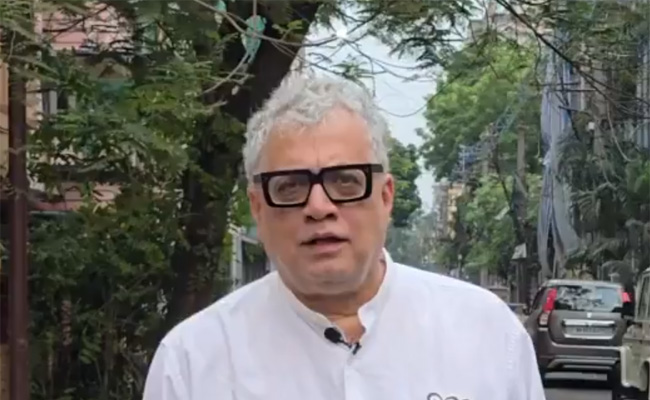
Kolkata (PTI): Trinamool Congress's Rajya Sabha MP Derek O'Brien on Wednesday expressed confidence that his party will come back to power in the state after the assembly elections and challenged Prime Minister Narendra Modi to resign when the results come.
In a video shared on microblogging site X, O'Brien accused the prime minister of making exaggerated political claims and urged him to "accept the challenge" instead of indulging in "big talk."
"Narendra, you had announced that you are the candidate on all 294 seats in West Bengal. Leave out the big talk and accept this challenge..." O'Brien wrote.
He asserted that if the Mamata Banerjee-led TMC wins the state, the prime minister should step down from his post. "When Mamata Banerjee and TMC win West Bengal, you will resign from your post as the prime minister," he said.
The remarks come amidst an intensifying political contest in West Bengal, where the ruling TMC and the Bharatiya Janata Party are engaged in a high-stakes electoral battle.
Polling is taking place in 142 constituencies in the second and final phase of the assembly elections on Wednesday, amid unprecedented security arrangements and a high-intensity contest that could decide whether the ruling TMC retains its dominance over the southern districts or the BJP can force open the gates of power in the state.