SC rejects Sanjiv Bhatt's plea seeking suspension of sentence in 1996 drug seizure case
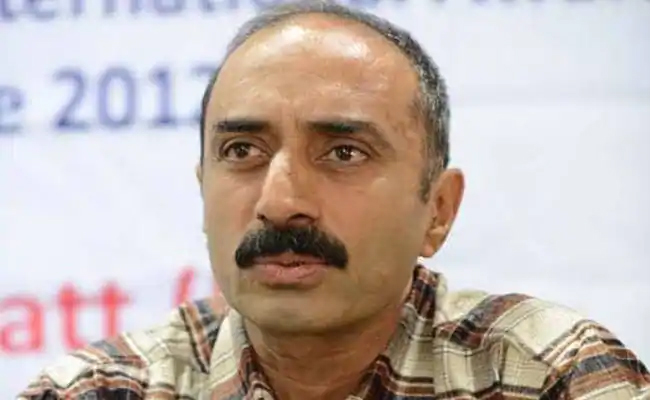
New Delhi (PTI): The Supreme Court on Thursday rejected a plea filed by former IPS officer Sanjiv Bhatt seeking seeking suspension of the 20-year jail sentence imposed on him in a 1996 drug seizure case.
A bench of Justices JK Maheshwari and Vijay Bishnoi said it was not inclined to entertain the matter.
The top court was hearing an appeal filed by Bhatt seeking suspension of sentence in the case.
A sessions court in Palanpur town of Gujarat’s Banaskantha district had sentenced Bhatt to 20 years in the case dating back to 1996.
Bhatt was found guilty of falsely implicating a Rajasthan-based lawyer by claiming that in 1996, police had seized drugs from a hotel room in Palanpur where the lawyer was staying.
Bhatt, who was sacked from service in 2015, was a superintendent of police in Banaskantha district in 1996.
The district police under him had arrested Sumersingh Rajpurohit, a Rajasthan-based lawyer, in 1996 claiming they had seized drugs from a hotel room in Palanpur town where he was staying.
However, the Rajasthan police later said Rajpurohit was falsely implicated by the Banaskantha police to compel him to transfer a disputed property located at Pali in Rajasthan.
Former police inspector I B Vyas had moved the Gujarat High Court in 1999 demanding a thorough inquiry into the case. Bhatt was arrested by the state CID in September 2018 in the drug case under the NDPS Act and is in Palanpur sub-jail since then.
Last year, the former IPS officer had approached the Supreme Court seeking transfer of the trial in the 28-year-old drug case to another sessions court alleging bias. He had also sought directions for recording of the trial court proceedings.
However, the Supreme Court had dismissed Bhatt’s plea and imposed a cost of Rs 3 lakh on him for alleging bias against a lower court judge conducting his trial in the drug planting case.
Let the Truth be known. If you read VB and like VB, please be a VB Supporter and Help us deliver the Truth to one and all.
Bengaluru airport introduces AI-based system to enhance safety at vehicle-aircraft intersections
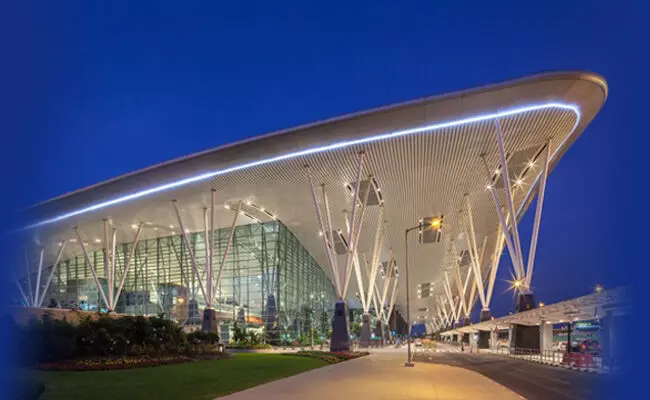
Bengaluru: Bangalore International Airport Limited (BIAL) has introduced an integrated smart airside safety system at Kempegowda International Airport to improve operational safety at key intersection zones.
According to The Hindu, the system has been designed to enhance safety at Cross Service Roads (CSRs), where aircraft and ground vehicle movements intersect.
According to BIAL, the system integrates AI-based computer vision, automation, and centralised monitoring to manage right-of-way movements and reduce the risk of human error.
“CRSs are among the most sensitive areas within airport operations, requiring precise and seamless coordination between aircraft and ground vehicles. Traditionally, right of way protection at these intersections relied on manual or semi-manual inset light activation, creating dependencies on human intervention, increasing the risk of delays and limiting operational visibility,” TH quoted BIAL as saying.
The new system uses real-time detection of vehicle movement, risk assessment, and automated signalling. AI-enabled cameras identify potential conflicts and trigger automated inset light signals to ensure aircraft priority. Normal operations resume once the area is confirmed clear.
“Based on these detections, the system triggers automated inset light activation to protect aircraft right‑of‑way and restores normal signalling once the intersection is confirmed clear. A centralised monitoring and analytics platform digitally logs all events, strengthening governance, compliance, and operational control,” BIAL said.
By embedding technology into operations, the system creates a data-driven separation layer between aircraft and ground vehicles, significantly reducing human error, especially during night and low-visibility conditions.
“Precision-led signal activation improves traffic flow, minimises unnecessary stoppage and enhances turnaround efficiency. It also establishes a scalable foundation for predictive safety analytics, enabling trend analysis, peak-hour optimisation, compliance mapping and risk forecasting to support continuous improvement and stronger airside governance,” BIAL said.