SC reserves interim orders in waqf case
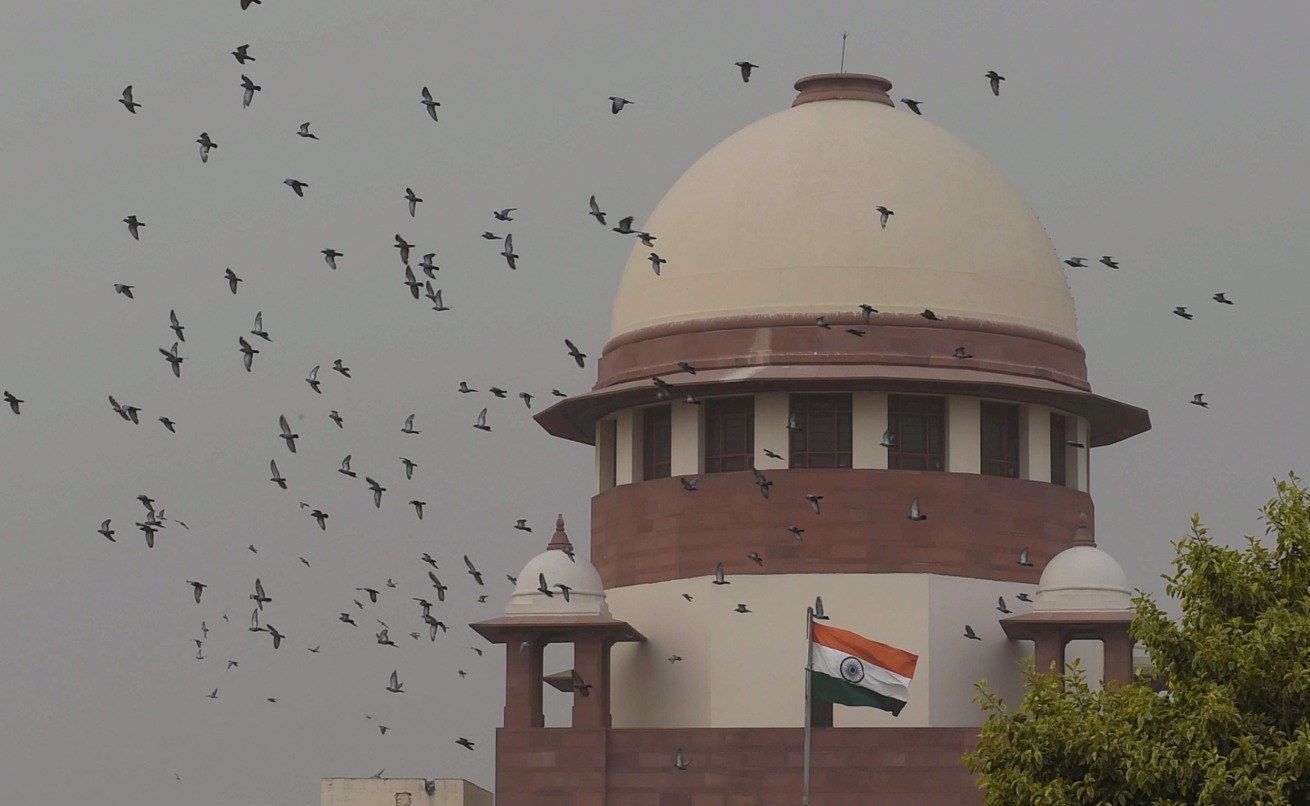
New Delhi (PTI): The Supreme Court on Thursday reserved its interim orders on three issues, including the power to denotify properties declared as “waqf by courts, waqf-by-user or waqf by deed” after hearing a clutch of pleas challenging the validity of the Waqf (Amendment) Act, 2025.
Before reserving the interim orders, a bench comprising Chief Justice B R Gavai and Justice Augustine George Masih heard senior advocates Kapil Sibal, Rajeev Dhavan and Abhishek Singhvi on behalf of those opposed to the amended waqf law and Solicitor General Tushar Mehta, representing the Centre, for about three consecutive days.
The Centre strongly defended the Act, saying waqf by its very nature is a “secular concept” and can't be stayed given the “presumption of constitutionality” in its favour.
Sibal, leading the petitioners, described the law as a "complete departure from historical legal and constitutional principles" and a means to "capture waqf through a non-judicial process".
"This is a case about the systematic capture of waqf properties. The government cannot dictate what issues can be raised," Sibal said.
The petitioners at the present stage sought interim orders on three key issues.
One of the issues related to the power to denotify properties declared as waqf by courts, waqf-by-user or waqf by deed.
The second issue was over the composition of state waqf boards and the Central Waqf Council, where they contend only Muslims should operate except ex-officio members whereas the last one is over the provision stipulating a waqf property won't be treated as a waqf when the collector conducts an inquiry to ascertain if the property is government land.
On April 25, the Union Ministry of Minority Affairs filed a preliminary 1,332-page affidavit defending the amended Waqf Act of 2025 and opposed any "blanket stay" by the court on a "law having presumption of constitutionality passed by Parliament".
The Centre notified the Waqf (Amendment) Act, 2025 last month after it got President Droupadi Murmu's assent on April 5.
The bill was cleared by Lok Sabha with the support of 288 members while 232 MPs were against it. The Rajya Sabha saw 128 members voting in its favour and 95 against it.
Let the Truth be known. If you read VB and like VB, please be a VB Supporter and Help us deliver the Truth to one and all.
TN polls: TVK pushes DMK behind with leads in 83 seats, AIADMK ahead in 54
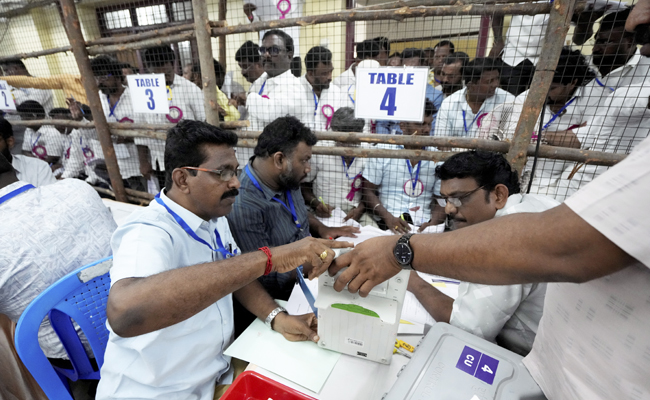
Chennai (PTI): New entrant TVK, led by actor-politician Vijay, was leading in as many as 83 constituencies on Monday when counting of votes polled in the April 23 Assembly polls was on across Tamil Nadu. The AIADMK was leading in 58 seats while the ruling DMK was ahead in 34, EC data showed.
About two hours after the postal ballots were counted and EVMs opened for multi-round counting, Vijay's Tamilaga Vettri Kazhagam surged ahead of its Dravidian rivals-- the DMK and the AIADMK, with the ruling party struggling to catch up.
If the trends maintain, Vijay could as well ensure the biggest electoral upset, something in lines with the "1967,1977" wins he had referred to in his campaign speeches.
While the Dravidian stalwart CN Annadurai brought the first non-Congress government in Tamil Nadu post-independence in 1967, the charismatic MG Ramachandran (MGR) installed the maiden AIADMK government 10 years later, unseating then DMK government under M Karunanidhi. TVK was leading in most Chennai segments, all considered DMK strongholds and currently represented by the party in the 234-member House.
A poor show by DMK could belie most exit polls giving an edge to it, riding on the number of populist measures Chief Minister M K Stalin had implemented in his five year "Dravidian model," inclusive governance.
According to EC and TV reports, 15 cabinet ministers, including Stalin were trailing. His son and deputy CM Udhayanidhi was also behind in his incumbent Chepauk-Tirvuvallikeni seat, according to a number of reports.
Stalin was trailing behind TVK's VS Babu by 1234 votes in Kolathur segment. Vijay was ahead in Tiruchirappalli East by over 3,000 votes at the end of two rounds of counting, according to EC data.
BJP is trailing in 26 constituencies and it is ahead in Thali segment alone. TVK is ahead in constituencies including Ponneri, Tiruvallur, Poonamalle, and Avadi.
AIADMK is leading in segments including Katpadi, and Guidyattam and party chief Edappadi K Palaniswami is ahead in Edappadi segment by 7003 votes.
DMK was leading in segments including Vellore, Anaikattu and Rishivandiyam.