Shah to meet intellectuals, kin of killed activists in Bengal
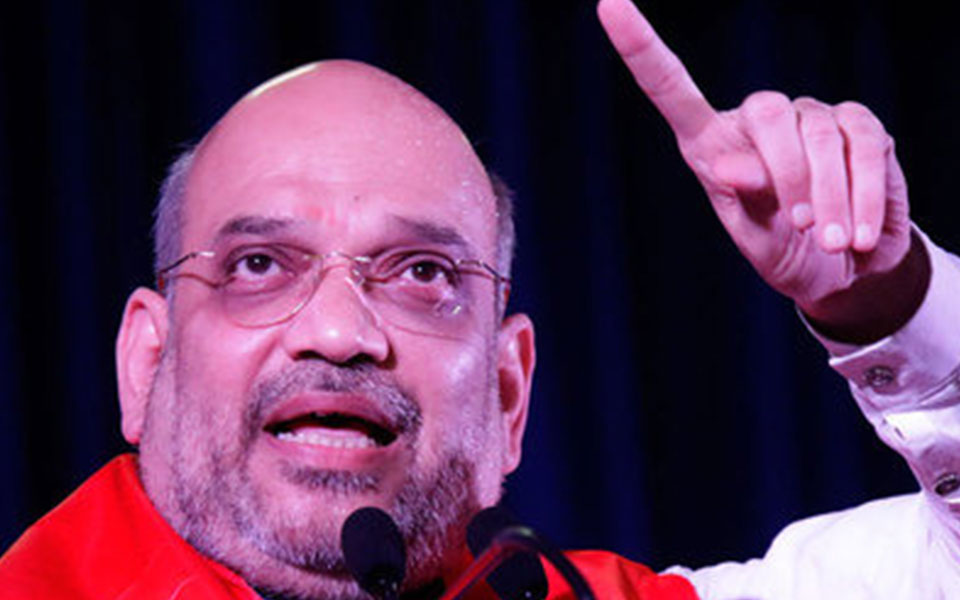
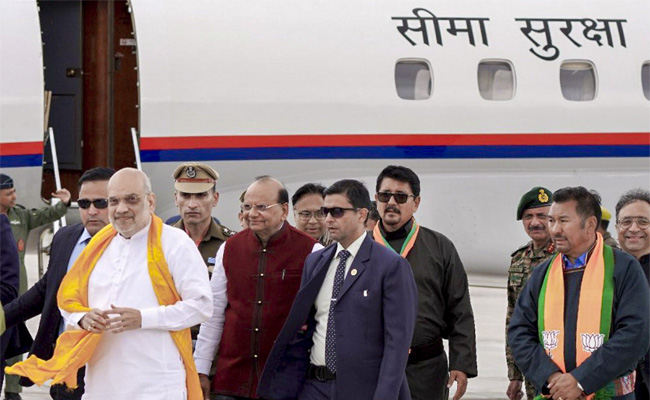
Kolkata, June 24: BJP President Amit Shah would hold a string of meetings with the party's West Bengal leadership and intellectuals here and would also meet the bereaved families of the three BJP activists allegedly killed recently in Purulia, during his two day visit to the state from June 27, a senior party leader said.
Shah would also review party's ground work in Bengal in the run up to the 2019 General Elections and set strategies and targets for the state unit accordingly.
"He would conduct three meetings with party's election committee, IT cell and Bengal intellectuals on the first day to take stock of the situation here. On the second day, he would be flying in a helicopter to Purulia district where three of our activists were murdered recently," state Bharatiya Janata Party (BJP) chief Dilip Ghosh told IANS.
According to Ghosh, Shah is also scheduled to visit temple town Tarapith in Birbhum district on his way to Purulia and offer his prayers to the Goddess Kali in the famous Tantric temple there.
"It would not be possible for him to visit houses of the deceased party workers in Purulia as they are scattered across three villages. Instead the bereaved family members would come to visit Shah there," he added.
Shah's visit comes on the back of the saffron party's good performance in some pockets iin Bengal rural polls where it consolidated its position as the main opposition party in the state.
The BJP President had also set a target to win in 22 out of 42 Lok Sabha seats in the state.
Let the Truth be known. If you read VB and like VB, please be a VB Supporter and Help us deliver the Truth to one and all.
AIITA welcomes Karnataka’s ban on obscene songs in school events
Bhatkal: The Karnataka unit of the All India Ideal Teachers Association (AIITA) has welcomed the Karnataka government’s decision to strictly ban school children from dancing to obscene songs during educational and cultural programmes in government, aided, and private schools across the state.
AIITA Karnataka State President M. R. Manvi congratulated the government for taking what he termed an important step to preserve the sanctity of education.
“Such decisions to safeguard the dignity of school children and uphold the values of education are the need of the hour. This rule should not be limited to government schools alone but must be strictly implemented in all private educational institutions as well,” he said.
He further urged the government to address other concerns within school programmes.
“The government should not only prohibit obscene dances in the name of school anniversaries, but also ensure that plays and dialogues that incite religious hatred are avoided. Schools should be centres of harmony, not platforms for spreading hatred,” he added.
According to a recent circular issued by the Department of School Education and Literacy, obscene dances are adversely affecting the mental health and moral values of students.
In this regard, schools have been advised to use songs that promote nationalism, positive thinking, the greatness of Kannada culture, and value-based traditions instead of inappropriate content during programmes.
The circular also emphasises that students should be dressed in decent attire.
AIITA also backed the department’s warning that disciplinary action would be taken against head teachers if such guidelines are violated. The association has further demanded that district Deputy Directors of Public Instruction strictly monitor the implementation of these rules.