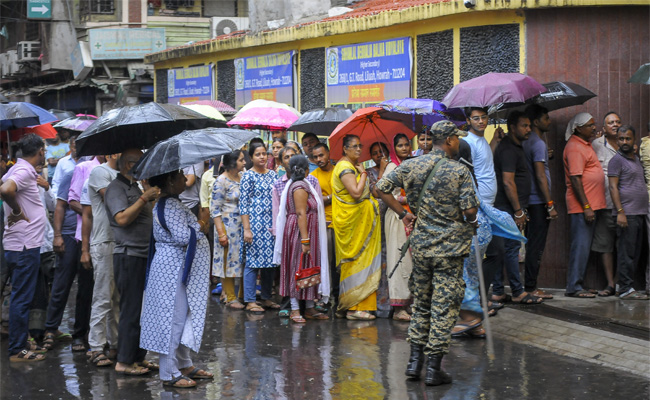
'Shobha yatra': Security stepped up in Nuh, drones deployed for surveillance
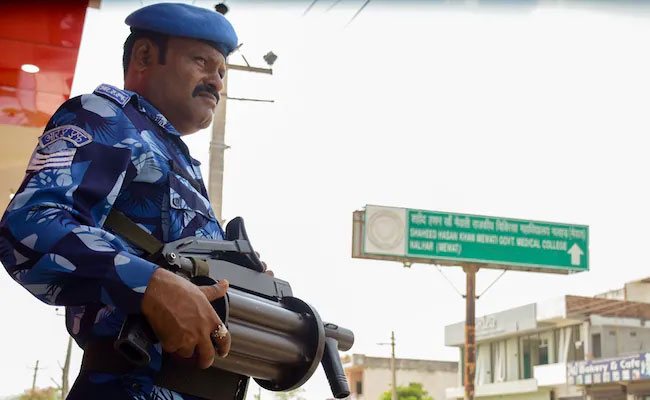
Nuh (Haryana) (PTI): Heavy security arrangements are in place here and in adjoining areas with anti-riot vehicles and drones deployed in view of the Sarv Jatiya Hindu Mahapanchayat's call for a 'shobha yatra' on Monday, officials said.
Authorities have denied permission for the yatra.
As a precautionary measure, the Nuh district administration has already ordered the closure of educational institutions and banks on Monday, suspended mobile Internet and bulk SMS services, and imposed prohibitory orders in the communally-sensitive district.
Outsiders have been barred from entering Nuh with security personnel being deployed at all the entry points of the district.
Haryana Police personnel and paramilitary forces have been deployed to keep a strict vigil.
Security has been tightened at inter-state and inter-district borders, they said.
Multiple layers of barricades have been erected by police at various points and all vehicles entering Nuh were thoroughly checked by security personnel. Anti-riot vehicles and drones have also been deployed.
Communal clashes had erupted in Nuh and its adjoining areas after a Vishva Hindu Parishad (VHP) procession was attacked by a mob on July 31, leading to the death of six people, including two home guards and a cleric.
On August 13, the Sarv Jatiya Hindu Mahapanchayat gave a call to resume the Brij Mandal Shobha Yatra in Nuh on August 28 which was disrupted by the communal clashes in July.
The VHP has said the procession will be taken out and asserted that there is no need to obtain permission for such religious events. However, the authorities have denied permission for the yatra.
Haryana Chief Minister Manohar Lal Khattar on Sunday had asked devotees to offer prayers at temples in their neighbourhood instead of holding any 'yatra'. Permission has not been granted for the 'yatra', he had also said.
August 28 is the last Monday of the holy month of Shravan.
According to police, 1,900 Haryana Police personnel and 24 companies of paramilitary forces have been deployed.
All entry points to Nuh have been sealed and the road leading to the Nalhar temple has also been closed.
Deputy Commissioner of Nuh, Dhirendra Khadgata, has deputed 57 duty magistrates at designated places in the wake of the call for the 'shobha yatra'.
He also appealed to the locals to cooperate with the district administration in maintaining law and order.
Haryana Police chief Shatrujeet Kapur on Saturday had said the administration has denied permission for the yatra due to a meeting of the G20 Sherpa Group, scheduled to be held in Nuh from September 3 to 7, and to maintain law and order in the aftermath of the July 31 violence.
Let the Truth be known. If you read VB and like VB, please be a VB Supporter and Help us deliver the Truth to one and all.
Rickelton's ton in vain as SRH beat MI by 6 wickets
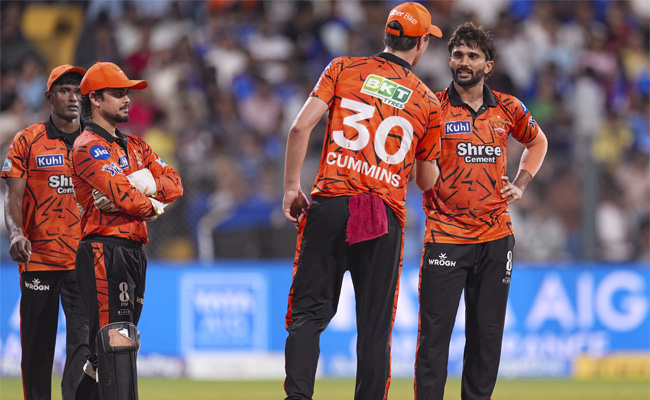
Mumbai (PTI): Ryan Rickelton's whirlwind unbeaten ton was overshadowed by Heinrich Klaasen's unbeaten 65 as Sunrisers Hyderabad defeated Mumbai Indians by six wickets in an IPL match here on Wednesday.
Chasing an imposing 244-run target, Travis Head (76 off 30) and Abhishek Sharma (45 off 24) shared 129 runs for the opening wicket to set the platform for SRH.
Klaasen (65 not out off 30 balls) then displayed his all-round hitting abilities to guide SRH home with the help of Nitish Kumar Reddy (21) and Salil Arora (30 not out off 10) in 18.4 overs.
Earlier, Rickelton's knock powered MI to 243 for five.
MI rode on a 93-run stand between Rickelton (123 not out off 55 balls) and Will Jacks (46 off 22) in 7.1 overs for the opening stand to power the side.
MI skipper Hardik Pandya scored a valuable 31 off 15 balls before being dismissed.
Praful Hinge (2/54), Eshan Malinga (1/29), Sakib Hasan (1/39) and Nitish Kumar Reddy (1/31) were the wicket-takers for SRH.
Brief Scores:
Mumbai Indian: 243 for 5 in 20 overs (Ryan Rickelton 123 not out; Praful Hinge 2/54).
Sunrisers Hyderabad: 249 for 4 in 18.4 overs (Travis Head 76, Heinrich Klaasen 65 not out; AM Ghazanfar 2/51).