SIR of electoral rolls begins in 12 states, UTs; TMC calls exercise a 'con job'
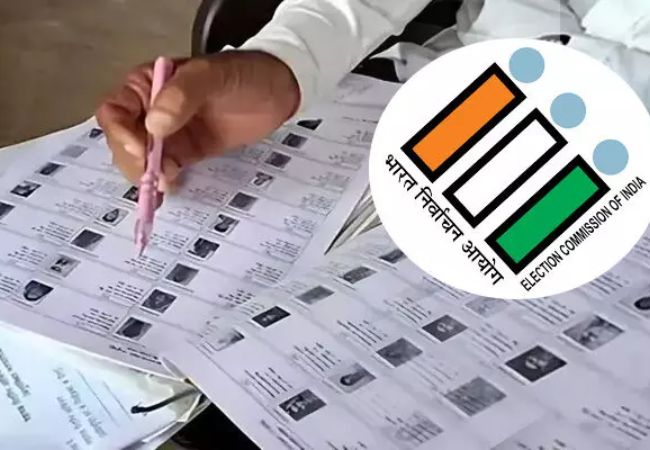
New Delhi (PTI): Election Commission's Special Intensive Revision (SIR) of voters' list commenced in nine states and three Union territories on Tuesday with the TMC dubbing the exercise as a "con job" by the "compromised" poll body.
The electoral roll cleanup exercise is also being opposed by the ruling DMK and its allies in Tamil Nadu.
The Election Commission (EC) said its booth-level officers (BLOs) have fanned out to hand over semi-filled enumeration forms to electors and will also help them fill the required document.
According to the schedule announced by the poll authority, SIR will begin with the enumeration stage and continue till December 4.
ALSO READ: ECI team to visit Bengal to review SIR procedures: Official
The EC will release the draft electoral rolls on December 9, and the final electoral rolls will be published on February 7.
The 12 states and UTs where the second round of SIR will be conducted are the Andaman and Nicobar Islands, Lakshadweep, Chhattisgarh, Goa, Gujarat, Kerala, Madhya Pradesh, Puducherry, Rajasthan, Tamil Nadu, Uttar Pradesh and West Bengal.
Among these, Tamil Nadu, Puducherry, Kerala and West Bengal will go to polls in 2026. In Assam, another state where polls are due in 2026, the revision of electoral rolls will be announced separately as a Supreme Court-supervised exercise to verify citizenship is underway in the state.
Also, a separate provision of the Citizenship Act was applicable to Assam.
After Bihar, this is the second round of SIR. The state's final voter list with nearly 7.42 crore names was published on September 30.
ALSO READ: SIR begins in Uttar Pradesh; BLOs to visit households with forms
The SIR began in West Bengal amid soaring political temperatures over the exercise in the state.
The exercise turned into a political battleground, pitting the BJP's clout and the poll body's push for "transparency" against the Trinamool Congress' grassroots resistance ahead of the 2026 assembly polls.
While the BJP has welcomed the SIR as a step towards ensuring greater transparency in the electoral rolls, the ruling TMC has questioned its timing and intent, alleging that the EC is acting under pressure from the saffron party to manipulate the voter list ahead of the state elections next year.
With both parties treating the SIR as a prelude to the 2026 assembly elections, the contest has morphed into what many in political circles describe as "the battle of two forces, the administrative and the organisational".
TMC leader Derek O'Brien termed the SIR exercise a "con job organised by the Extremely Compromised body".
Separately, the DMK, in its plea before the Supreme Court against the SIR, has dubbed it a "de facto NRC" and has challenged its constitutional validity. The ruling party in Tamil Nadu has sought the quashing of the EC's notification on SIR dated October 27, 2025.
However, the main opposition, AIADMK, an ally of the BJP, supports the exercise.
In Uttar Pradesh, the exercise was launched under the theme 'Shuddh Nirvachak Namavali – Majboot Loktantra' (Clean Electoral Roll – Strong Democracy).
Let the Truth be known. If you read VB and like VB, please be a VB Supporter and Help us deliver the Truth to one and all.
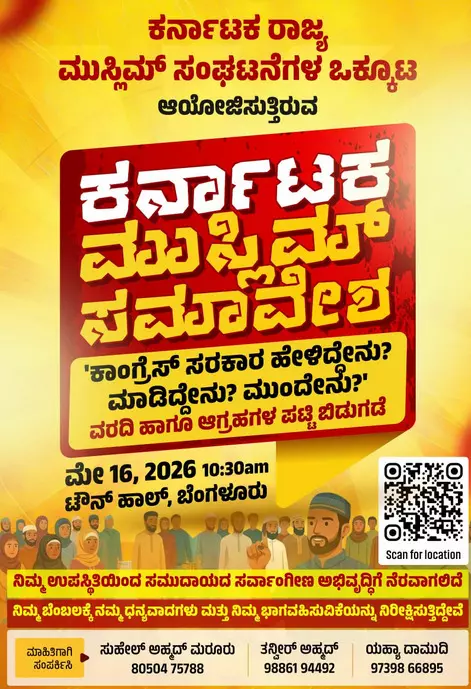
Karnataka Muslim Convention to be held as scheduled on May 16, say organisers
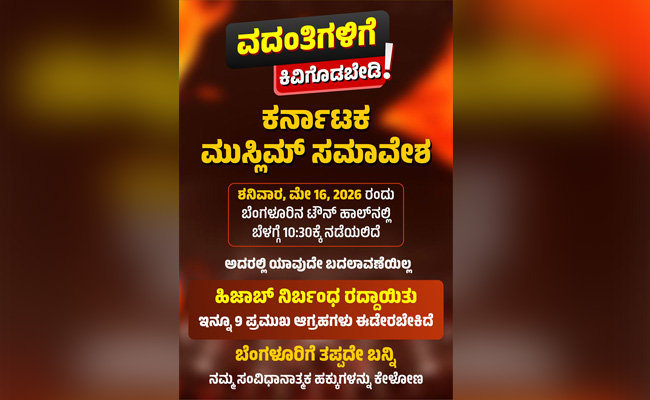
Bengaluru: Organisers of the ‘Karnataka Muslim Convention’ have clarified that the programme will be held as scheduled on Saturday, May 16, at 10.30 am at Town Hall in Bengaluru, and urged the public not to pay attention to rumours regarding any change in the event.
In a joint statement, convention coordinators Suhail Ahmed Maroor, Tanveer Ahmed and Yahya Damudi said there is no change whatsoever in the programme and that all preparations are in the final stage.
The convention is being organised by the Karnataka Rajya Muslim Sanghatanegala Okkoota.
According to the organisers, more than 45 Muslim organisations, associations and jamaats from different parts of Karnataka have extended support to the event and have assured active participation.
The organisers said the state government has withdrawn the restriction on hijab, but noted that nine other major demands of the Muslim community are still pending.
They said the convention is being held to urge the government to fulfil these constitutional demands without further delay.