Sonia Gandhi won't make me PM: Pranab told daughter Sharmistha after 2004 drama
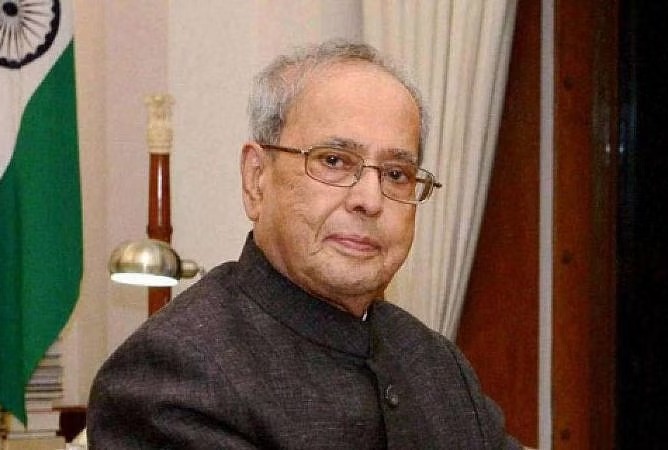
New Delhi(PTI): "No, she will not make me the PM," was Pranab Mukherjee's cryptic response in a reference to Sonia Gandhi when he was asked by his daughter Sharmistha Mukherjee about his chances of becoming the prime minister in 2004.
Sharmistha recalls her father's reply after Sonia Gandhi's decision to withdraw from the prime ministerial race in her upcoming book "In Pranab, My Father: A Daughter Remembers".
In the book, the former Congress spokesperson who quit politics in 2021 provides a glimpse into the illustrious life of her father, where she also says that he did not have any rancour against Sonia Gandhi for not making him the prime minister, and definitely not against the man chosen - Manmohan Singh.
Through her father's diary entries, personal stories narrated to her and her own research, Sharmistha uncovers new, hitherto unknown facets of his political life - his unfulfilled ambition of becoming India's prime minister arising out of his inability to emerge as the 'number one person' to earn Sonia Gandhi's trust, the personality cult around the Nehru-Gandhi family and Rahul Gandhi's lack of charisma and political understanding among other things, according to the book's publishers Rupa Publications.
Mukherjee served as India's finance minister and subsequently became minister for External Affairs, Defence, Finance and Commerce. He was India's 13th president (2012 to 2017). He died on August 31, 2020 at the age of 84.
As the president of the single largest party Congress to win the Lok Sabha elections in 2004, Sonia Gandhi was tipped to be the prime minister and had the full support of the coalition partners.
But she renounced her claim to be the prime minister - a decision that took the nation, including her own party colleagues and coalition partners, by surprise.
In the chapter titled "The PM India Never Had", Sharmistha also writes: "Following Sonia's decision to withdraw from the prime ministerial race, there was intense speculation within the media and political spheres.
"The names of Dr Manmohan Singh and Pranab were being discussed as the top contenders for the position. I did not have the chance to meet Baba for a couple of days as he was terribly busy, but I spoke to him over the phone. I asked him excitedly if he was going to become the PM. His response was blunt, 'No, she will not make me the PM. It'll be Manmohan Singh.' He added, 'But she should announce it fast. This uncertainty is not good for the country'."
The author goes on to add that if her father harboured any disappointment about not being named the prime minister, it did not reflect in his diaries. He told a journalist that he did not have any expectation from Sonia Gandhi to make him the prime minister.
"If there's no expectation, there's no disappointment as well," the book, which will be launched on Mukherjee's birth anniversary on December 11, says.
"It is generally believed that Pranab had a chance to become the PM earlier in 1984 as well, after Indira Gandhi's assassination, and not just in 2004," it adds.
Sharmistha says that people often asked her whether her father actually harboured the ambition to become the prime minister and she posed this question to him during the UPA-I era.
"His response was emphatic. He said, 'Of course, I would like to be the prime minister. Any politician worth his salt has this ambition. But just because I want it does not necessarily mean I am going to get it," she writes.
She then drew her own conclusions: "Pranab Mukherjee definitely had the desire to be the PM, but he also came to terms with the fact that he was not going to become one."
Sharmistha says Mukherjee's diary entries from those days contain very sketchy details, perhaps indicating a lack of time owing to a busy and hectic schedule filled with meetings and consultations with various stakeholders.
On 17 May 2004, he wrote, "Sonia Gandhi decides to withdraw from Prime Ministerial candidature. BJP's vicious campaign. Myself, Manmohan, Arjun, Ahmed Patel and Ghulam Nabi were called. We are stunned." On 18 May, he wrote, "Sonia Gandhi sticks to her decision. Countrywide agitation. Allies are also shocked. CPP meeting emotionally surcharged. Appeal to her to reconsider. Work up to 1 am."
"On 19 May, almost with a sigh of relief, he wrote, 'Issues resolved. Manmohan Singh becomes PM designate. Manmohan and Soniaji met President and the President was pleased to give mandate to form the government to Manmohan Singh'," the book says.
Sharmistha mentions that though at that time, her father didn't write anything more, on December 31, while recounting major events of the year, he wrote, "Most surprising was the amazing sacrifice of Sonia Gandhi by refusing to accept the Prime Ministership of the country despite pressure from within the party and outside. Her decision saved the country from a bitter confrontation between BJP and Congress."
She also writes that her father felt Sonia Gandhi was "intelligent, hardworking and keen to learn. Once he told me that unlike many political leaders, her biggest strength was that she knew and recognized her weaknesses and was willing to work hard to overcome them. She knew that she lacked political experience but worked hard to understand the complexities of Indian politics and society".
One of the early references in his diaries about Rahul Gandhi was on January
29, 2009, in the context of a CWC meeting that had discussions on strategies for the upcoming Lok Sabha elections that year as one of the agendas, the book says.
After that, there are few references in his diaries of Rahul Gandhi visiting him at his residence.
"Pranab described him as 'very courteous' and 'full of questions', which he took as
a sign of Rahul's desire to learn. But he felt that Rahul was 'yet to mature politically'. Rahul continued to meet Pranab at Rashtrapati Bhavan, though not very frequently. Pranab advised him to join the Cabinet and gain some first-hand experience in governance. Rahul obviously did not heed the advice, as we all know," the book says.
"During one of these visits on 25 March 2013, Pranab noted, 'He has interest in diverse range of subjects but moves very quickly from one subject to another. I don't know how much he listened and absorbed'," it adds.
Let the Truth be known. If you read VB and like VB, please be a VB Supporter and Help us deliver the Truth to one and all.
4 held for sexually assaulting woman, girl on moving bus after social media alert in UP's Agra
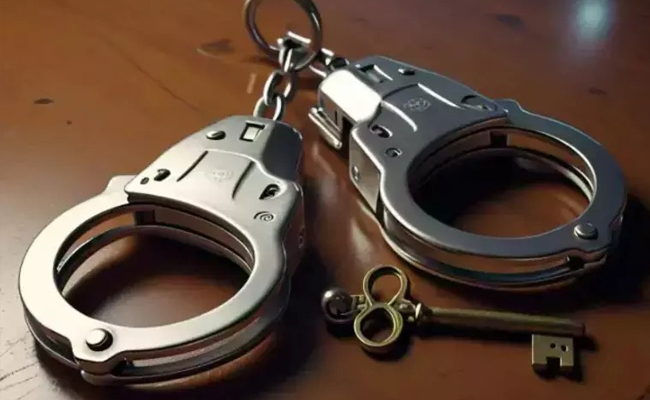
Agra (UP) (PTI): Four people were arrested, after a prompt response by police following a social media alert, for allegedly sexually assaulting a woman and a girl inside a moving bus here, officials said on Tuesday.
According to an official police statement, at 12:27 am on April 27, information was received on the social media platform X about an incident of sexual assault on a bus travelling from Kanpur to Ahmedabad, which was approaching Namner crossing in Agra.
Acting under the direction of Police Commissioner Deepak Kumar, the Agra Police social media team immediately alerted the Rakabganj police station within minutes and coordinated with the victims to confirm the incident and obtain the exact location, it stated.
Police teams launched intensive checking at Namner crossing and intercepted the bus as it reached the spot. The four accused involved in the incident were apprehended on the spot, and legal action was initiated against them, the statement said.
The police said the swift response and coordination between the social media team and field units ensured timely action, bringing relief to the victims and other passengers, who expressed gratitude towards the police, it added.