Sports Ministry holds no details of inquiry report on Brij Bhushan, reveals RTI

New Delhi: An exclusive report by The Quint has revealed through an RTI (Right to Information) inquiry that the Sports Ministry has no records of the investigation report on the allegations of sexual misconduct against Brij Bhushan Sharan Singh, the former BJP MP and the former chief of the Wrestling Federation of India (WFI).
The probe into the allegations, which included accusations of sexual harassment, groping, and intimidation made by female wrestlers, was supposed to be overseen by an Oversight Committee led by M.C. Mary Kom. The committee was appointed by the government on 23 January 2023 to investigate the charges and manage the WFI's daily operations. Despite an extension of the submission deadline, the Ministry responded to an RTI query on 26 May, stating that the report is unavailable.
This investigation gained significant public attention, leading to an FIR being filed against Singh following the Supreme Court's intervention in May 2023. In June 2024, the Delhi Police submitted a 1,000-page charge sheet against Singh. On 10 May 2024, a Delhi court found sufficient evidence to charge Singh and WFI's suspended assistant secretary, Vinod Tomar, with sexual harassment and outraging the modesty of five female wrestlers. Both have denied the charges and opted to stand trial.
Wrestler Bajrang Punia criticized the government for the delays and discrepancies in handling the case, questioning the seriousness of the efforts to investigate the allegations.
Let the Truth be known. If you read VB and like VB, please be a VB Supporter and Help us deliver the Truth to one and all.
Ordinance issued to increase number of Supreme Court judges from 34 to 38
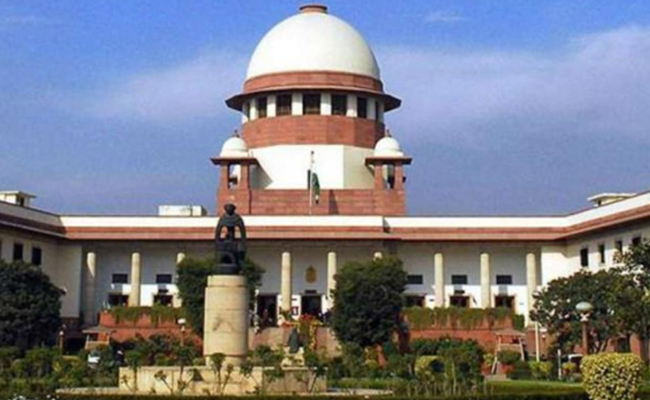
New Delhi (PTI): The government has promulgated an ordinance to increase the strength of the Supreme Court from the present 34 judges to 38, including the Chief Justice of India.
The law ministry notified the ordinance on Saturday, which amended the Supreme Court (Number of Judges) Act, 1956, to increase the sanctioned strength of the top court.
So far, the sanctioned strength of the top court was 34, including the Chief Justice of India (CJI). Now, the number of judges has been increased by four, taking the sanctioned strength to 38.
The top court will now have 37 judges, other than the CJI.
With the apex court having two vacancies at present, and the ordinance coming into force immediately, the Supreme Court Collegium will now have to recommend six names for appointment as judges in the top court.
A bill will be brought in the Monsoon Session of Parliament to convert the ordinance – an executive order – into a law passed by Parliament.
The Union Cabinet had cleared a draft bill on May 5 to increase the number of apex court judges.
The strength of the Supreme Court was last increased from 30 to 33 (excluding the CJI) in 2019.
The Supreme Court (Number of Judges) Act, as originally enacted in 1956, put the maximum number of judges (excluding the CJI) at 10.
This number was increased to 13 by the Supreme Court (Number of Judges), Amendment Act, 1960, and to 17 by another amendment to the law.
The Supreme Court (Number of Judges) Amendment Act, 1986, augmented the strength of judges from 17 to 25, excluding the CJI.
A fresh amendment in 2009 further increased the strength from 25 to 30.
Article 124(3) of the Constitution lists the qualifications required to become a Supreme Court judge.
An Indian citizen who has either served as a high court judge for at least five years, or as an advocate for 10 years, or is a distinguished jurist, can be appointed to the top court.
The strength of the Supreme Court is increased based on the recommendations of the CJI, who writes to the Union law minister. After consulting the finance ministry, the Department of Justice under the law ministry moves the Cabinet with a draft bill.