Startup founder questions India's growth story, cites corruption, inequality as key hurdles

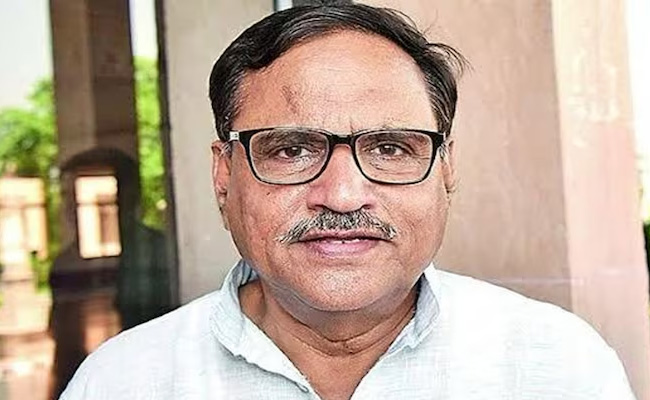
New Delhi: Dhawal Jain, founder and CEO of mental health startup Mave Health, has stirred debate on social media after expressing disillusionment with what he called the “India's growth story.” In a candid post on X, Jain said he was optimistic aboout India’s progress but it has waned. He warned that the country’s economic and social challenges might worsen in the coming years.
“I was high on India’s growth story, but not anymore,” Jain wrote reflecting on how his faith in the nation’s development narrative had faded.
Jain, who once believed India’s problems were remnants of its colonial past and that economic growth would naturally lead to better infrastructure and governance, said, “But lately, it feels like it’s all just a story being fed to us. The change isn’t really coming. The slow growth we see now might not improve, in fact, it could get worse."
Pointing to corruption and a “scarcity mindset” as the two biggest obstacles, Jain argued that accountability must begin at the top. “When our politicians leave rally grounds littered, I can’t expect an average Indian to take the ‘Clean India Mission’ seriously,” he remarked.
He criticised the lack of transparency in how public funds are used. He said, “It pinches me when I pay tax because I know part of it goes into someone’s pocket. I’d love to pay more tax, but I just want to know how it’s being used.” Jain described government processes as “opaque” and “a nightmare” for those who try to act ethically.
Recalling a local tragedy, he cited civic negligence, in which a young boy lost his life in a pothole accident. “Only that one pothole was repaired; others were ignored. We talk about caring for citizens, it’s almost a joke,” he said.
Jain also warned that the rise of artificial intelligence and humanoid automation could exacerbate unemployment. “Millions of Indians will lose jobs, and I don’t expect the government to handle it. Maybe they’ll ban humanoids like they resisted self-driving cars,” he wrote.
Jain expressed admiration for India’s entrepreneurs. “The only way I see us doing better is if entrepreneurs build better systems, fund research, improve healthcare, and drive innovation. I’m so proud of young, ambitious Indians doing real work against all odds,” he said.
Acknowledging his own privilege Jain concluded his post by reaffirming his saying, “I’m not ranting, I just want my country to do better. I’d love to be proven wrong. Until then, I hope India is thriving in some other universe, because I truly believe she can.”
Let the Truth be known. If you read VB and like VB, please be a VB Supporter and Help us deliver the Truth to one and all.
UP man gets life term for electrocuting mentally challenged wife to death in Bareilly

Bareilly (UP) (PTI): A local court here has sentenced a man to life imprisonment for murdering his mentally challenged wife by repeatedly electrocuting her while she was tied to a cot, lawyers said on Thursday.
Additional district government counsel Harendra Singh Rathore said Additional Sessions Judge Avinash Kumar Singh on Wednesday convicted Vinod Kumar (45) for killing his wife, Satyavati, in Chaina village of Bareilly district and imposed a fine of Rs 15,000 on him.
According to the prosecution, he was allegedly frustrated with his wife Satyavati's mental illness and often assaulted her.
Rathore said the prosecution examined nine witnesses to establish the charges against him.
As per court records, on the night of May 1-2, 2022, when Satyavati was asleep, Vinod tied her hands and legs to a cot using ropes and then connected an aluminium cable to an electric board to repeatedly administer electric shocks to her.
"She writhed in pain, but the accused continued to electrocute her until she died," the prosecution said.
The court observed that the murder was carried out in an inhuman manner.
After committing the crime, the accused threw the rope and cable on the roof and left for work at a brick kiln around 2 am to create a false alibi.
He later tried to mislead the police and the victim's family by claiming that Satyavati, whose mental condition was unstable, had accidentally died by suicide after grabbing a live electric wire.
However, the victim's brother, Sanjeev, a resident of Shahjahanpur district, suspected foul play and lodged an FIR under sections 498A (husband subjecting wife to cruelty) and 302 (murder) of the Indian Penal Code at Nawabganj police station.
During the trial, the prosecution relied on the post-mortem report prepared by Dr Faraz Anwar, who stated that multiple electrocution marks found on different parts of the victim's body could not have been self-inflicted.
The police also recovered the rope and electric wire used in the crime on the accused's identification, officials said.