Study says heart diseases contribute 28 per cent of total deaths in India in 2016: Govt

New Delhi(PTI): A study has said that heart diseases contributed over 28 per cent of the total deaths in India in 2016, compared to 15.2 per cent in 1990, the Lok Sabha was informed on Friday.
The government also told the lower house that non-communicable diseases are estimated to account for 63 per cent of fatalities in the country.
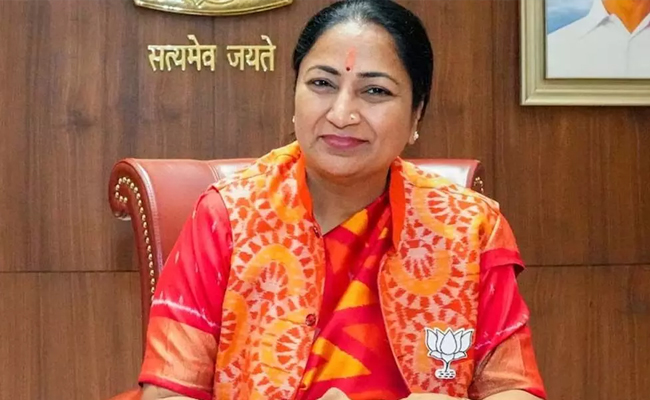
Union Minister of State for Health Bharati Pawar said the study -- The changing patterns of cardiovascular diseases and their risk factors in the States of India: The Global Burden of Disease Study 1990-2016 -- was published in the Lancet Global Health 2018 by the Indian Council of Medical Research (ICMR).
She said the according to the study, heart diseases contributed 28.1 per cent of the total deaths in India in 2016 compared to 15.2 per cent in 1990.
Pawar said another study -- 'Global, regional and national burden of chronic kidney disease, 1990-2017: a systematic analysis for the Global Burden of Disease Study 2017 -- was published in Lancet 2020 by ICMR.
According to this study, the age standardised prevalence of chronic kidney disease (CKD) in India has increased by 5.6 per cent between 1990 and 2017, she said.
The minister also said the non-communicable diseases are estimated to account for 63 per cent of all deaths in India.
Let the Truth be known. If you read VB and like VB, please be a VB Supporter and Help us deliver the Truth to one and all.
Karnataka launches drug monitoring portal for NSQ detection, NDPS misuse
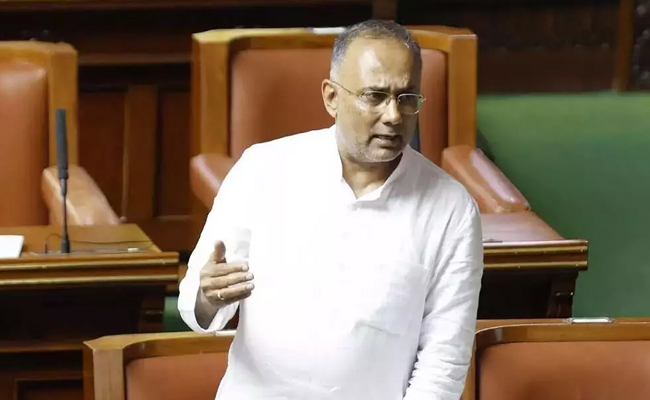
Bengaluru (PTI): Karnataka Health Minister Dinesh Gundu Rao on Thursday launched a monitoring portal for the detection of NSQ drugs and the prevention of misuse of NDPS, aimed at strengthening surveillance, transparency and accountability in public health.
To effectively monitor and control the movement of such drugs, the Food Safety and Drug Administration department has developed the portal to track Not of Standard Quality (NSQ) drug batches available with stockists and retailers, officials said.
Through this system, identified NSQ batches will be automatically locked, preventing any further sale or transaction of those products. The portal also provides real-time information to the department regarding available stock, stock-in-hand details and quantities returned to suppliers, ensuring better monitoring, transparency and public safety, they said.
Addressing a press conference here, the health minister said the main objective is that whenever any medicine is found to be not of proper quality or not up to standard, action needs to be taken.
He said that earlier, when samples were collected and tested, if a medicine was found to be substandard, it would already have reached the market - distributors, retailers, pharmacies and others.
"There was no system to recall those medicines. We could only try to stop future supplies, but we had no control over medicines that had already entered the market, even if we knew they were of poor quality. As a result, such medicines could still be purchased and sold to the public," Rao said.
Officials noted that the Food Safety and Drug Administration department has recalled medicines worth Rs 1.85 crore in the year 2025-26.
"Today, we are launching this portal... Whenever any drug is newly identified as substandard, we will immediately upload that information on the portal. The portal is integrated with databases of wholesalers and stockists," the minister said.
According to him, the moment a batch is declared substandard and uploaded, messages are instantly sent to all wholesalers and retailers. Wholesalers have been linked to this system. Once the information is updated, further sale of that batch will automatically stop.
"Whether it is in warehouses, distribution chains or stockists' inventories, the stock will be frozen automatically. They will not be able to sell those medicines further," he said.
Around 15,000 stockists and wholesalers are currently part of this system, the health minister said, adding that in the next stage, "We will bring in about 45,000 retailers and pharmacists into the database. For now, at the wholesale and stockist level, this system will completely block the sale of such medicines. Those batches will have to be returned, and the companies concerned will be held responsible. The recall process will happen in real time".
"Once testing and verification are completed and the drug is proven substandard, we can instantly alert the entire state. Every stock point holding that batch will be frozen immediately. Even if someone wishes to continue selling it, they will not be able to do so. The process will stop automatically," he said.
Stressing that this is a major reform and a very positive step, Rao said, "As far as I know, no other state in the country has introduced such a system. Karnataka is introducing it today." Apart from this, the minister said the portal will also help in monitoring narcotic and psychotropic drugs regulated under the Narcotic Drugs and Psychotropic Substances (NDPS) Act.
Earlier, when pharmacies sold such medicines, they only had to maintain physical records containing the patient's name, the doctor's details and the prescription. Irregularities would come to light only during inspections conducted at pharmacies.
Under the new system, Rao said that pharmacies selling narcotic or psychotropic drugs will have to upload all details onto the portal. "This means we will have data on where and how much is being sold, who is purchasing these medicines, whether excessive quantities are being sold under one person's name, or whether a particular doctor is prescribing unusually high amounts," he said.
Rao said the data can be analysed to identify suspicious patterns or unusual sales of such medicines.
"If certain doctors are issuing too many such prescriptions, we can monitor them closely. Likewise, if any pharmacy is selling unusually high quantities of these medicines, we can inspect them and take action," he added.