Supreme Court to hear, decide sensitive cases like Ayodhya, Rafale on reopening
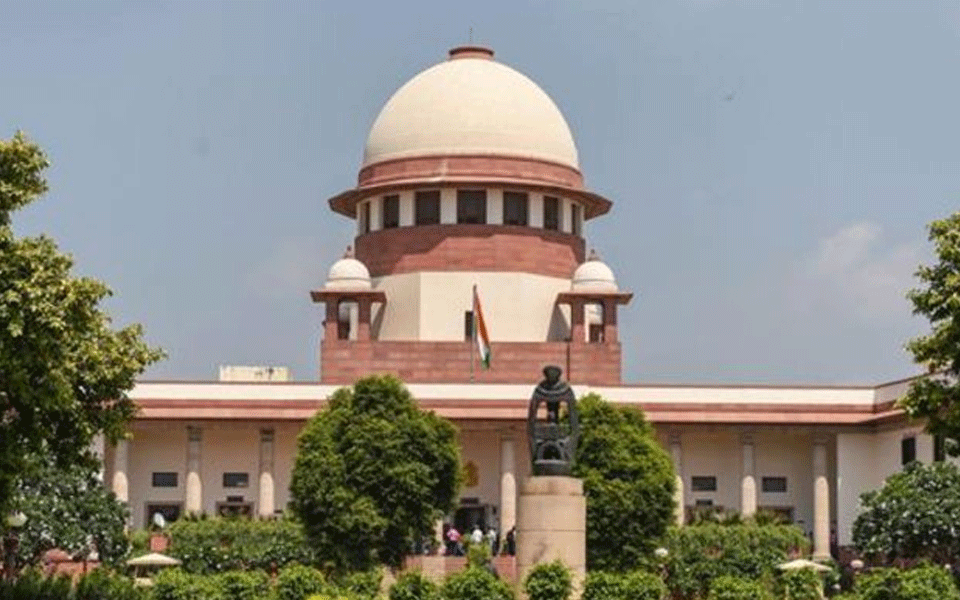
New Delhi: Upon reopening on July 1 after a six-week summer vacation, the Supreme Court will deal with very sensitive issues, including the Ayodhya land dispute, review pleas in Rafale case and the contempt case against Rahul Gandhi for wrongly attributing to the court his "chowkidar chor hai" slogan.
The top court, which would function with its full judicial strength of 31 judges under the stewardship of Chief Justice (CJI) Ranjan Gogoi, is likely to deliver its verdict in the review pleas in Rafale case.
The petitions, including the one filed by ex-Union ministers Yashwant Sinha and Arun Shourie, and lawyer Prashant Bhushan, seek review of the apex court's December 14, 2018, judgment dismissing all pleas challenging procurement of 36 Rafale fighter jets from France.
Also, a three-judge bench headed by the CJI would decide the fate of BJP MP Meenakshi Lekhi's contempt plea against Gandhi for wrongly attributing to the top court his "chowkidar chor hai" jibe against Prime Minister Narendra Modi.
Gandhi, however, has already tendered unconditional apology for it and sought closure of the case.
The outcome of the in-camera mediation proceedings, undertaken by a three-member panel headed by former apex court judge Justice F M I Kallifulla, to find an amicable solution to the politically-sensitive Ram Janmabhoomi-Babri Masjid land dispute, would be watched with bated breath.
The mediation committee, which also comprises spiritual guru Sri Sri Ravishankar and senior advocate Sriram Panchu, is "optimistic" about finding an amicable solution to the vexatious dispute. It has been granted time till August 15 by a five-judge bench headed by the CJI.
Fourteen appeals have been filed in the SC against the 2010 Allahabad High Court judgment, delivered in four civil suits, that the 2.77-acre land in Ayodhya be divided equally among three parties -- the Sunni Waqf Board, the Nirmohi Akhara and Ram Lalla.
Besides these, the SC will have to deal with a PIL seeking a probe and lodging of an FIR against activist lawyers Indira Jaising, Anand Grover and their NGO 'Lawyers Collective' for allegedly violating rules relating to receipt and utilisation of foreign funds.
The PIL has been filed by 'Lawyers' Voice', a voluntary organisation of advocates.
The top court would also dealing with the PIL of lawyer and BJP leader Ashwini Upadhyay challenging the constitutional validity of Article 370, which grants special status to Jammu and Kashmir and limits Parliament's power to make laws for the state.
The top court would also be dealing a host of pleas challenging the constitutional validity of Article 35A, which provides special rights and privileges to natives of Jammu and Kashmir.
On February 11, the Jammu and Kashmir government had sought permission from the Supreme Court to circulate a letter to parties for adjourning the hearing on pleas saying that there was no "elected government" in the state.
Let the Truth be known. If you read VB and like VB, please be a VB Supporter and Help us deliver the Truth to one and all.
What is Iran’s 10-point plan? Key demands ahead of US talks in Islamabad
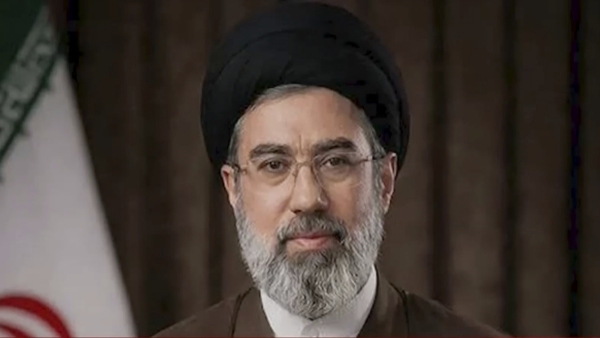
Tehran/Islamabad: Iran has outlined a 10-point plan as the basis for upcoming talks with the United States, expected to begin in Islamabad on April 11, according to a statement from the Iranian Supreme National Security Council.
The plan lays out Tehran’s key political, military and economic demands, and is being seen as a framework for negotiations following the recent escalation in the region.
Strait of Hormuz at the centre
A major focus of the plan is the Strait of Hormuz, a critical global shipping route. Iran has proposed “controlled passage through the Strait of Hormuz in coordination with the Iranian armed forces,” which it says would give the country a unique economic and geopolitical position.
The plan also calls for the “establishment of a safe transit protocol” in the Strait that would guarantee Iran’s dominance under an agreed mechanism.
Call to end conflict
Iran has demanded “the necessity of ending the war against all elements of the axis of resistance,” signalling its expectation that hostilities should stop not only in Iran but also involving allied groups in the region.
US troop withdrawal
Another key demand is the “withdrawal of US combat forces from all bases and deployment points in the region,” indicating Tehran’s long-standing position against American military presence in West Asia.
Sanctions relief and compensation
The plan places strong emphasis on economic measures. It calls for “full payment of Iran’s damages according to estimates,” along with “the lifting of all primary and secondary sanctions and resolutions of the Board of Governors and the Security Council.”
It also seeks “the release of all Iranian assets and properties frozen abroad,” which have been a major point of contention for years.
Binding global guarantee
Finally, Iran has demanded that all these terms be formally recognised through “a binding Security Council resolution,” suggesting it wants international legal backing to ensure enforcement.
What this means
The 10-point plan reflects Iran’s broader push for security guarantees, economic relief and regional influence. The upcoming talks in Islamabad are expected to test how far both sides are willing to negotiate on these demands.