Supreme Court to pass order in stray dogs case on Nov 7
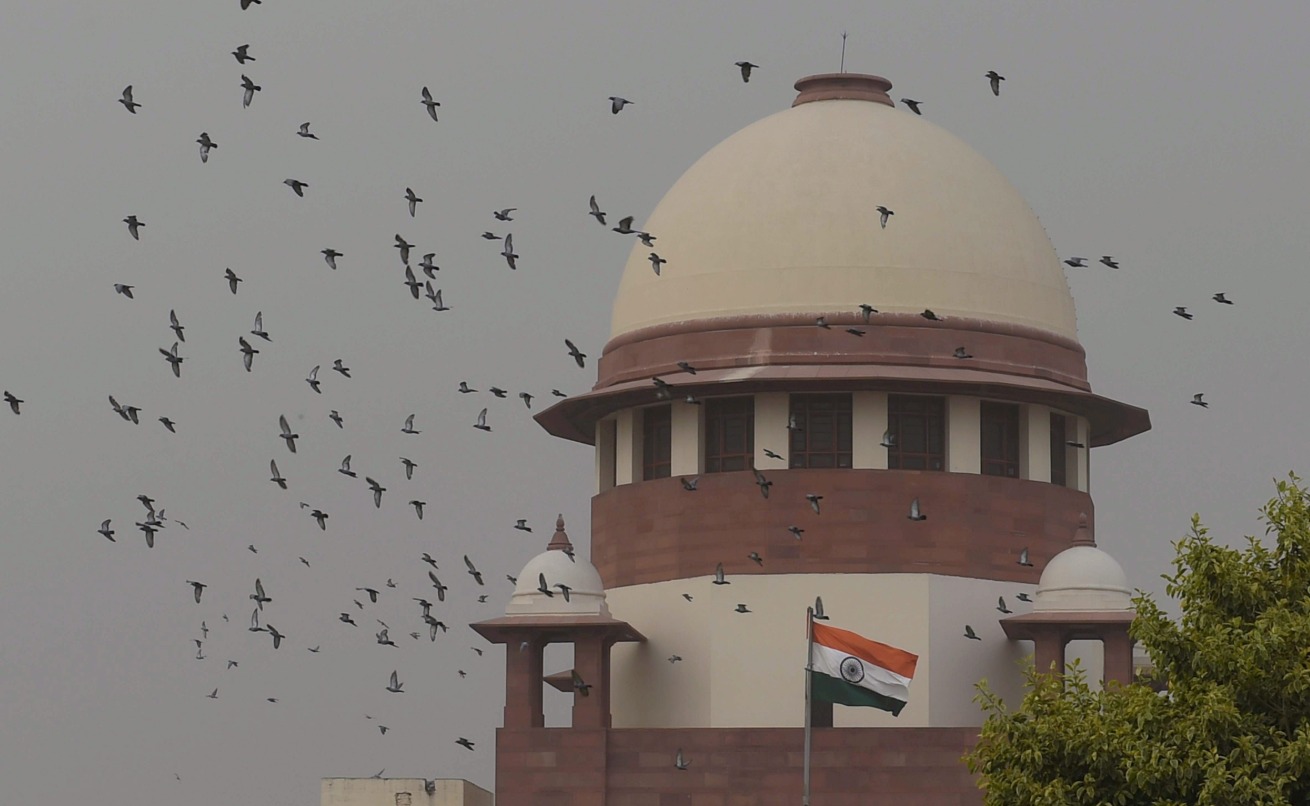
New Delhi (PTI): The Supreme Court on Monday said it would pass order in the stray dogs case on November 7.
A three-judge special bench comprising Justices Vikram Nath, Sandeep Mehta and N V Anjaria noted that chief secretaries of most of the states and Union Territories were present before it.
It allowed the exemption application filed by the chief secretary of Kerala and noted that a principal secretary of the state was present in the court.
The bench said the Animal Welfare Board of India be made a party in the matter.
At the outset, Solicitor General Tushar Mehta informed the bench that most of the states and UTs have filed their compliance affidavit in the matter.
"List for orders on November 7," the bench said.
It said personal presence of the chief secretaries of states and UTs would no longer be required.
However, the bench said their presence would again become necessary in case there was any default in compliance of the orders passed by the court.
While hearing the matter on October 27, the top court had directed the chief secretaries of states and UTs, except West Bengal and Telangana, to remain present before it on November 3 to explain why compliance affidavits were not filed despite the court's August 22 order.
The apex court on August 22 asked the states and UTs about the steps being taken for compliance of the Animal Birth Control (ABC) Rules.
The bench had expressed displeasure over the non-compliance of its order and observed that by October 27, compliance affidavits were not filed by the states and UTs, except West Bengal, Telangana and the Municipal Corporation of Delhi (MCD).
It had made clear that the chief secretaries would have to appear in the court and explain as to why no compliance affidavits were filed by them.
On October 27, the top court had slammed the states and UTs, which had not filed their compliance affidavits in the matter, and said continuous incidents were happening and the country was being "shown as down" in foreign nations.
The apex court had earlier expanded the scope of the stray dogs case beyond the confines of Delhi-National Capital Region, and directed that all states and UTs be made parties in the matter.
It had directed the municipal authorities to file an affidavit of compliance with complete statistics of resources like dog pounds, veterinarians, dog-catching personnel, and specially-modified vehicles and cages available as on date for the purpose of compliance of the ABC Rules.
The bench had also impleaded the states and UTs in the matter while observing that application of ABC Rules was uniform all over India.
The apex court is hearing a suo motu case which was initiated on July 28 over a media report on stray dog bites leading to rabies, particularly among children, in the national capital.
Let the Truth be known. If you read VB and like VB, please be a VB Supporter and Help us deliver the Truth to one and all.
No unannounced load shedding in Kerala, outages due to overload, says Minister
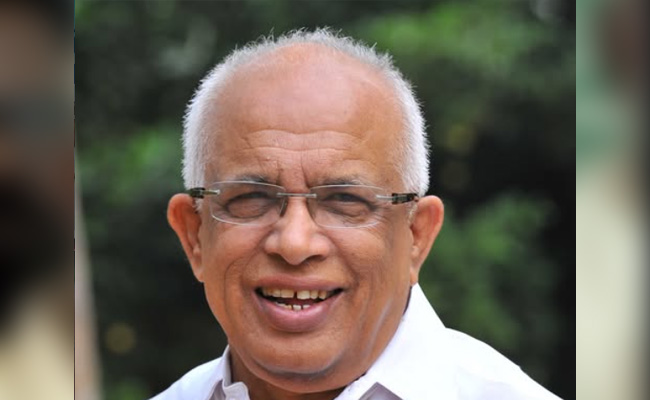
Palakkad (PTI): Kerala Electricity Minister K Krishnankutty on Saturday said there was no unannounced load shedding in the state, attributing recent power interruptions to temporary overload caused by high consumption.
Clarifying concerns raised from various parts of the state, the minister said the disruptions are not deliberate but occur when demand peaks, particularly between 10 pm and 11 pm.
"It is not being done intentionally. Power consumption has risen sharply, and when there is excessive and indiscriminate usage, the system experiences overload, leading to natural supply interruptions," he told reporters here.
His remarks come amid complaints that several areas have been witnessing frequent power cuts, often lasting around 15 minutes and occurring multiple times during the night.
Krishnankutty said the state's power demand has crossed 6,195 MW, putting pressure on the supply system. He added that around 70 per cent of Kerala's electricity is procured from outside, and existing power banking arrangements have been exhausted.
"We have approached the Regulatory Commission seeking permission to purchase more power. However, this will come at a higher cost," he said.
The minister said the government is trying to avoid increasing electricity tariffs and urged consumers to exercise restraint in usage to help manage the situation.
Responding to opposition criticism over the ruling LDF's earlier claims of a decade without power cuts, he said the current situation is not unique to Kerala.
A power crisis is emerging across the country, he said, and sarcastically asked the Opposition to take note of the role of natural factors in this.
Krishnankutty expressed confidence that the situation would improve within two days, while cautioning that long-term energy security would depend on enhancing in-state power generation.
He also warned that future generations could face serious challenges if adequate electricity production capacity is not developed within Kerala.