Suspected drones observed along IB in Jammu's Samba, being engaged: Army
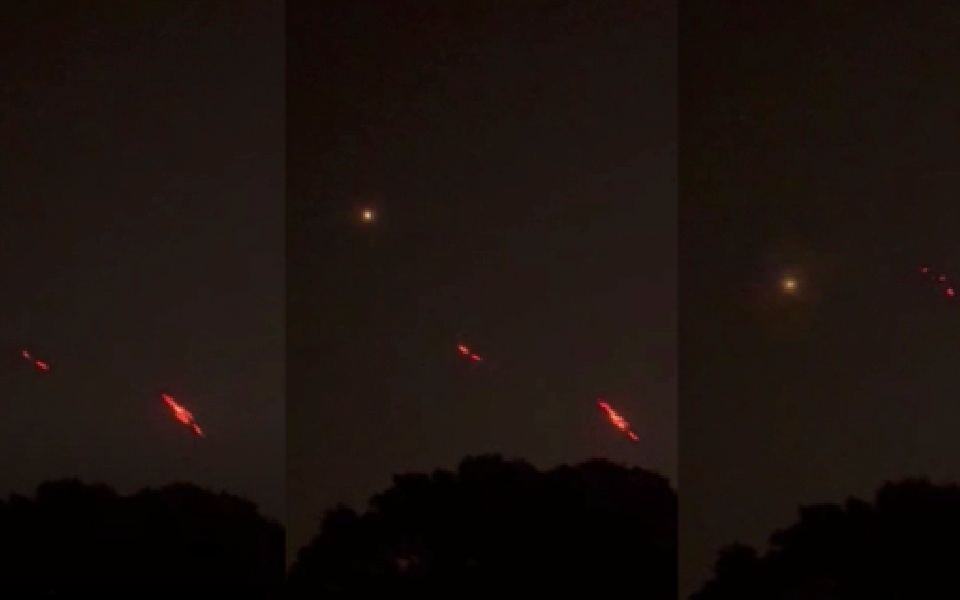
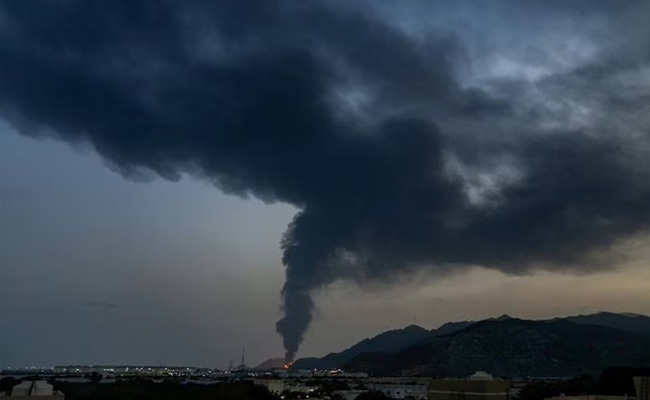
Jammu, May 12 (PTI): Security forces are engaging suspected drones observed along the International Border in Samba district of Jammu region on Monday, an Army said.
This fresh incident of drone activity along the borderline comes barely hours after Prime Minister Narendra Modi’s first address to the nation following Operation Sindoor and the meeting of the DGMOs of India and Pakistan.
The Army, however, said there is no need to be alarmed.
“A small number of suspected drones have been observed near Samba in J&K. They are being engaged,” it said.
In the backdrop of the situation, several areas witnessed blackouts in Samba, Kathua, Rajouri, and Jammu.
Lights were switched off at the cave shrine of Mata Vaishno Devi and along its track as a precautionary measure, sources said.
On Monday, talks between the DGMOs were held during which issues related to the continuing commitment that both sides must not fire a single shot or initiate any aggressive or inimical action against each other were discussed, the Indian Army said.
It was also agreed that both sides would consider immediate measures to ensure troop reduction along the borders and in forward areas, it added.
The situation remained largely peaceful across Jammu and Kashmir, with no incidents of ceasefire violation reported along the Indo-Pak border Sunday overnight — marking the first calm night after 18 days of hostilities following the Pahalgam terror attack that left 26 people — mostly tourists — dead.
India and Pakistan on Saturday reached an understanding to cease all firing and military actions on land, air, and sea with immediate effect, following four days of intense cross-border drone and missile strikes that brought the two countries to the brink of full-scale war.
Eighteen days of intense hostilities following the Pahalgam terror attack and Operation Sindoor, which brought India and Pakistan to the brink of war, ended with a ceasefire that restored calm along the Line of Control, the International Border, and the hinterland in Jammu and Kashmir. The Army thwarted Pakistan’s Hamas-style kamikaze drone attacks during the escalation.
Since the night of April 24, hours after India suspended the Indus Waters Treaty in response to the Pahalgam terror attack, Pakistani troops repeatedly targeted Indian positions along the LoC — beginning in the Kashmir Valley and quickly expanding to the Jammu region.
The latest hostilities began in the northern districts of Kupwara and Baramulla in the Kashmir Valley, before spreading southwards to Rajouri, Poonch, Akhnoor, and the Pargwal sector along the International Border in Jammu district. The firing affected five border districts — Baramulla, Kupwara, Poonch, Rajouri, and Jammu.
The recent round of cross-border firing further undermined the ceasefire agreement reached in February 2021, which has largely been seen as ineffective due to Pakistan’s frequent violations along the 740-km-long LoC.
The April 22 terror attack, which claimed the lives of 26 people — mostly tourists — in Pahalgam’s Baisaran valley, triggered a strong response from the central government.
The India-Pakistan border stretches over 3,300 kilometers, divided into three segments: the International Border (IB), spanning about 2,400 km from Gujarat to Akhnoor in Jammu; the 740-km-long Line of Control (LoC) that divides Jammu and Kashmir; and the 110-km-long Actual Ground Position Line (AGPL), which separates the Siachen Glacier region.
WATCH: OP Sindoor continues. Minutes after PM Speech.
— Rahul Shivshankar (@RShivshankar) May 12, 2025
A small numbers of suspected drones being observed near Samba in J&K. Being engaged . pic.twitter.com/jmGmRkmQ26
Let the Truth be known. If you read VB and like VB, please be a VB Supporter and Help us deliver the Truth to one and all.
Maharashtra sets up state vaccination task force to strengthen immunisation programme

Mumbai (PTI): The Maharashtra government has set up a State Vaccination Task Force to strengthen the regular immunisation programme and review the progress of related campaigns, a health department official said on Monday.
The State Vaccination Task Force will comprise at least 29 members and will be headed by the administrative head of the health department, he informed.
The government has also constituted separate district-level and municipal vaccination task forces to improve implementation and address challenges at the grassroots level, he said.
Municipal task forces, chaired by respective civic commissioners, have been constituted in view of the vast urban population in Maharashtra and the role of civic bodies in implementing different health programmes.
The district-level task forces will function under the chairmanship of collectors.
"Complete immunisation of children at the appropriate age is an extremely simple, cost-effective and highly effective measure to reduce child mortality and the prevalence of diseases among kids. Immunisation is a powerful tool for reducing illness in children," maintained the official.
To ensure full vaccination of all children, the state government implements various campaigns from time to time as per the central government guidelines, he pointed out.
"Active participation and cooperation of other relevant government departments are essential (in making these campaigns successful)," according to the official.
The state-level body will review the regular immunisation programme, associated campaigns and vaccine-preventable diseases in detail. It will also conduct focused assessments of high-risk districts and municipal corporations, including vacancies at district, municipal and sub-district levels, availability of cold chain equipment, resource gaps and training requirements, he noted.
The state task force will review allocation and utilisation of funds for immunisation and ensure timely action by officers concerned based on reports from district and municipal task forces and state-level monitoring mechanisms, the official said.
It will also ensure active coordination and participation of other government departments in immunisation drives, while district and municipal task forces will carry out similar functions at their respective levels, the official added.