'Sustained debate' needed over holding simultaneous polls: Prez
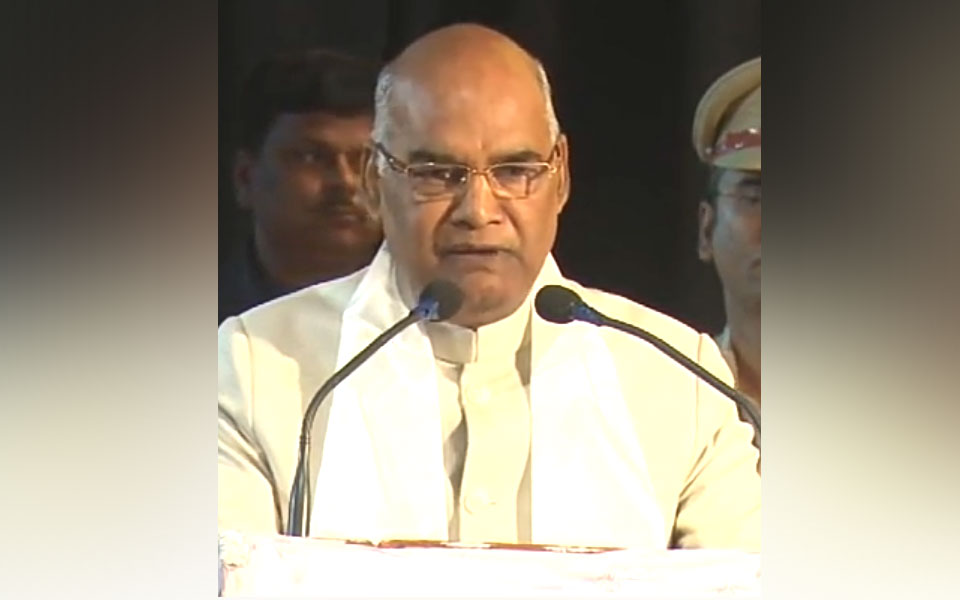
New Delhi: President Ram Nath Kovind today called for a "sustained debate" on holding simultaneous polls for the Lok Sabha and the state assemblies, saying all parties need to arrive at a consensus over the issue.
In his maiden address to the joint sitting of the two Houses of Parliament at the beginning of the Budget session here, he said citizens alive to the state of governance in the country were concerned about frequent elections in one part of the country or another, which adversely impacted the economy and development.
"Frequent elections not only impose a huge burden on human resources but also impede the development process due to the promulgation of the model code of conduct," he said.
The president said a "sustained debate" was required on the subject of simultaneous elections and "all political parties need to arrive at a consensus on this issue".
His remarks came days after Prime Minister Narendra Modi made a fresh pitch for holding the polls together.
Modi had said that like festivals, elections should be held on fixed dates so that governments can function for five years.
He had also said that barbs exchanged during campaigning in one state have a bearing in other parts of the country which are not going to polls.
Modi was of the view that once the elections are held together, the central and the state governments can devote the next five years to governance which otherwise suffers due to frequent polls.
Newly-appointed chief election commissioner O P Rawat had recently thrown a word of caution over the issue, saying the legal framework required to hold the two elections together will take a "lot of time" to get ready.
Rawat had also said he would be the wrong person to respond to whether simultaneous polls could be held in 2019.
"We cannot put the cart before the horse. Logistical issues are subservient to legal framework. Unless legal framework is in place, we don't have to talk about anything else because legal framework will take lot of time -- making constitutional amendment to (changing) the law -- all the process will take time," he had said.
In 2016, the Election Commission (EC) had told the government that it supports the proposal of simultaneous polls but cost involved will be to the tune of over Rs 9,000 crore.
The EC has told the government as well as a parliamentary committee that simultaneous conduct of elections would require large-scale purchase of Electronic Voting Machines and paper trail machines.
"For conducting simultaneous elections, the Commission expects that a total of Rs 9,284.15 crore will be needed for procurement of EVMs and VVPATs (voter verifiable paper audit trail)," the EC had said.
The government feels that while one-time cost in holding simultaneous polls would be high, but the exercise may bring down expenditure involved in election arrangements such as deployment of central forces and polling personnel.
Let the Truth be known. If you read VB and like VB, please be a VB Supporter and Help us deliver the Truth to one and all.
Noida International Airport appoints Nitu Samra as interim CEO
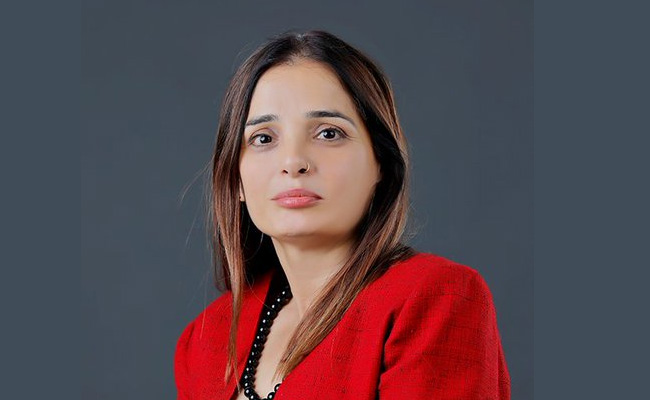
New Delhi (PTI): Noida International Airport on Friday announced the appointment of its Chief Financial Officer Nitu Samra as the interim Chief Executive Officer after authorities denied permission for foreign national Christoph Schnellmann to be at the helm.
"This change follows directions issued by the Bureau of Civil Aviation Security (BCAS) that the Chief Executive Officer of an airport in India is required to be an Indian national," NIA said in a statement.
Samra will replace Schnellmann, a Swiss national who has led Noida International Airport (NIA) as the CEO since August 2020.
The regulatory issue related to the requirement of having an Indian national as CEO has been delaying the start of commercial operations of the airport, which was inaugurated by Prime Minister Narendra Modi on March 28.
Schnellmann will join the airport's Board of Directors as Executive Vice Chairman. In this role, he will continue to support the project and its transition to operations, the statement said.
With immediate effect, NIA said Samra has been appointed as the CEO on an interim basis until the Board of Directors can conclude a formal selection process.
Samra has been serving as the CFO since October 2021 and was closely involved in the airport’s development journey, overseeing financial stewardship, governance, and strategic planning during a key phase of the project, the statement added.
NIA will be operated by Yamuna International Airport Pvt Ltd (YIAPL), a subsidiary of Zurich Airport International AG, under a public-private partnership.
Originally scheduled to commence passenger services in September 2024, NIA is being developed in four phases, along with a dedicated cargo terminal. It received an aerodrome license from the aviation regulator Directorate General of Civil Aviation (DGCA) in March.
YIAPL Chairman Daniel Bircher said that since the inauguration of the airport by the Prime Minister, the goal was to enable the start of operations as early as possible.
"This management change brings the airport into compliance with Bureau of Civil Aviation Security requirements while maintaining continuity in the airport’s leadership team. The newly structured team will support a smooth transition into operations, guided by clear and transparent governance and a strong corporate culture," he said.
On March 28, Civil Aviation Minister K Rammohan Naidu said commercial flight operations from the airport would start in the next 45 to 60 days.
Among the largest greenfield airport projects in the country, NIA will initially have a capacity to handle 12 million passengers per annum.
Once fully developed, the airport will have a total passenger handling capacity of 70 million.
The first phase of NIA has been developed at an investment of around Rs 11,200 crore. 'DXN' is the code for the airport.
The airport features a 3,900-metre runway capable of handling wide-body aircraft, along with modern navigation systems, including Instrument Landing System (ILS) and advanced airfield lighting.
The peak handling capacity in the first phase will be 30 flights per hour.
In the first phase, there will be 28 aircraft stands, and the projected cargo capacity is around 2.5 lakh tonnes.
Terminal 1 of the airport is spread across 1,37,985 square metres with 48 check-in counters. Over 40 acres of land have been earmarked for developing MRO (Maintenance, Repair and Overhaul) facilities at the airport.