Take interim steps for appointments in tribunals: SC to Govt
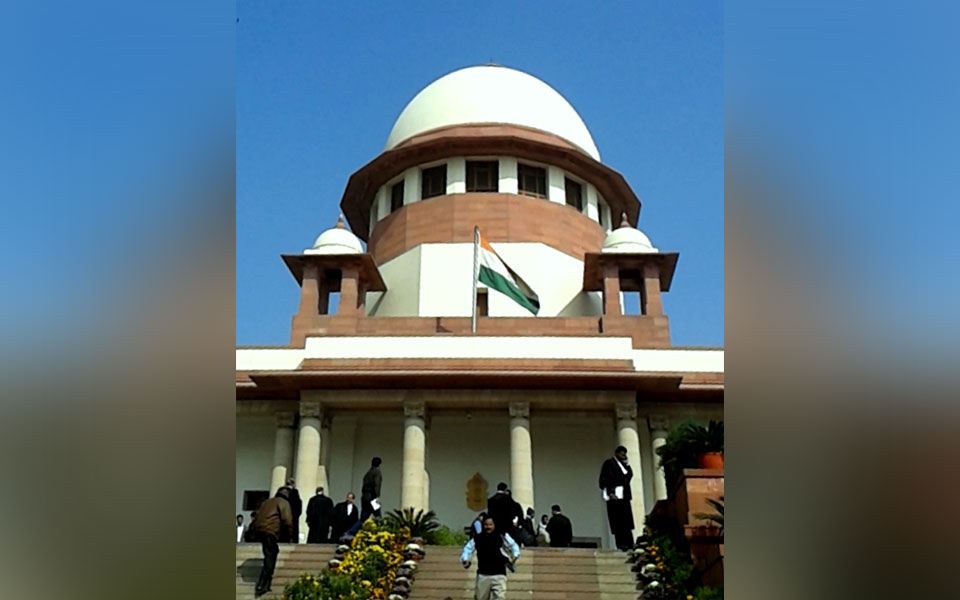
New Delhi: The Supreme Court today asked the Centre and other stakeholders to sit together and formulate an "interim arrangement" to deal with appointments to be made in various tribunals in the country.
The top court, hearing a clutch of petitions challenging the constitutional validity of the Finance Act 2017 and the rules under it to regulate issue like appointment and tenure of members of tribunals, said that though it would deal with this aspect later, the issue of vacancies have to be addressed on an urgent basis as tribunals have to be "manned".
A bench headed by Chief Justice Dipak Misra asked Attorney General K K Venugopal, representing the Centre, and senior lawyers like Arvind Datar and C A Sundaram, appearing for those opposed to the new Act, to sit together and make an "interim arrangement" to deal with appointments in tribunals in view of the fact that the new law and the Rules are under challenge before it.
The bench, also comprising Justices A M Khanwilkar and D Y Chandrachud, said, "The petitions are pending here. But, tribunals have to be manned. We have to find an interim solution".
The bench posted the matters on February 2 when it may finalise the interim arrangement to deal with the appointments till it finally decides on the validity of the new law and the rules, which govern the affairs of the panels including the National Green Tribunal (NGT) and the Central Administrative Tribunal (CAT).
During the hearing, the counsel for petitioners, including Congress leader Jairam Ramesh and NGO Social Action for Forest and Environment, said the issue was whether Parliament can delegate its rule-making powers to the executive and can those rules undermine the power of judiciary in making appointments to the tribunals.
Senior advocate Arvind Datar, appearing as amicus curiae, said that earlier there used to be three judicial and two executive members in the selection committees, meant for choosing presiding officers and members to the tribunals, but now the position has been reversed and the executive has got more say in the selection.
Datar said the tenure of the Chairperson appointed to the Tribunals should be extended to five years instead of three years now.
"The committee appointing judicial members to tribunals like NGT and other tribunals should comprise only two members from the Union Government, instead of the present rule allowing three members from Centre and two members from judicial background," he said.
The Finance Act and the rules framed are striking at the root of independence of quasi-judicial bodies, he said.
In the same vein, another lawyer said "the tribunals will now be controlled by the executive."
Earlier, the apex court had directed the Centre to file amended draft rules, to be framed under the 2017 Finance Act which would deal with appointment and service conditions of judicial and non-judicial members of as many as 19 tribunals including the NGT and the CAT.
The court had asked Venugopal that the draft amended Tribunal, Appellate and other Authorities (Qualifications, Experience and other conditions of Service of Members) Rules, 2017, which would govern the procedure of appointment, removal and service conditions of chairperson and members of tribunals, be filed before it.
Several individuals and organisations have moved the apex court challenging the constitutional validity of the 2017 Finance Act and the rules alleging that these would destroy independent functioning of tribunals as they give primacy to the executive in deciding the constitution, qualifications of members, their appointments and removal from tribunals.
The new law and rules provide that the appointment committees, to be headed by the CJI or his nominees, will have more members from the Executive and hence, undermined the judicial independence of tribunals and impinged upon the doctrine of separation of powers, the petitions alleged.
Earlier, the apex court had issued notices on petitions challenging the constitutional validity of the 2017 law and rules framed under the statute.
The Finance Act, which came into effect from April 1 last year, led to framing of the Rules and they allegedly gave "unbridled" powers to the Executive to decide Constitution, qualifications of members, their appointments and removal etc, they said.
One of the petitions said the alterations brought about by the Finance Act, would weaken functioning of tribunals including the NGT and curtail their powers.
It claimed that the tribunal rules have severely diluted the minimum qualifications for appointment of members to the NGT, including the chairperson and judicial members.
It claimed that there was a "clear and present danger of persons being appointed as the chairperson/judicial members of the NGT, who have no judicial or even legal training and experience" and of those without significant technical and scientific knowledge being appointed as expert members, which violated the guidelines laid down by the apex court.
Let the Truth be known. If you read VB and like VB, please be a VB Supporter and Help us deliver the Truth to one and all.
T'gana RTC strike: Talks between govt, employees successful

Hyderabad (PTI): Talks between employees of Telangana State Road Transport Corporation (RTC) who were on strike and the state government concluded successfully on Friday as the government agreed to the key demands of the workmen.
Following a day-long marathon of talks between the leaders of the employees' Joint Action Committee (JAC) and the cabinet sub-committee, the government announced after midnight that it acceded to the demands, including a merger of RTC with the government, 11 per cent pay revision and elections to the employees' unions.
A committee comprising officials and employee leaders would be appointed over the merger of RTC with the government, it said.
The RTC management has also agreed to address the remaining issues as well, an official release said.
The employees would call off their strike and the RTC buses would hit the roads shortly, it said.
The employees had been on an indefinite strike since April 22 over a series of demands, including the merger of RTC with the government.
Earlier in the day, a driver of the RTC, who attempted suicide on April 23 during the strike, died at a hospital here in the early hours of Friday.
Shankar Goud, a 55-year-old driver, set himself ablaze by pouring petrol at Narsampet in Warangal district when the employees were staging a protest on Thursday in support of their demands.
Goud suffered serious burns, was initially admitted to a state-run hospital in Warangal, and later shifted to a super-speciality hospital in Hyderabad for advanced treatment.
"He succumbed (to injuries) at about 1.30 am on Friday," a senior official said.
The driver’s body was taken to his relative’s village, Muttojipet in Warangal district, for funeral rites.
Tension prevailed in Muttojipet as his family members and RTC employees attempted to take the body to the Narsampet bus station, where he worked, to enable his colleagues to pay their last respects. However, police did not permit this, citing law-and-order concerns.
This led to a deadlock before the funeral could proceed.
Union Minister Bandi Sanjay Kumar criticised the Telangana government for not allowing the body to be taken to the Narsampet bus station.
Kumar, Minister of State (Home), visited Muttojipet village in Warangal district, where the funeral was held, and paid homage to Goud.
“They (family members) want to take the body to the bus depot for five minutes. Is the RTC bus depot in Pakistan or Bangladesh? They are emotionally attached to taking the body there. The government is hurting sentiments and creating fear among RTC employees,” Kumar told reporters.
He also expressed anger at the police for not allowing the body to be taken to the bus station and staged a protest, according to a release from his office.
RTC employees and BJP workers attempted to take the mortal remains in an ambulance to Narsampet, but were stopped by the police.
Later, after discussions with the police, the family members and RTC employees agreed to conduct the funeral in the village.
Sanjay Kumar, stating he would abide by the family’s decision, left the village after the funeral was conducted there.
Transport Minister Ponnam Prabhakar said an ex gratia of Rs 10 lakh, a house, and a government job would be provided to the kin of Goud.
Chief Minister A Revanth Reddy expressed shock over the employee’s death and conveyed deep condolences to the grieving family, according to the release.
The RTC employees’ JAC had earlier announced an agitation programme from April 24 to 29, including silent marches and submission of memorandums to MLAs and other leaders.