Taliban's ʼabusiveʼ education policies harm boys as well as girls in Afghanistan, rights group says
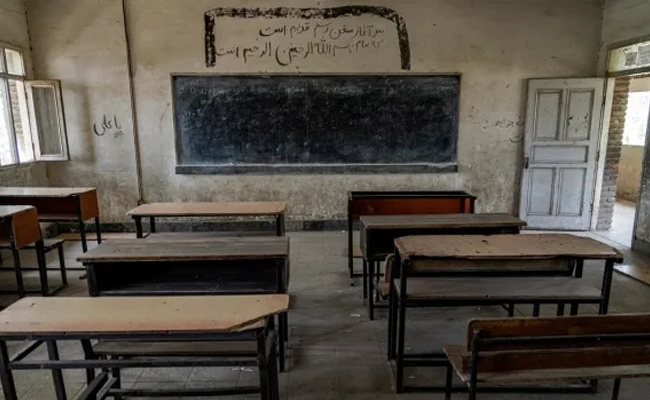
Islamabad (AP): The Taliban's "abusive" educational policies are harming boys as well as girls in Afghanistan, according to a Human Rights Watch report published Wednesday.
The Taliban have been globally condemned for banning girls and women from secondary school and university, but the rights group says there has been less attention to the deep harm inflicted on boys' education.
The departure of qualified teachers including women, regressive curriculum changes and the increase in corporal punishment have led to greater fear of going to school and falling attendance.
Because the Taliban have dismissed all female teachers from boys' schools, many boys are taught by unqualified people or sit in classrooms with no teachers at all.
Boys and parents told the rights group about a spike in the use of corporal punishment, including officials beating boys before the whole school for haircut or clothing infractions or for having a mobile phone. The group interviewed 22 boys along with five parents in Kabul, Balkh, Herat, Bamiyan and other communities in eight provinces.
The Taliban have eliminated subjects like art, sports, English and civic education.
"The Taliban are causing irreversible damage to the Afghan education system for boys as well as girls," said Sahar Fetrat, who wrote the report. "By harming the whole school system in the country, they risk creating a lost generation deprived of a quality education."
Students told Human Rights Watch that there are hours during the school day when there are no lessons because there is a lack of replacement teachers. So they said they do nothing.
Taliban government spokesmen were not available for comment on the report.
The Taliban have barred women from most areas of public life and work and stopped girls from going to school beyond the sixth grade as part of harsh measures they imposed after taking power in 2021.
According to the U.N. children's agency, more than 1 million girls are affected by the ban, though it estimates 5 million were out of school before the Taliban takeover due to a lack of facilities and other reasons.
The ban remains the Taliban's biggest obstacle to gaining recognition as the legitimate rulers of Afghanistan. But they have defied the backlash and gone further, excluding women and girls from higher education, public spaces like parks and most jobs.
The new report suggests that concerned governments and U.N. agencies should urge the Taliban to end their discriminatory ban on girls' and women's education and to stop violating boys' rights to safe and quality education. That includes by rehiring all women teachers, reforming the curriculum in line with international human rights standards and ending corporal punishment.
"The Taliban's impact on the education system is harming children today and will haunt Afghanistan's future," Fetrat said. "An immediate and effective international response is desperately needed to address Afghanistan's education crisis."
Let the Truth be known. If you read VB and like VB, please be a VB Supporter and Help us deliver the Truth to one and all.
4 held for sexually assaulting woman, girl on moving bus after social media alert in UP's Agra

Agra (UP) (PTI): Four people were arrested, after a prompt response by police following a social media alert, for allegedly sexually assaulting a woman and a girl inside a moving bus here, officials said on Tuesday.
According to an official police statement, at 12:27 am on April 27, information was received on the social media platform X about an incident of sexual assault on a bus travelling from Kanpur to Ahmedabad, which was approaching Namner crossing in Agra.
Acting under the direction of Police Commissioner Deepak Kumar, the Agra Police social media team immediately alerted the Rakabganj police station within minutes and coordinated with the victims to confirm the incident and obtain the exact location, it stated.
Police teams launched intensive checking at Namner crossing and intercepted the bus as it reached the spot. The four accused involved in the incident were apprehended on the spot, and legal action was initiated against them, the statement said.
The police said the swift response and coordination between the social media team and field units ensured timely action, bringing relief to the victims and other passengers, who expressed gratitude towards the police, it added.