Tamil Nadu, UK launch Heat Resilience Centre to tackle rising extreme heat conditions
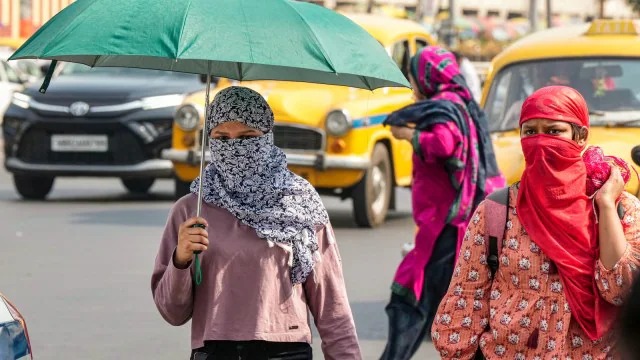
Chennai(PTI): Tamil Nadu government and the United Kingdom government on Friday jointly launched a "Heat Resilience Centre" for the state, aimed at strengthening the capacity to address rising extreme heat conditions.
A Letter of Intent (LoI) was signed between Additional Chief Secretary, Environment, Climate Change and Forests Department, Supriya Sahu and Seema Malhotra MP, Parliamentary Under-Secretary of State, Government of the United Kingdom, according to a statement.
The Heat Resilience Centre would serve as Tamil Nadu's nodal institution to coordinate heat-risk management across sectors.
It would establish a scientific and institutional governance framework, build technical capacity across departments, including health and urban development, among others.
The centre would also generate evidence, climate data and policy-relevant tools. It would also support city and district-level heat action planning, an official release said on Friday.
The initiative is supported through the UK's flagship Climate Action for a Resilient Asia (CARA) programme, and it is being implemented in partnership with the United Nations Environment Programme and the World Resources Institute. The programme would run till September 2026.
With this initiative, Tamil Nadu has become one of India's first states to create a dedicated institutional mechanism to address extreme heat, the release said.
Commenting on the occasion, Supriya Sahu said, "Accurate heat maps and clearly defined heat-risk zones should be an essential foundation for climate readiness in the State. Tamil Nadu is taking a science-first approach to identify heat risk zones in every city, so that planners, health systems, and local bodies know exactly where vulnerabilities lie."
"With high-resolution satellite data and ground sensors, we should be able to map heat the way we map floods or air pollution. This will enable us to redesign neighbourhoods, guide construction, strengthen ventilation corridors and create pockets of thermal safety," she added.
Seema Malhotra MP, the Parliamentary Under-Secretary of State, Government of the United Kingdom, said, "Extreme heat is one of the most urgent climate challenges we face. Without targeted action, the impacts of heat stress will continue to grow, affecting the lives and livelihoods of millions of people across the region."
"The United Kingdom is proud to partner with Tamil Nadu in this pioneering effort. The state has already demonstrated visionary leadership by being the first Indian state to establish a Green Climate Fund and recognise heatwaves as a state-specific disaster," Malhotra said.
"Today's launch of the Heat Resilience Centre marks an important milestone in this leadership journey," she added.
Let the Truth be known. If you read VB and like VB, please be a VB Supporter and Help us deliver the Truth to one and all.
Mamata’s decision not to quit part of her protest against Centre, EC: Raut
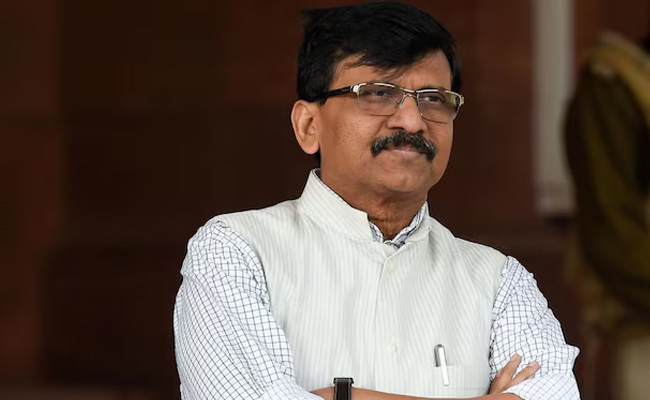
Mumbai (PTI): Shiv Sena (UBT) leader Sanjay Raut on Wednesday backed West Bengal Chief Minister Mamata Banerjee’s decision not to quit after her defeat in the assembly polls, calling it a part of her protest against the Centre and the Election Commission of India.
Talking to reporters, Raut asserted that it is necessary to unite against the “dictatorship of the Centre and partisan behaviour of the Election Commission”. He said the poll body has become “slaves” of the Centre.
The Opposition has to decide whether it has to contest the polls or not, he said.
“Mamata Banerjee is not resigning is part of her agitation against the government (Centre), the Election Commission (EC) and a series of acts against democracy,” Raut said.
It has to be seen what direction the agitation takes, he added.
Alleging that the West Bengal assembly poll verdict was “not a people's mandate but a conspiracy”, Banerjee on Tuesday refused to resign as chief minister.
The BJP sealed a landslide victory with 207 seats in the 294-member assembly, ending the TMC’s uninterrupted 15-year rule. Banerjee dismissed the outcome as “engineered” and asserted that her party was fighting the Election Commission, not the BJP. The TMC could only manage 80 seats.
In a post on Facebook, Raut said Banerjee’s decision not to quit is fully justified. He also sought to draw a parallel with the 2022 Maharashtra political crisis.
The then Chief Justice of India had observed during hearings on petitions seeking the disqualification of rebel MLAs of the undivided Shiv Sena that Uddhav Thackeray, who headed the party at the time, could have been reinstated as chief minister had he not resigned, Raut said.
The Rajya Sabha MP said Sena (UBT) chief Uddhav Thackeray had called up Banerjee after the polls and extended support. Almost all INDIA bloc leaders have called Banerjee and extended their support to her.
“We have to come together if we have to unite against the dictatorship of the Centre and the partisan behaviour of the EC or the way the poll body has become slaves of the government,” Raut said.
He claimed that even many in the government do not agree with the “degradation of democracy”.