"Tamil Thai Vazhthu" is prayer song, not Anthem: Madras HC
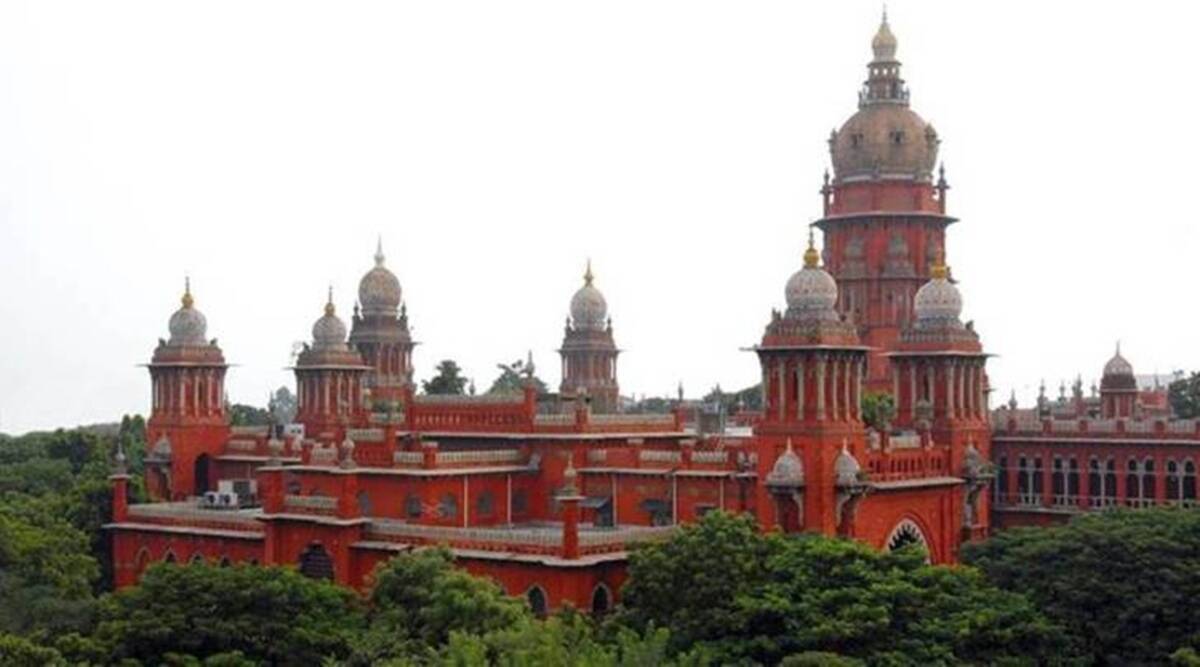
Madurai, Dec 10: The 'Tamil Thai Vaazhthu', an invocation, is only a prayer song and not a National Anthem and hence, there is no need for every one to remain in standing posture when it is rendered, the Madras High Court bench here has ruled.
Justice G R Swaminathan gave the ruling recently while quashing an FIR registered against "Nam Tamilar Katchi" (NTK) functionaries by the Remeswaram police in Ramanathapuram district, in 2018.
The then Tamil Nadu Governor Banwarilal Purohit released a Tamil-Sanskrit dictionary at a function held in Music Academy, Chennai in the presence of the Pontiff of the Kanchi Kamakoti Peetam Sri Vijayendra Saraswathi on January 24, 2018. When the invocation song to Mother Tamil, "Tamil Thai Vaazhthu" was played, the seer remained seated and this triggered considerable outrage and debate.
Kan Ilango, now associated with NTK and then part of "Tamilar Desiya Munnani", and his men entered the branch of the Kanchi Mutt in Rameswaram, shouting slogans, condemning the Shankaracharya. They allegedly entered the Mutt premises wearing footwear.
When the Mutt manager protested, he was criminally intimidated. Hence, a case was registered against them for offences under various sections of the IPC including rioting and criminal intimidation.
Hence, the present criminal original petition from Ilango, challenging the FIR.
Justice Swaminathan noted that Sec. 3 of the Prevention of Insults to National Honour Act, 1971 states whoever intentionally prevents the singing of the National Anthem or causes disturbance to any assembly engaged in such singing shall be punished with imprisonment which may extend to three years, or with fine, or with both.
Article 51A(a) of the Constitution mandates it shall be the duty of every citizen of India to respect the National Flag and the National Anthem.
When three school children who were adherents of Jehovah's Witnesses, a Christian denomination, refused to sing the National Anthem, they were expelled from the school, in Kerala. The matter reached the Supreme Court, which struck down the expulsion and directed their re-admission in the school. The Supreme Court had held that the children while refusing to sing had stood up respectfully, the judge said.
It was noted there is no provision of law which obliges anyone to sing the National Anthem. The Supreme Court judges did not think it is disrespectful to the National Anthem if a person who stands up respectfully when the National Anthem is sung, does not join the singing. After a discussion regarding the right to freedom of conscience and freedom to profess, practice and propagate religion the court concluded our tradition teaches tolerance; our philosophy preaches tolerance; our Constitution practices tolerance; let us not dilute it.
Allowing the petition, the Madras HC also pointed out that there is no statutory or executive order requiring the attendees to stand up when Tamil Thai Vazhthu is sung. It was not a National Anthem. But highest reverence and respect ought to be shown to Tamil Thai Vaazhthu. It is true that the members of the audience conventionally stand up whenever Tamil Thai Vaazhthu is sung. But the question is whether this is the only mode in which respect can be shown.
When we celebrate pluralism and diversity, insisting there can be only one way of showing respect, it reeks of hypocrisy. One should not forget that a Sanyasi occupies a special place in the social and cultural life. Emperors and Kings have prostrated before Sanyasis and Fakirs. In the epics whenever a Sanyasi entered the royal court, the King will step down from his throne and pay his respects. On becoming a Sanyasi, the person suffers a civil death. He must be taken to have a re-birth.
A Sanyasi primarily leads a life of piety. When in prayer, he is invariably found in a meditative posture. Since Tamil invocation is a prayer song, a Sanyasi is certainly justified in sitting in a state of meditation. In the instant case, the pontiff is seen sitting in a Dhyana (meditative) posture with his eyes closed. It was his way of expressing his reverence and respect for Mother Tamil, the judge said and also set aside the case pending before the Rameswaram police station.
Let the Truth be known. If you read VB and like VB, please be a VB Supporter and Help us deliver the Truth to one and all.
Real Madrid fines Valverde and Tchouaméni half a million euros each for altercation

Barcelona (AP): Real Madrid slapped players Federico Valverde and Aurélien Tchouaméni with half-a-million-euro ($588,000) fines on Friday for their altercation during practice.
The massive fines came a day after the midfielders tussled when the team trained. Valverde said in a post on social media on Thursday that no punches were thrown. But Valverde knocked his head on a table and he suffered a small cut that required a brief hospital visit.
On social media, Valverde initially called it a “meaningless fight” with a teammate and said “everything has been blown out of proportion."
His employers, however, considered it a significant enough breach of team discipline to nail both Valverde and Tchouaméni with fines that bite even the bank account of a top soccer player. The half-a-million euro penalties reflect the reputational damage the club was enduring in a chaotic end to a disappointing season.
In a statement, the 15-time European champion said its disciplinary action was concluded after both players expressed to the club “their complete remorse for what happened and apologized to one another.”
Madrid added they also apologized to their teammates, the coaching staff and club supporters, as well as showing their willingness to accept whatever disciplinary action the club deemed “opportune.”
Tchouaméni was back training with Madrid on Friday, two days before they play at Barcelona in a clasico. Madrid has to win otherwise Barcelona will be crowned La Liga champion.
After being notified of the fine, he posted a public apology to the club and its fans on social media.
“What happened this week in training is unacceptable,” Tchouaméni wrote. "I say this while thinking about the example we are expected to set for young people, whether in football or at school.
“Above all, I am sorry for the image we projected of the club.”
Valverde was not at practice due to the head knock.
Both players are set to play in the World Cup next month, with Tchouaméni playing for France and Valverde for Uruguay.
Chaotic end to a poor season
===================
The run-in between the players, who for seasons have played side by side in Madrid's midfield, came after they argued this week in previous training sessions. But tempers boiled over on Thursday. Spanish media was rife with reports that the players previously disagreed over the club's decision to let coach Xabi Alonso go after just months on the job.
It was not the only altercation involving Madrid players during training this week. Álvaro Carreras confirmed he was in a “minor” incident with a teammate. Spanish media said he and fellow defender Antonio Rüdiger got into a scuffle.
Álvaro Arbeloa, the coach who was promoted from Madrid's reserve team when Alonso was fired in January, will face tough questions on what went wrong inside the changing room when he gives a press conference on Saturday ahead of the clasico at Camp Nou.
Madrid is facing a second consecutive campaign without a major trophy amid rumors in the Spanish media that club president Florentino Pérez is considering bringing back Jose Mourinho to straighten out his underperforming team.