Teachers start relay hunger strike to protest job loss, police action
Kolkata (PTI): A section of teachers who lost their jobs following a Supreme Court judgment which held that the whole appointment process was tainted, on Thursday began a relay hunger strike outside the West Bengal School Service Commission (SSC) office in protest over the issue.
Joining the protesters, BJP MP Abhijit Gangopadhyay who is a former judge of the Calcutta High Court, blamed the state administration and its wings for their plight.
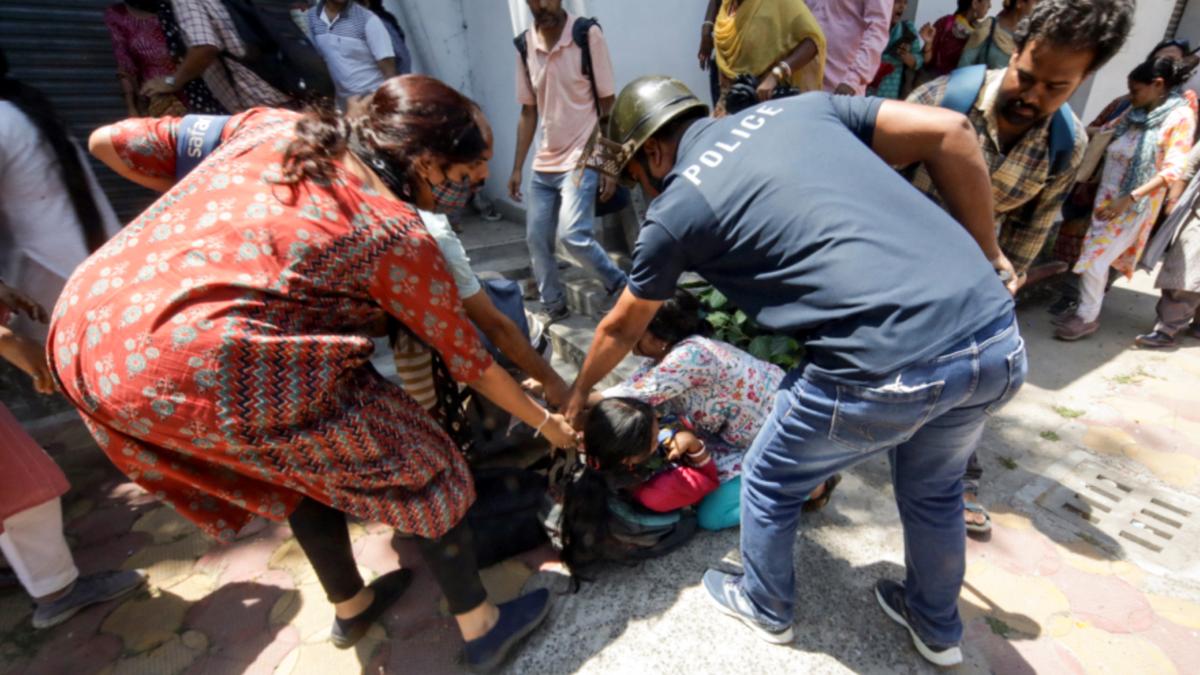
The teachers and other staff who lost their jobs said that they were also protesting police action against their compatriots at the district inspector (DI) of schools' office at Kasba in south Kolkata on Wednesday.
"We started a relay hunger strike agitation with one teacher at the beginning and will soon chalk out further programme to protest the issue," one of the protesters told reporters outside the SSC office at Salt Lake here.
The agitating teachers have been holding a sit-in outside the SSC office building 'Acharya Sadan' since Wednesday night to protest the loss of jobs and police action against their compatriots.
The protesters alleged they were subjected to baton-charge and were even kicked and shoved around by law enforcement personnel during their agitation outside the DI office, situated beside Kasba police station of the Kolkata Police.
Noting that the police have lodged cases against the protesting teachers over Wednesday's protest at Kasba, Gangopadhyay said that this should not have been done.
"Cases have been lodged against innocent teachers who lost their jobs for the illegal acts of others," the BJP MP told reporters.
Maintaining that he had not gone to meet Education Minister Bratya Basu on Wednesday in protest against the police action, he said that the BJP leadership was with him in his decision.
Gangopadhyay said that he, along with former Rajya Sabha MP Rupa Ganguly, came to the protest site at Acharya Sadan to express solidarity with the teachers and other staff who lost their jobs.
Gangopadhyay, as a judge of the Calcutta High Court, had ordered a CBI investigation in November 2021 into alleged irregularities in the recruitment process.
He had also ordered the termination of more than 25,000 jobs of teaching and non-teaching staff in West Bengal government-run and -aided schools after finding irregularities in the process.
This order was upheld by a division bench of the high court and thereafter by the Supreme Court.
The Supreme Court on April 3 upheld a 2024 Calcutta High Court judgment annulling the recruitment of 25,753 teaching and non-teaching staff appointed through a recruitment drive by SSC in 2016, terming the entire selection process "vitiated and tainted".
Those who were rendered jobless claimed that the reason behind their plight was the inability of the SSC to differentiate between the candidates who secured employment through fraudulent means and those who did not.
The Central Bureau of Investigation (CBI) and the Enforcement Directorate (ED) arrested former West Bengal education minister Partha Chatterjee and some others, who held positions in the state's SSC when the irregularities in the recruitment process took place.
Let the Truth be known. If you read VB and like VB, please be a VB Supporter and Help us deliver the Truth to one and all.
Bhojshala case: Disputed structure built from remains of pre-existing temples, claims ASI
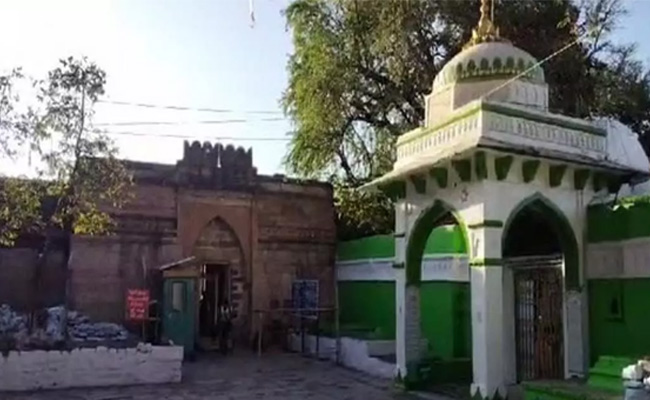
Indore (PTI): The ASI has told the Madhya Pradesh High Court that a massive structure dating back to the Paramara kings' rule existed at the disputed Bhojshala temple-Kamal Maula mosque complex, and the current structure was built from the remains of temples.
The Archaeological Survey of India (ASI) made the claim on Tuesday based on its 98-day scientific survey and over 2,000-page report.
The Hindu community considers Bhojshala a temple dedicated to Vagdevi (Goddess Saraswati), while the Muslim side claims the monument as the Kamal Maula Mosque. The disputed complex is protected by the ASI.
During the hearing before Justices Vijay Kumar Shukla and Alok Awasthi of the HC's Indore bench, Additional Solicitor General Sunil Kumar Jain, representing the ASI, presented a detailed account of the scientific survey conducted two years ago at the complex.
Referring to the ASI's survey report, he said, "Retrieved architectural remains, sculptural fragments, large slabs of inscriptions with literary texts, Nagakarnika inscriptions on pillars, etc, suggest that a large structure associated with literary and educational activities existed at the site. Based on scientific investigations and archaeological remains recovered during the investigations, this pre-existing structure can be dated to the Paramara period."
It can be said that the existing structure was made from the parts of earlier temples, based on scientific investigations, survey and archaeological excavations conducted, study and analysis of retrieved finds, study of architectural remains, sculptures, and inscriptions, art and sculptures, Jain said quoting the report.
Summarising the report, he also drew the court's attention to the fact that the archaeological study identifies that many architectural components, such as pillars and beams, were originally part of temple structures before being repurposed for a mosque.
"The evidence of this transition includes Sanskrit and Prakrit inscriptions that were damaged or hidden, alongside sculptures of deities and animals that were often mutilated or defaced," Jain contended.
The report also states that "all Sanskrit and Prakrit inscriptions are older than the Arabic and Persian inscriptions, indicating that users or engravers of the Sanskrit and Prakrit inscriptions occupied the place earlier".
In light of the Muslim side's earlier objections, the bench wanted to know why there were some discrepancies in the ASI's responses regarding the status of the disputed complex in the cases filed over the years.
The Additional Solicitor General argued that earlier studies of the complex involved only officials, while the current survey involved scientists and the use of advanced technologies such as Ground Penetrating Radar (GPR).
The hearing in the Bhojshala case will continue on Wednesday.
The high court has been regularly hearing four petitions and one writ appeal regarding the religious nature of the Bhojshala temple-Kamal Maula mosque complex since April 6.