Telangana bus accident: Conductor side passengers survived, driver side killed, recalls survivor
_vb_45.jpeg)
Hyderabad (PTI): Most passengers seated behind the bus driver were killed, while those behind the conductor survived the deadly accident in Telangana that claimed 19 lives, one of the survivors said on Monday.
Recalling the horrific incident, the survivor said he was dozing in the bus when a loud thud jolted him awake, leaving him half-buried in gravel.
“Several people were buried under the gravel. The tipper lorry came from the opposite direction. I was seated on the left side of the bus. We managed to climb out, but those who were sitting behind the driver couldn’t make it, some of them died. I was seated three rows behind the conductor,” he told the media.
He further said he opened a window and escaped, with six others following. Later, another person broke the window panes to free more passengers.
The accident erased entire generations and shattered many families.
According to Sheikh Amer, his friend’s wife Saleha Begum (19), her father Sheikh Khalid Hussain (50) and her 41-day-old baby girl, Zahera Fathima, all perished.
The family was returning to Hyderabad to celebrate the baby's birth after showing the newborn to relatives in Tandur.
“Saleha was returning to the city after showing her newborn to relatives in Tandur. None of us imagined that joy would turn to grief so suddenly,” Sheikh Amer told PTI videos.
Saleha’s husband, Waheed Hussain, who drives a truck for a living, was away on duty when the tragedy struck.
Khalid Hussain was the sole breadwinner of the family, he said and urged the government to lend a helping hand to the bereaved family.
Similarly, tragedy struck a family of Tandur town in Ranga Reddy district in Telangana as it lost three daughters in the accident.
Nandini, Saipriya and Tanusha were killed in the accident, leaving the family distraught.
The trio were studying in college in Hyderabad.
Ambika, mother of the girls, wept inconsolably at the government hospital at Chevella, where the bodies were taken following the accident.
“These three daughters are going to Hyderabad. They are studying there.they wanted to yesterday itself. but they did not go. They should have gone yesterday itself,” Ambika, mother of children- one son and four daughters told PTI Videos.
A teenage survivor, Ashok, who suffered minor injuries, recounted the horrifying scene of his father's death.
Ashok and his father, Hanumantha (45), boarded the bus at Kodangal to travel to a hospital in Hyderabad for his ear problem.
"My father was sitting next to me. After the tipper hit the bus. Several people fell on my father and also huge quantities of gravel."
Ashok was later saved after some people broke open the window.
A doctor at the government hospital in Chevella said the accident victims suffered fractures, facial, abdominal and leg injuries.
The injured persons were undergoing treatment, including administration of IV fluid, TT injections and referred to major state-run hospitals in Hyderabad.
According to TV visuals, half the bus was filled with gravel, trapping passengers inside.
The authorities deployed heavy earth-moving equipment to clear the wreckage of the ill-fated bus.
Chevella Inspector Sridhar sustained minor injuries during a rescue operation after an excavator ran over his leg, a police official said.
A senior official of the Transport Department said the tipper has the capacity to carry 35 tons of material. However, they are verifying if it was overloaded.
Let the Truth be known. If you read VB and like VB, please be a VB Supporter and Help us deliver the Truth to one and all.
No unannounced load shedding in Kerala, outages due to overload, says Minister
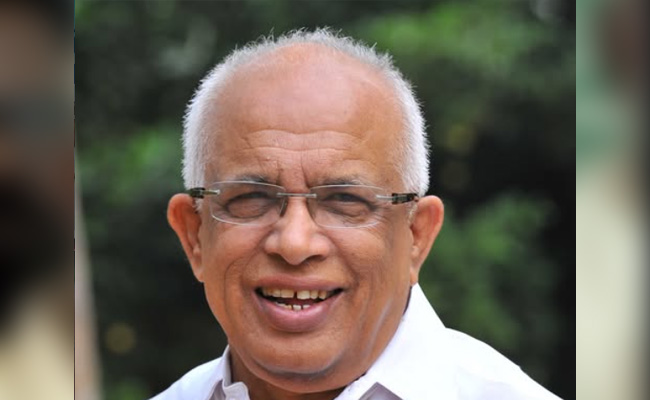
Palakkad (PTI): Kerala Electricity Minister K Krishnankutty on Saturday said there was no unannounced load shedding in the state, attributing recent power interruptions to temporary overload caused by high consumption.
Clarifying concerns raised from various parts of the state, the minister said the disruptions are not deliberate but occur when demand peaks, particularly between 10 pm and 11 pm.
"It is not being done intentionally. Power consumption has risen sharply, and when there is excessive and indiscriminate usage, the system experiences overload, leading to natural supply interruptions," he told reporters here.
His remarks come amid complaints that several areas have been witnessing frequent power cuts, often lasting around 15 minutes and occurring multiple times during the night.
Krishnankutty said the state's power demand has crossed 6,195 MW, putting pressure on the supply system. He added that around 70 per cent of Kerala's electricity is procured from outside, and existing power banking arrangements have been exhausted.
"We have approached the Regulatory Commission seeking permission to purchase more power. However, this will come at a higher cost," he said.
The minister said the government is trying to avoid increasing electricity tariffs and urged consumers to exercise restraint in usage to help manage the situation.
Responding to opposition criticism over the ruling LDF's earlier claims of a decade without power cuts, he said the current situation is not unique to Kerala.
A power crisis is emerging across the country, he said, and sarcastically asked the Opposition to take note of the role of natural factors in this.
Krishnankutty expressed confidence that the situation would improve within two days, while cautioning that long-term energy security would depend on enhancing in-state power generation.
He also warned that future generations could face serious challenges if adequate electricity production capacity is not developed within Kerala.