Three JeM terrorists killed in encounter in J-K's Pulwama
Srinagar(PTI) Three Jaish-e-Mohammad (JeM) terrorists, including one who was behind the killing of BJP worker Rakesh Pandita in June, were gunned down in an encounter with security forces in Jammu and Kashmir's Pulwama district on Saturday, officials said.
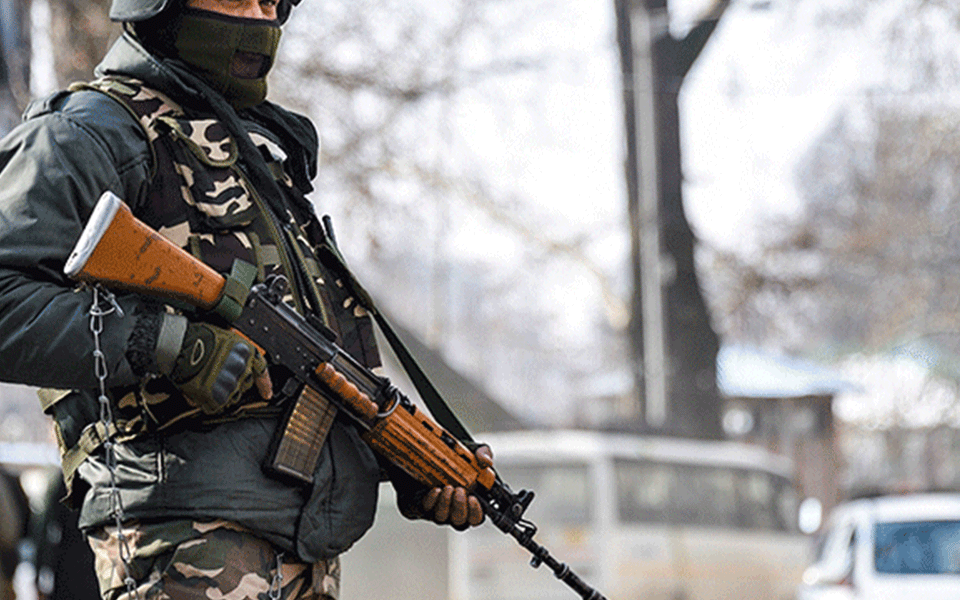
Security forces personnel had launched a cordon-and-search operation in the upper reaches of the forest area of Nagbaeran Tral in the south Kashmir district following inputs about the presence of ultras there, they said.
The officials said the search operation turned into an encounter when the terrorists fired upon the security personnel, who retaliated.
"In the ensuing gunfight, three terrorists affiliated with JeM outfit were killed," they said.
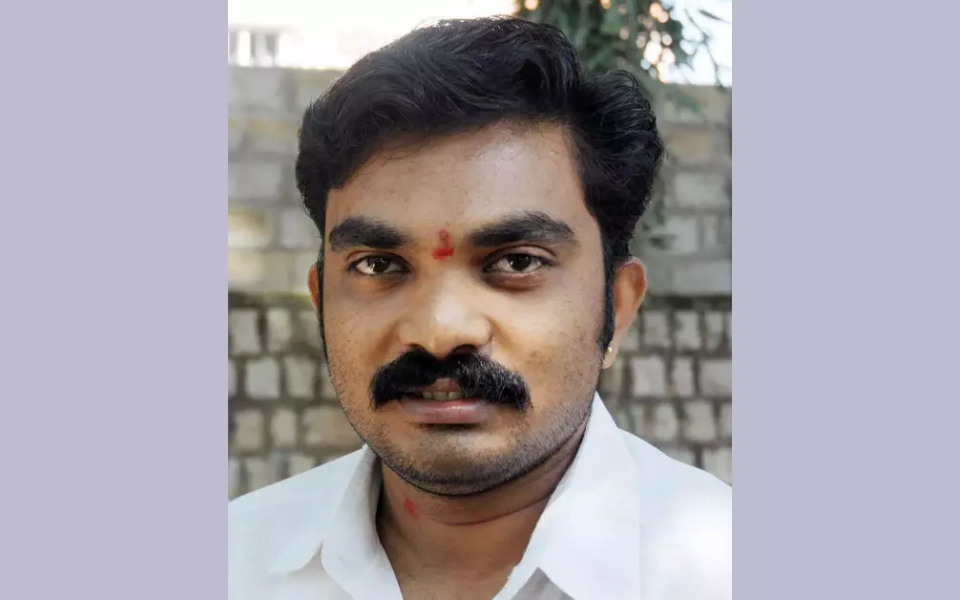
Inspector General of Police (IGP), Kashmir, Vijay Kumar said one of the slain ultras has been identified as Wakeel Shah.
"Shah is one of the terrorists included in the recently released list of top 10 terrorists wanted by the police. He was involved in the killing of BJP leader Rakesh Pandita. It is a huge success," the IGP told reporters at a press conference at the Army's Victor Force headquarters at Awantipora.
GoC, Victor Force, Major Gen Rashim Bali also addressed the media.
Kumar said there was no collateral damage in the operation.
"It was a very difficult operation and concluded without any collateral damage. We cordoned off the target area, offered them surrender, but they fired and were killed in retaliation," he said.
The IGP said the terrorists used to exploit the families of the Gujjar community where they were hiding.
In a stern message to the ultras, he said there was no hiding place for them.
I want to tell the terrorists and their families that do not think that you will hide in the mountains after killing civilians and no one will do anything. Our force is professional and we will track you there also and neutralise you like we have been, Kumar said.
Major Gen Bali said the militants were operating in the area for a long time.
A solid message from us has gone out through this operation that there is no place for them, not even in the forests. We will get information about them and we will neutralise them. We will continue eliminating them by launching suitable operations whenever there is any information, he said.
The GoC said two AK 47 rifles, an SLR, a UBGL and a huge amount of ammunition were recovered from the encounter site.
Asked if there were inputs on the presence of more RPGs in the valley after it was recovered from the site of an encounter in Kulgam on August 13 where Pakistani militant Usman was killed, IGP Kumar said the security forces have no information about the presence of such a weapon in the hinterland.
We have activated our intelligence and will neutralise any such threat if there is. The forces are ready and the counter-insurgency grid has been made stronger, and if there is any such threat we will neutralise that timely, he added.
Replying to another question, Kumar said so far, only one foreign terrorist was killed this year who had recently infiltrated .
The foreign terrorist killed in Bandipora was a recent infiltration, all the others were either six months ago or one-and-a-half years ago, he said.
Let the Truth be known. If you read VB and like VB, please be a VB Supporter and Help us deliver the Truth to one and all.
Lakhimpur Kheri violence case: SC expresses disappointment over non-production of witnesses in trial
New Delhi (PTI): The Supreme Court on Friday expressed disappointment over the non-production of witnesses in the ongoing trial against Ashish Mishra, son of former Union minister Ajay Mishra, and others in the 2021 Lakhimpur Kheri violence case.
A bench of Chief Justice Surya Kant and Justice Joymalya Bagchi said the status report filed before it by the Uttar Pradesh government has not assigned any reason whatsoever for the non-production of witnesses.
It noted that no witnesses have been examined in the trial for the last two months.
"We direct the presiding judge to take lawful measures to secure the presence of witnesses," the bench said.
It asked the trial judge to make an endeavour to conclude the trial in a time-bound manner, and also to file a status report before it.
The trials in two cases related to the incident are going on before a court in Uttar Pradesh.
The bench noted that in the first case, out of 131 witnesses to be examined, 44 have been examined, 15 have been discharged and 72 are still to be produced.
In the second FIR, out of 35 witnesses, 26 have been examined and nine were left, it said.
Senior advocate Siddharth Dave, appearing for Ashish Mishra, said that as per the latest status report filed by Uttar Pradesh, 44 witnesses have been examined so far in the first FIR.
"No witnesses have been examined in the last two months," Dave said.
He argued that the last status report filed by the state in March also said that 44 witnesses had been examined.
"What have you done from March till today?" the bench asked the counsel appearing for Uttar Pradesh.
The state's counsel said that 3-4 witnesses were summoned for the recording of their deposition during the trial.
The bench said at least 7-8 witnesses should be summoned instead of three or four for a day, so that even if some of them do not turn up, the trial court could proceed with the recording of statements of those appearing before it.
The top court also wondered how official witnesses can remain absent during the trial.
"We are disappointed to note that the so-called status report does not assign any reason whatsoever for non-production of witnesses...," the bench said.
Advocate Prashant Bhushan, appearing for the relatives of the farmers who were allegedly mowed down in the incident, said the apex court will have to do something regarding the manner in which the trial was going on.
The bench noted that besides the two FIRs, another FIR was registered in October last year concerning alleged witness intimidation.
It said that, as per the state's status report, the chargesheet was filed against the main accused in that case.
The bench noted that the status report reveals that, as far as Ashish Mishra is concerned, his alleged role in the third case is still being investigated.
The top court directed the investigating officer of the third case to conclude the pending probe and ensure that the appropriate report is filed before the concerned court within four weeks.
The bench posted the next hearing in the Lakhimpur Kheri violence case for July.
On October 3, 2021, eight people, including four farmers, were killed in Tikunia in Lakhimpur Kheri district during a protest by farmers against Deputy Chief Minister Keshav Prasad Maurya's visit to the area.
Four farmers were mowed down by a sports utility vehicle. A driver and two BJP workers were then allegedly lynched by angry farmers. A journalist also died in the violence.
In one of the cases, the trial court in December 2023 framed charges against Mishra and 12 others for alleged murder, criminal conspiracy and under other penal laws in the case of the farmers' deaths, paving the way for the trial.