'Tiger state' MP lost 290 big cats in 19 years: Official
Karnataka lost tag of "Tiger State" in 2018 census
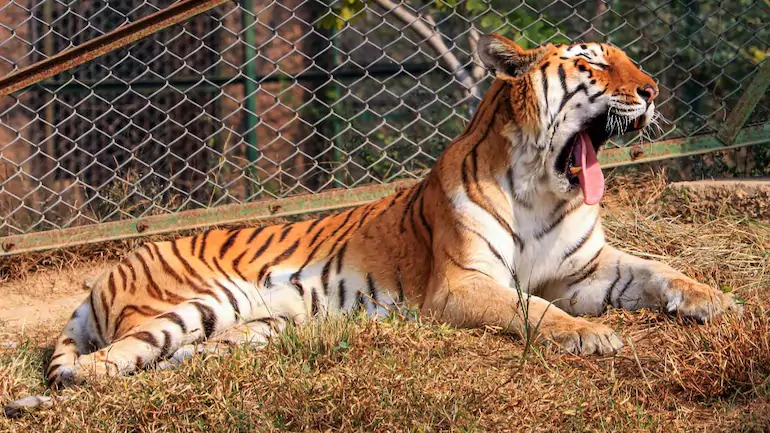
Bhopal, Nov 30: Madhya Pradesh has lost 290 tigers over the last 19 years but the central Indian state still has more than 675 tigers, including 125 cubs, in the designated reserves and in the wild, a top Forest department official said on Monday.
Claiming that the population of tigers has actually "gone up", he said Madhya Pradesh will continue to remain the "tiger state of India".
The official said only five per cent of the deaths of big cats had occurred due to poaching or in man-animal conflicts. Most of the deaths of the tigers occurred either in territorial fights or due to natural causes, he added.
"Madhya Pradesh has lost 290 tigers so far since 2002," Principal Chief Conservator of Forests (Wildlife) Alok Kumar told PTI.
However, there are 550 big cats in tiger reserves in Kanha, Bandhavgarh, Pench, Satpura, Panna and Sanjay Gandhi reserve and in the wild, he said, adding that there are 125 cubs in the parks.
Kumar said about 10 to 20 more tiger cubs might be roaming in the wild.
"They can't be captured as they might be deep inside the jungles. When they turn young and venture out, we would be able to see them," he added.
Kumar said movements of tigers were recorded through camera traps, patrolling and other means.
Asked about the deaths of 290 tigers since 2002, Kumar said, "As the number of tigers has risen, they are fighting for territorial control. We are losing 25 to 30 striped animals every year. Of them (the deceased tiger), 95 per cent were weak and old. While the remaining five per cent of (290) tigers were killed by poachers or in man-animal conflicts".
Queried on whether territories of the majestic beasts have shrunk due to encroachments, he said, "We do have an adequate area for tigers".
Kumar said there was no talk on increasing the area for the striped animals.
"The habitat of tigers needed to be protected, and for this people need to be made aware as well," he added.
Kumar said the typical lifespan of a tiger living in a reserve is 12 to 13 years.
Responding to a query, he said Madhya Pradesh will continue to remain the tiger state of India.
"The tiger state tag pulls tourists to Madhya Pradesh.
Our tourism is largely big cat-centric," said MP Wildlife Board (MPWB) member Abhilash Khandekar.
He said the state government should take utmost care to conserve its "tiger state" status so that it does not lose out on tourists and thus revenue.
"We don't have many big industries in MP. So each tiger counts for us," he said.
He said that economy of Panna region had been adversely affected in 2005 when the population of big cats dwindled in the Panna Tiger Reserve in 2005.
Earlier, MP had lost the 'tiger state' tag to Karnataka in the all India tiger estimation exercise for 2010, primarily due to alleged poaching in the Panna Tiger Reserve.
That time, MP had 257 tigers compared to 300 in Karnataka.
In the 2014 tiger census, MP slipped to no.3 position in the country with a population of 308 striped animals, after Uttarakhand (340) and Karnataka (408).
The central Indian state regained the top slot in the 2018 Census with a population of 526 tigers, two more than Karnataka.
Let the Truth be known. If you read VB and like VB, please be a VB Supporter and Help us deliver the Truth to one and all.
4 workers die after being buried under coal slurry in Jharkhand's Dhanbad
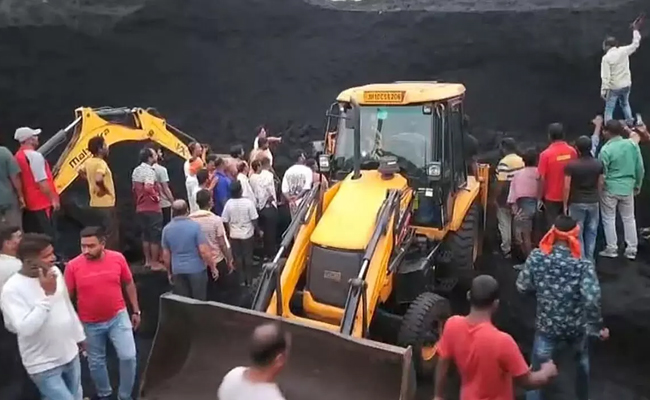
Dhanbad (Jharkhand) (PTI): At least four workers died after being buried under coal slurry in Jharkhand's Dhanbad district on Saturday, a police official said.
The incident took place at Moonidih coal washery in the command area of Bharat Coking Coal Limited (BCCL).
"Bodies of all four workers were dug out of debris during a rescue operation," Putki police station in-charge Waqar Hussain told PTI.
The incident took place when coal slurry was being loaded into trucks by workers, during which a large chunk of slurry fell and trapped several workers underneath, officials said.
The deceased have been identified as Manik Bauri, Dinesh Bauri, Deepak Bauri, and Hemlal Gope.
Meanwhile, the family members of the deceased and local villagers placed the bodies in front of the washery gate and began a protest.
They demanded compensation, jobs for dependents and action against those responsible for the incident.
Police and administration officials are trying to pacify the protesters, an official said.