TN Guv Ravi in fresh trouble, his 'Jai Shri Ram' chant in college stokes controversy
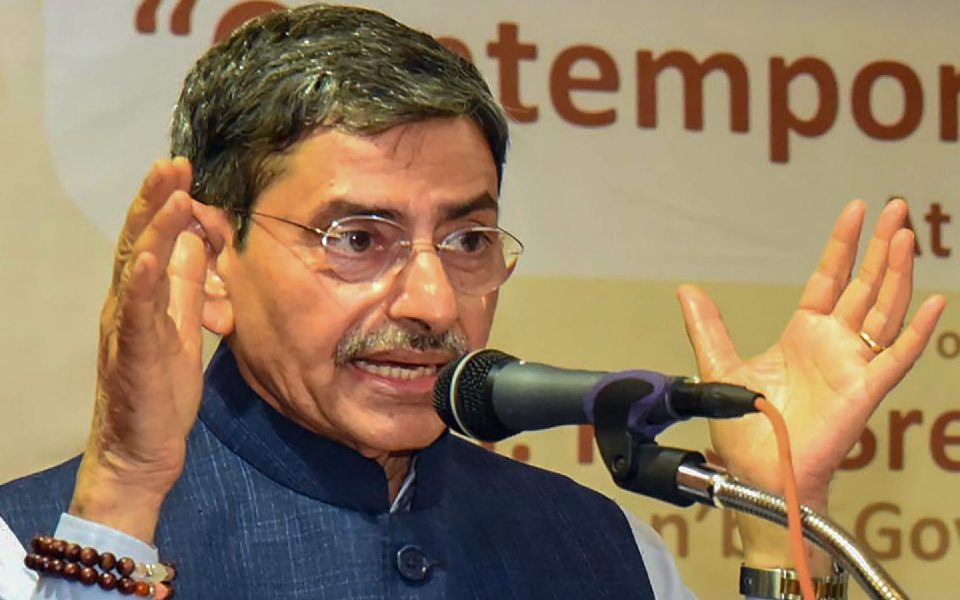
Chennai, Apr 13 (PTI): Tamil Nadu Governor R N Ravi's reported remarks asking students of a college to chant "Jai Shri Ram" have trigered a controversy with SPCSS-TN, a body of educationists, alleging he violated his oath of office and secular principles and urged President Droupadi Murmu to remove him from his post.
The State Platform for Common School System-Tamil Nadu (SPCSS-TN), said Ravi failed to abide by the Constitution, respect its ideals and institutions.
"Ravi should be removed from the office of Governor of Tamil Nadu forthwith for deliberately violating Article 159 (oath by governor) of the Constitution of India," SPCSS-TN General Secretary, PB Prince Gajendra Babu, said in a statement.
Ravi was invited by a government-aided college in Madurai as chief guest to distribute prizes to the winners in a literary contest.
Delivering his address on April 12, he had asked the students to chant the name of a God of particular religion (Jai Shri Ram) thrice.
According to the Constitution, India is a secular country, education is a secular activity and it shall be the fundamental duty of every citizen to abide by the Constitution and respect its ideals and institutions, the national flag and the national anthem and also to develop scientific temper, humanism and the spirit of inquiry and reform.
However, Ravi failed to preserve, defend and protect the Constitution by chanting the name of the God of a particular religion and asking the students to repeat the same thrice, Gajendra Babu alleged.
Instead of obeying the Governor, had the students protested against him for violating his oath, unnecessary embarrassment would have been caused to the management and staff of the college.The students in order to "protect the name of the college," passively submitted themselves to the will of the Governor.
Gajendra Babu alleged: "Ravi is illiterate as far as his knowledge of the curriculum and syllabus followed in schools and colleges in Tamil Nadu. Due to his ignorance and arrogance, he continues to propagate wrong ideas that in effect aim to disturb peace and instigate a group of people against another."
The SPCSS-TN said it hence appeals to President Murmu to remove Ravi from the office of Governor of Tamil Nadu.
Congress MP (Tiruvallur) Sasikanth Senthil said in a post on 'X': "After being slammed by the Supreme Court and blocked by the State Government, he's now resorting to stunts like making students chant ‘Jai Shri Ram’ just to irritate the system. Clearly frustrated, he’s sending a message that “Even if the courts rule against me, I will find other ways to push my agenda." It’s a dangerous mix of arrogance and defiance that undermines democratic institutions and the principles of the Constitution!
On April 8, 2025, the Supreme Court's bench of Justices J B Pardiwala and R Mahadevan said the 10 Bills withheld by Governor Ravi were deemed to have been given assent.
The court came down heavily on Governor Ravi and said him reserving 10 Bills for the consideration of the President was against constitutional provisions.
It was considered a major victory for the DMK government and a legal setback for Governor Ravi.
On April 12, Tamil Nadu government duly notified the 10 Acts in the state gazette.
SPCSS-TN is a body of educationists and educational activists following socialist principles.
Controversy does not seem to leave Tamil Nadu Governor RN Ravi. At a recent event at Thiagarajar Engineering College in Madurai, where he was invited as the chief guest, he allegedly asked students to chant 'Jai Shri Ram', while distributing prizes to the winners in a literary… pic.twitter.com/yvDIM5WylN
— The Siasat Daily (@TheSiasatDaily) April 13, 2025
Let the Truth be known. If you read VB and like VB, please be a VB Supporter and Help us deliver the Truth to one and all.
CM Siddaramaiah alleges ‘criminal conspiracy’ in Sringeri recount, vows legal action
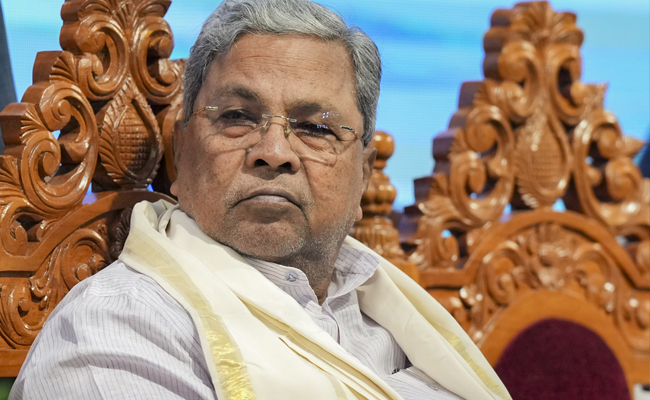
Bengaluru (PTI): Alleging a “criminal conspiracy” by BJP candidate D N Jeevaraj in the Sringeri Assembly poll recounting, Karnataka CM Siddaramaiah on Tuesday said the outcome was manipulated after valid postal ballot votes in favour of Congress leader T D Raje Gowda were tampered with during the recounting process.
Following a Karnataka High Court order on an election petition filed by Jeevaraj, challenging Raje Gowda’s election, the reverification and recounting were conducted on Saturday.
After the reverification and recount of postal ballots for the Sringeri Assembly constituency, votes polled in favour of Raje Gowda were reduced by 255, the returning officer said.
A report on the matter has been submitted to the Election Commission of India for further action, the officer added.
Congress leader Raje Gowda had won the 2023 Assembly polls from Sringeri by 201 votes, defeating his nearest rival Jeevaraj.
Addressing a press conference in Bengaluru, Siddaramaiah said the High Court had directed the recounting of postal ballots and that irregularities were noticed during the exercise conducted on May 2.
“This is a clear case of criminal conspiracy,” Siddaramaiah said, alleging that valid votes cast in favour of Raje Gowda were altered after being accepted by counting agents of all parties, including Congress, BJP, and JD(S).
He claimed that during the recounting of postal ballots, 255 votes were initially accepted as valid by all agents but were later tampered with by subordinate officials.
“There is a second mark on the votes polled in favour of Raje Gowda. They had accepted these as valid votes. Subsequently, another mark was made by officials. This is a clear case of criminal conspiracy,” he said.
When asked who was behind the alleged conspiracy, the CM replied, “It was hatched by Jeevaraj and others. It is planned.”
Siddaramaiah further alleged that the returning officer acted improperly by declaring the result despite the presence of an Election Commission observer during the recounting.
“Immediately after the counting, the returning officer announced the result. He should not have done so; this is against the law,” he said.
He pointed out that Raje Gowda had originally won by 201 votes, but after the recounting, the BJP candidate was declared the winner by 52 votes.
“The BJP has committed a criminal act of conspiracy. This is not vote chori but vote dacoity,” he alleged.
The CM said a police complaint had already been filed by Raje Gowda’s election agent, Sudhir Kumar, and emphasised the need for electoral integrity.
“We want transparency and free and fair elections. That is what our Constitution mandates,” he added.
Stating that the government would pursue legal remedies, Siddaramaiah said, “We are preparing an appeal challenging the returning officer’s announcement in a court of law.”
Responding to a separate query on elections in other states, the CM said there appeared to be an anti-incumbency factor in West Bengal, while results in Tamil Nadu were “surprising,” adding that Vijay’s party was emerging as the largest there.
Following the victory of party candidates in Bagalkote and Davanagere South, Siddaramaiah expressed confidence about future electoral prospects in Karnataka.
“Even in 2028, we will win the Assembly elections. We will come back,” the CM said.
Siddaramaiah added that he would order a forensic examination into the alleged tampering of postal ballots.