Toddler attacked, killed by leopard in Mumbai's Aarey Colony

Mumbai, Oct 24: A one-and-a-half-year-old girl was attacked and killed by a leopard in a forested area of Aarey Colony in the western suburb of Goregaon on Monday morning, police said.
Aarey Colony is a green belt of Mumbai and is located close to the sprawling Sanjay Gandhi National Park (SGNP).
The incident took place in unit number 15 of Aarey Colony around 6.30 am, when the child followed her mother who was on her way to a temple around 30 feet from their house, an official from the Aarey police station said.
A leopard suddenly appeared from the forested area and attacked the girl, leaving her seriously injured. The toddler was rushed to a hospital, where she was declared dead by doctors, he said.
"On the basis of primary information, we have registered an accidental death report (ADR) in the case and further investigation was underway," the official added.
Meanwhile, the forest department has initiated an action plan to prevent human-wildlife conflict in the area and installed camera traps to monitor movements of leopards, an official said.
A team from the Resqink Association for Wildlife Welfare (RAWW) has been called in by the forest department for assistance, he said.
The authorities have deployed a wildlife ambulance, wildlife distress response teams from the Mumbai forest department and volunteers in the area, the official said.
Rescuers, leopard experts, veterinarians and senior officials from the forest department will be stationed at Aarey Colony round the clock for the entire week, he said.
After the girl's tragic death, around a dozen camera traps have been installed to monitor the movement of leopards and other wild animals, the official said, adding volunteers are patrolling the area.
According to the forest official, since it was Diwali, many children had ventured out of their homes to burst firecrackers.
"Our staff members have been cautioning local residents and asking them to stay indoors and not allow children to go out of homes, especially during night and early morning hours, he said.
Aarey Colony, which houses tribal hamlets, has witnessed several attacks by leopards in the past.
SGNP, located in the in Mumbai Metropolitan Region, is home to leopards and other wild animals besides birds.
Let the Truth be known. If you read VB and like VB, please be a VB Supporter and Help us deliver the Truth to one and all.
Bhojshala case: Disputed structure built from remains of pre-existing temples, claims ASI
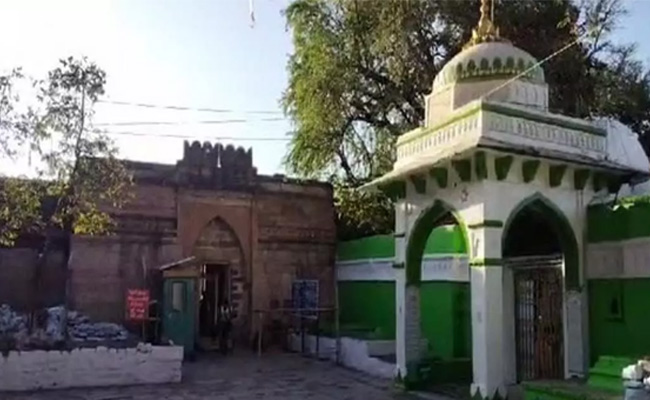
Indore (PTI): The ASI has told the Madhya Pradesh High Court that a massive structure dating back to the Paramara kings' rule existed at the disputed Bhojshala temple-Kamal Maula mosque complex, and the current structure was built from the remains of temples.
The Archaeological Survey of India (ASI) made the claim on Tuesday based on its 98-day scientific survey and over 2,000-page report.
The Hindu community considers Bhojshala a temple dedicated to Vagdevi (Goddess Saraswati), while the Muslim side claims the monument as the Kamal Maula Mosque. The disputed complex is protected by the ASI.
During the hearing before Justices Vijay Kumar Shukla and Alok Awasthi of the HC's Indore bench, Additional Solicitor General Sunil Kumar Jain, representing the ASI, presented a detailed account of the scientific survey conducted two years ago at the complex.
Referring to the ASI's survey report, he said, "Retrieved architectural remains, sculptural fragments, large slabs of inscriptions with literary texts, Nagakarnika inscriptions on pillars, etc, suggest that a large structure associated with literary and educational activities existed at the site. Based on scientific investigations and archaeological remains recovered during the investigations, this pre-existing structure can be dated to the Paramara period."
It can be said that the existing structure was made from the parts of earlier temples, based on scientific investigations, survey and archaeological excavations conducted, study and analysis of retrieved finds, study of architectural remains, sculptures, and inscriptions, art and sculptures, Jain said quoting the report.
Summarising the report, he also drew the court's attention to the fact that the archaeological study identifies that many architectural components, such as pillars and beams, were originally part of temple structures before being repurposed for a mosque.
"The evidence of this transition includes Sanskrit and Prakrit inscriptions that were damaged or hidden, alongside sculptures of deities and animals that were often mutilated or defaced," Jain contended.
The report also states that "all Sanskrit and Prakrit inscriptions are older than the Arabic and Persian inscriptions, indicating that users or engravers of the Sanskrit and Prakrit inscriptions occupied the place earlier".
In light of the Muslim side's earlier objections, the bench wanted to know why there were some discrepancies in the ASI's responses regarding the status of the disputed complex in the cases filed over the years.
The Additional Solicitor General argued that earlier studies of the complex involved only officials, while the current survey involved scientists and the use of advanced technologies such as Ground Penetrating Radar (GPR).
The hearing in the Bhojshala case will continue on Wednesday.
The high court has been regularly hearing four petitions and one writ appeal regarding the religious nature of the Bhojshala temple-Kamal Maula mosque complex since April 6.