Tulah Clinical Wellness Sanctuary set to begin operations from April 2025
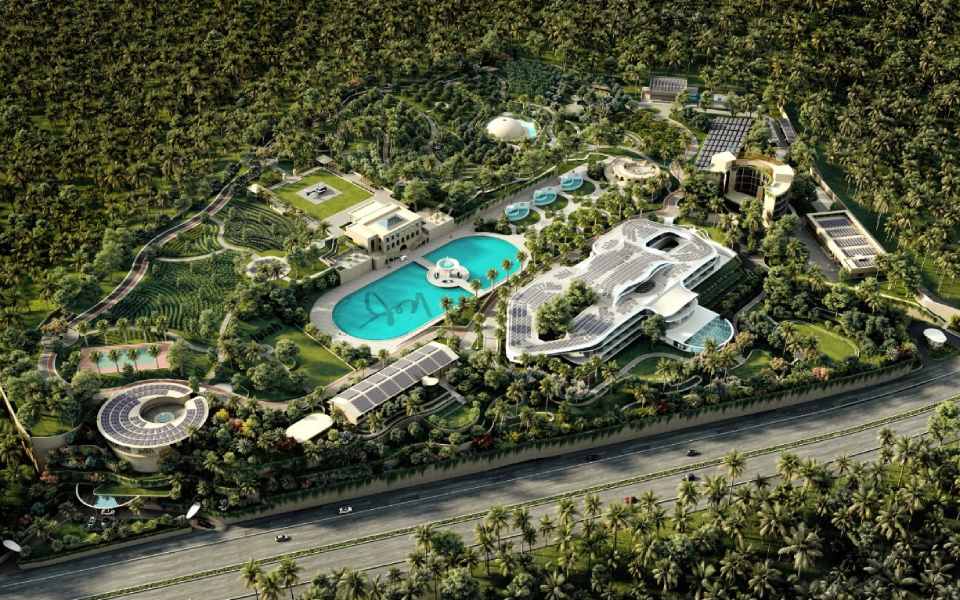
Kozhikode: The Tulah Clinical Wellness Sanctuary, a revolutionary wellness retreat combining traditional healing practices with modern medical advancements, is set to open in April 2025 in Chelembra, near Kozhikode Airport. Spread across 30 acres, this visionary project has been developed under the leadership of Faizal E. Kottikollon, founder and chairman of KEF Holdings. Built with an investment of ₹1,000 crore, Tulah aims to redefine global wellness by integrating Ayurveda, Chinese, and Tibetan medicine, yoga, meditation, sports rehabilitation, and genome-based treatments.
The sanctuary was soft-launched on February 22, attended by UAE Minister of Economic Affairs Abdulla Bin Touq Al Marri and former NITI Aayog CEO and G20 Sherpa Amitabh Kant.
Speaking about Tulah’s philosophy, Faizal Kottikollon emphasized the importance of design, nature, and mindful living. He explained that the sanctuary's architecture flows seamlessly with nature, enhancing a sense of peace and tranquility.
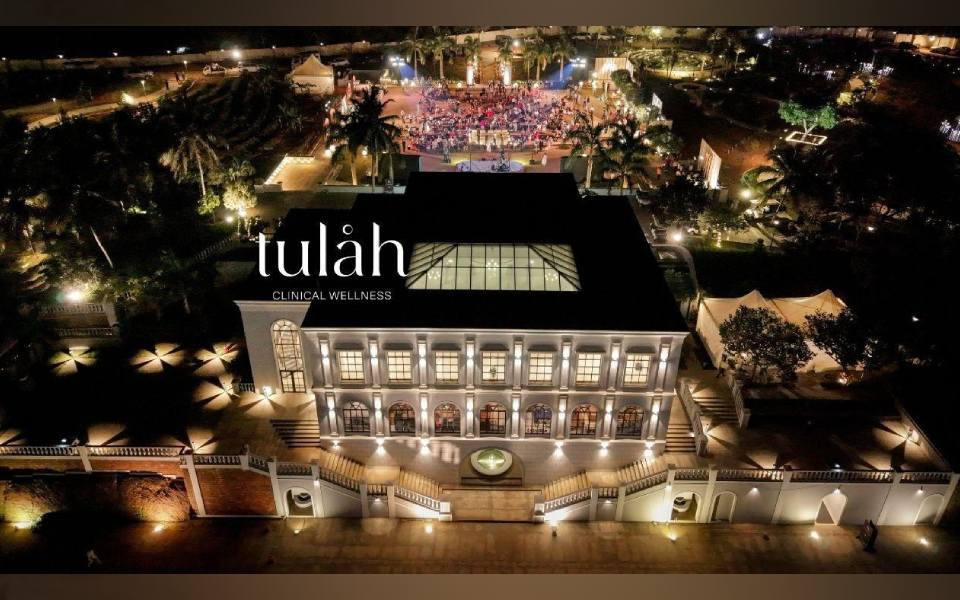
"Design plays a very important role in our lives because if you have a good flowing design, your mind is always calm. If your mind is calm, everything will be okay. That is why we chose a flowing architecture for Tulah," Faizal shared.
The sanctuary has been designed to preserve two of the oldest trees on the site, wrapping the entire structure around them without sharp corners. "When you step into Tulah, you will feel the peace. Everything is flowing, just like water. We have mountains in the background, and the architecture reflects that natural flow. That is the beauty of Tulah," he added.
Beyond physical wellness, Tulah also focuses on mental well-being, fitness, and longevity. "We, as human beings, are always looking for happiness and success, but how do we get there? That is where mindfulness, fitness, and nutrition come in. We are not compartmentalized beings—our wellness should be holistic," he explained.
Tulah also seeks to educate people on aging gracefully and increasing lifespan through better nutrition, fitness, and mindfulness. Faizal highlighted that Ayurveda, the world’s oldest medicinal system, recognized over 5,000 years ago that humans have the potential to live up to 120 years.
"Today, the average life expectancy in developed nations is around 82-83 years, while in developing nations, it is even shorter. This is largely due to lifestyle choices. Tulah will teach people how to live beyond 100 years through scientifically backed lifestyle changes," he said.
Tulah Clinical Wellness Sanctuary is designed to offer an all-encompassing healing experience, featuring 65 luxurious suites with panoramic views of the Western Ghats. It includes a dedicated sports rehabilitation center and sports medicine facilities for athletes and fitness enthusiasts.
One of Tulah’s standout innovations is its organic medicinal garden, home to around 400 medicinal plants, with plans to expand it into a large-scale medicinal forest.
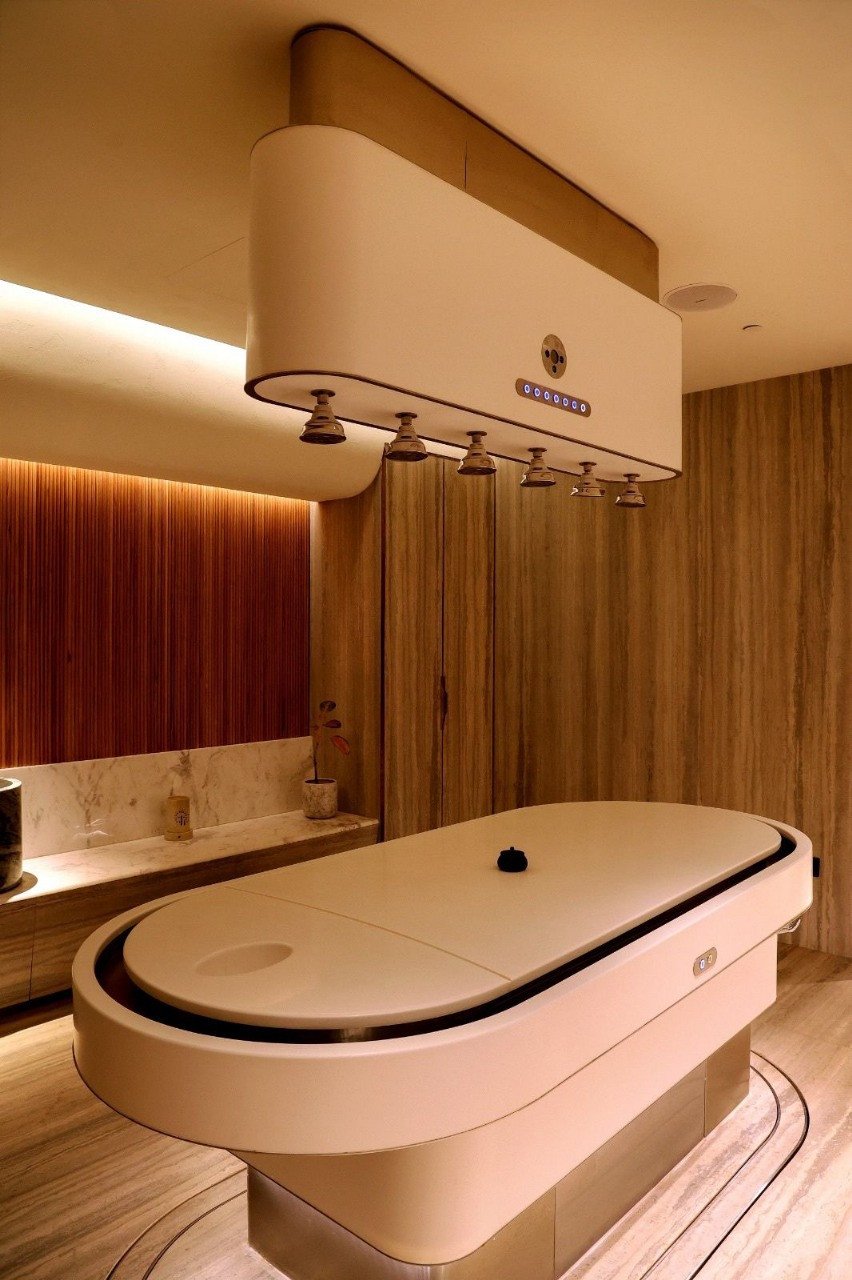
A groundbreaking feature of the sanctuary is the world’s first patented Ayurvedic oil bath bed, developed with European technical support. Unlike traditional wooden oil beds, this hygienic, scientifically advanced bed has secured patents in the European Union, the UK, and Asia.
Tulah is also pioneering genome-based treatments, offering personalized wellness programs based on an individual's genetic and microbiome analysis. These services will be made available through ‘Tulah Tech,’ an AI-powered online app.
Tulah Clinical Wellness Sanctuary is closely linked to Meitra Hospital in Kozhikode, a premier healthcare facility under KEF Holdings. This strategic partnership is expected to position Kerala as a global hub for medical value tourism, attracting international visitors seeking holistic healing and scientific wellness treatments.
Faizal Kottikollon has also announced ambitious plans to establish 100 Tulah Centers worldwide under the brand ‘Urban Tulah’. These centers, each spanning 10,000 square feet, will bring premium wellness solutions to major cities. The first Urban Tulah center is set to open in Dubai.
Faizal E. Kottikollon, the son of P.K. Ahmed, founder of Kozhikode-based Peekay Steel, has been a trailblazer in business, healthcare, and philanthropy. Alongside his wife, Shabana Faizal, he runs the Faizal & Shabana Foundation, which actively supports social and educational development initiatives.
Shabana hails from Mangaluru in Karnataka state of India. She is the only daughter of prominent businessman and socio religious leader Late B Ahmed Haji Mohiudeen who founded the prestigious BA Group of Businesses in Thumbay near Mangaluru.
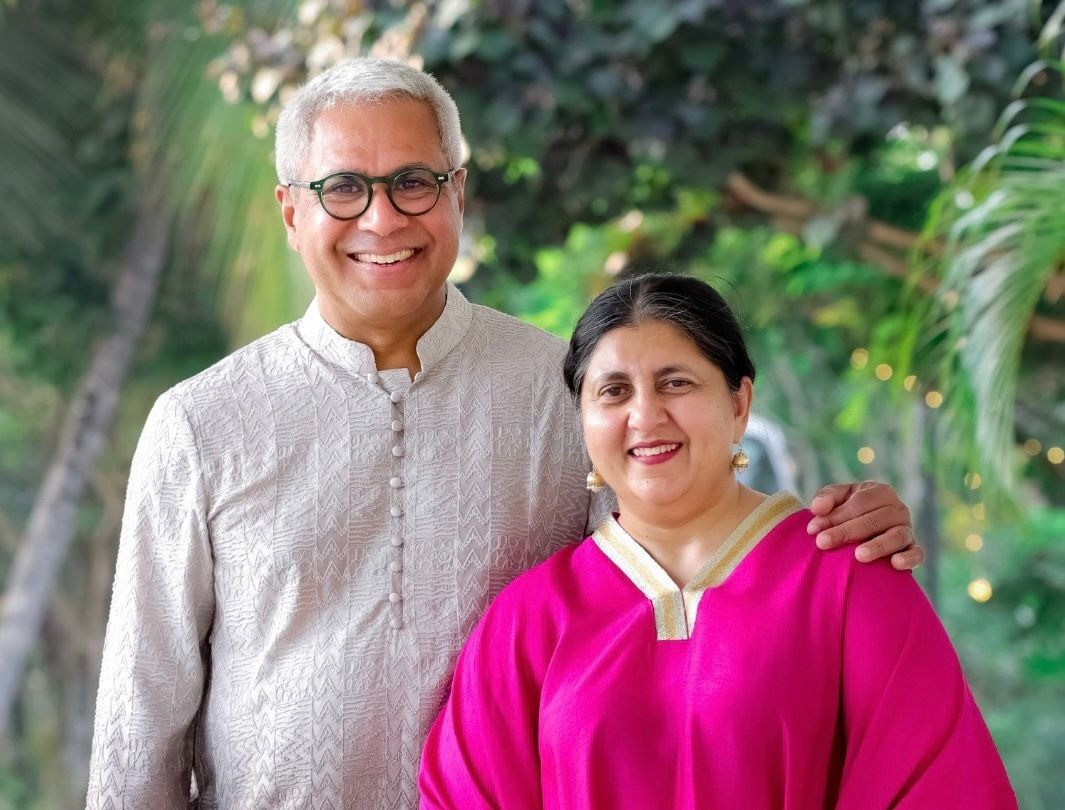
Faizal E. Kottikollon, and Shabana Faizal
Let the Truth be known. If you read VB and like VB, please be a VB Supporter and Help us deliver the Truth to one and all.
Cong claims TVK chief Vijay has sought its support for govt formation in Tamil Nadu
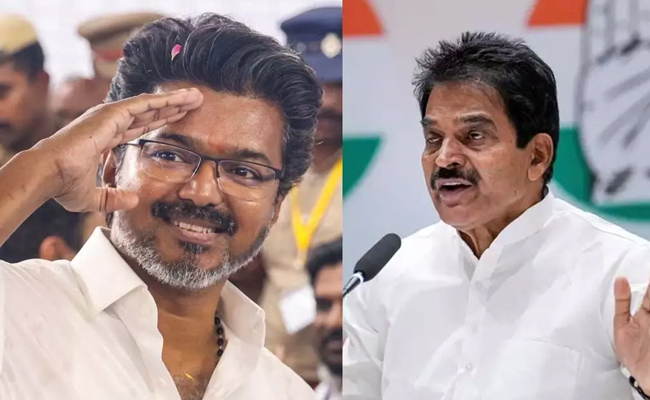
New Delhi (PTI): The Congress on Tuesday claimed that TVK chief Vijay has sought its support for government formation in Tamil Nadu and its leadership has directed the state unit to take a final decision on the matter, keeping in view the state's sentiments.
The party, which fought the assembly election in alliance with the DMK, asserted that the mandate in Tamil Nadu is for a secular government and that it is determined "not to have the BJP and its proxies run the government of Tamil Nadu in any manner".
Top Congress leaders held a meeting at party chief Mallikarjun Kharge's residence on Tuesday evening that was attended by Leader of Opposition in Lok Sabha Rahul Gandhi and Tamil Nadu in-charge Girish Chodankar, among others.
Addressing the media after the meeting, Congress general secretary, Organisation, K C Venugopal said the Congress leadership discussed the post-election scenario in Tamil Nadu.
"TVK President Thiru Vijay has requested the Indian National Congress for support to form a Government in Tamil Nadu. He has spoken about drawing inspiration from Perumthalaivar Kamaraj as well, in his political mission.
"The INC is clear that the mandate in Tamil Nadu is for a secular government that is committed to protecting the Constitution in letter and spirit. The INC is determined not to have the BJP and its proxies run the Government of Tamil Nadu in any manner," he said.
"Accordingly, the Congress leadership has directed the TNCC to take a final decision on Thiru Vijay's request, keeping in view the sentiments of the state reflected in the electoral verdict," Venugopal told reporters.
Vijay's TVK won 108 seats in the 234-member Tamil Nadu Assembly, falling short of the halfway mark. He needs the support of 10 MLAs to form a government with a simple majority. The results were declared only on Monday.
The Congress has won five seats, while the Pattali Makkal Katchi (PMK) has bagged four seats. The CPI and CPI-M have two seats each.
On the other hand, the Dravida Munnetra Kazhagam (DMK) has won 59 seats while the All India Anna Dravida Munnetra Kazhagam (AIADMK) has won 47 seats.
The Bharatiya Janata Party (BJP) has won only one seat and so have the Desiya Murpokku Dravida Kazhagam (DMDK) and the Amma Makkal Munnettra Kazagam (AMMK), while the VCK has won two seats.
The Congress had fought the assembly polls in a pre-poll alliance with the DMK, while the BJP had a tie-up with the AIADMK.