Two aides of Gujarat BJP leader arrested for ex-MLA's killing: Police
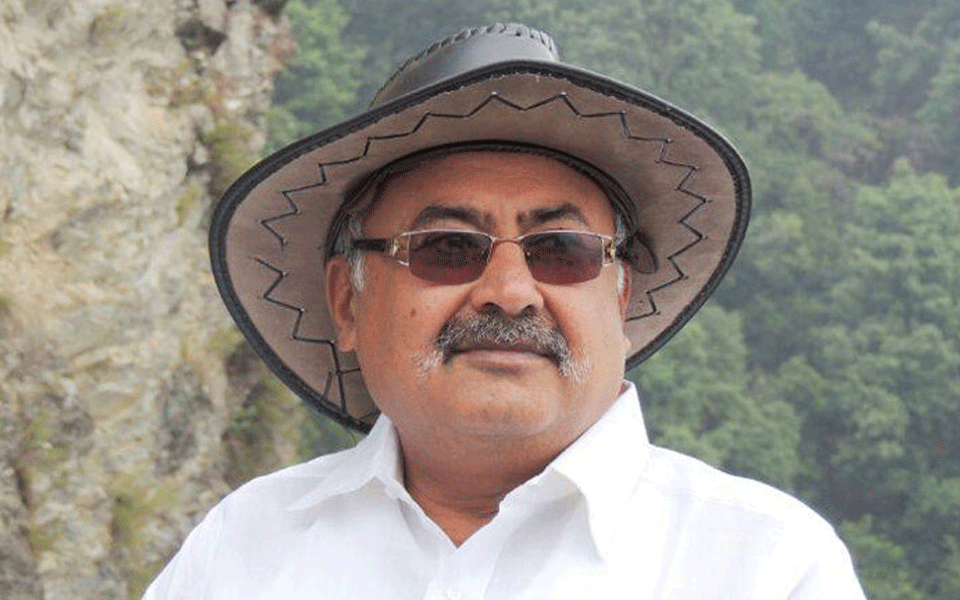
Ahmedabad, Jan 24: Police Thursday arrested two aides of Gujarat BJP leader and former MLA Chhabil Patel in connection with the killing of ex-party legislator Jayanti Bhanushali, who was shot dead in a moving train.
Chhabil Patel fled to Muscat a week before the murder.
His two aides Nitin Patel and Rahul Patel were arrested by the Gujarat CID, which is probing the case, the police said.
Both played a "key role" in taking care of two "sharp shooters" brought from Maharashtra by Chhabil Patel and a woman suspect, Manisha Goswami, to execute the crime, said Additional Director General of Police, CID-Crime, Ajay Tomar.
Bhanushali, who once represented Abdasa in Kutch district in the assembly, was shot dead in a moving train on January 8. The incident took place when the train was between Bhachau and Samkhiyali stations in Kutch, the police had said.
Investigations till now have revealed that both Chhabil Patel and Manisha Goswami harboured a grudge against Bhanushali and decided to join hands to eliminate their common rival, Tomar told reporters in Gandhinagar.
The sharp-shooters allegedly hired by Chhabil Patel and Manisha Goswami were identified as Shashikant Kamble and Ashraf Shaikh, both dreaded criminals from Pune, he said.
"Both Chhabil and Manisha had a grudge against Bhanushali over some issues, including financial dealings. Last year, Manisha was arrested by the Ahmedabad police for blackmailing Bhanushali's nephew, Sunil.
"She remained behind bars for around two months in that case," Tomar said.
"At that time, Chhabil Patel helped Manisha to come out of jail. Both of them had then decided to eliminate their common enemy Bhanushali.
"To do that, they hired two sharp shooters from Pune and kept them at Chhabil Patel's farmhouse in Kutch in December last year," the officer said.
It is alleged that Nitin Patel and Rahul Patel took care of these sharpshooters at Chhabil Patel's farmhouse, located in Reldi village near Bhuj town of Kutch district.
A meeting between Chhabil Patel, Manisha Goswami and other conspirators was held at the farmhouse on December 31. After finalising the plan, Chhabil Patel fled to Muscat on January 2, a week before the murder, said Tomar.
Bhanushali (53) was attacked when he was travelling in an air-conditioned coupe on the Bhuj-Dadar Express while returning to Ahmedabad from Bhuj.
Chhabil Patel, his son Siddharth Patel and Manisha Goswami were named as "suspects" in an FIR lodged by the Gandhidham railway police on January 9.
As planned by Patel, Goswami and others, the two sharpshooters boarded the train from Bhachau and allegedly shot Bhanushali in the early hours of January 8, said Tomar.
"The sharpshooters fired two rounds on Bhanushali as soon as he opened the door of his coupe upon hearing knocks. Kamble and Shaikh fled from the compartment after pulling the chain near Samakhiali station.
"They then fled to Pune via Radhanpur in a vehicle provided by their aides," said Tomar.
The police were yet to establish the whereabouts of Goswami, who was in Kutch till January 6 to provide support to the shooters in carrying out the murder plan, he said.
Meanwhile, Gujarat Chief Minister Vijay Rupani said the police were taking all necessary action in the case and the "guilty will not be spared".
Bhanushali represented the Abdasa assembly seat from 2007 to 2012. Chhabil Patel, as the Congress candidate, had defeated him from Abdasa in the 2012 assembly elections.
Within two years, Chhabil Patel switched sides and joined the BJP, but lost the bypoll for the seat in 2014.
In the 2017 polls, the BJP chose Chhabil Patel over Bhanushali for the Abdasa seat, but he lost to the Congress candidate.
In his complaint to the Gandhidham railway police, Bhanushali's nephew Sunil Bhanushali had alleged Chhabil Patel held his uncle responsible for his defeat in 2014 and 2017 and held a grudge against him.
In the complaint, Sunil Bhanushali had also alleged that to end Jayanti Bhanushali's political career, Chhabil Patel and others made a CD which showed his uncle in a compromising position with a woman.
When Bhanushali refused to retire from politics as allegedly demanded by Chhabil Patel, the latter hatched the murder plan, the complaint said.
Let the Truth be known. If you read VB and like VB, please be a VB Supporter and Help us deliver the Truth to one and all.
'Godman' Kharat held in 8th sexual exploitation case; court denies police remand, sends him to jail
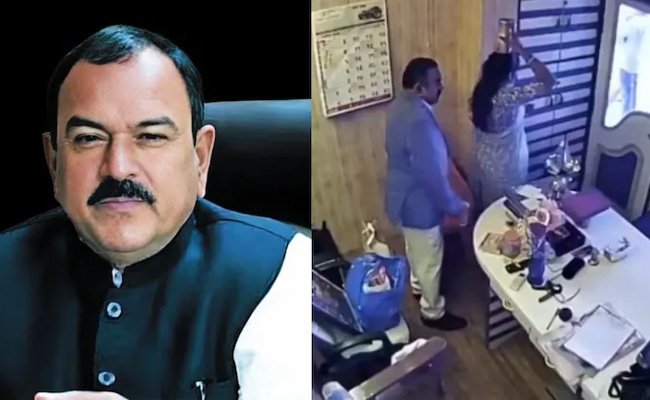
Nashik (PTI): Police took custody of self-proclaimed godman-cum-astrologer Ashok Kharat in an eighth case related to sexual exploitation of women and produced him before a Nashik district court which sent him to jail till May 12 after rejecting the plea for his police remand on Thursday.
On April 29, the Special Investigation Team (SIT) of the Nashik police in north Maharashtra filed a request application in the court demanding Kharat's custody in the eighth case.
After the court granted them the necessary permission, the SIT took custody of Kharat, who was in jail in connection with the seventh case of sexual exploitation registered against him.
The 'godman', named in a dozen FIRs related to rape and financial fraud, was produced before Chief Judicial Magistrate B N Ichpurani in the eighth case through video conferencing due to security reasons.
The eighth case related to Kharat allegedly sexually exploiting a woman who had approached him in search of solutions to her family problems, according to police.
During the hearing, the prosecution demanded police custody of the accused in the latest case.
However, the defence strongly opposed the demand and argued that the SIT was giving same reasons for police custody every time and there was no strong reason for accepting their plea.
The court accepted the argument put forth by the defence and remanded Kharat to judicial custody till May 12 in the eighth case.
The SIT will produce Kharat in the court on Friday again and seek his police custody in the ninth case. As the self-styled godman has been granted judicial custody in the eighth case, he will be sent to Nashik Road Central Jail and the SIT will take his custody from there.
Meanwhile, Kharat's judicial custody in the fourth case ended on Thursday. On April 18, the accused was remanded to judicial custody till April 30 in the fourth case of sexual exploitation of women.
In a related development, the SIT conducted a search at Kharat's office in the 'Canada Corner' area of Nashik city on Wednesday. A 'panchnama' (record of search and seizure proceedings) was conducted and the office was locked and sealed again.
Kharat, a well-heeled man with political connections, was arrested for the first time on March 18 after a woman alleged he had repeatedly raped her for three years.
He is accused of sexually exploiting several women by claiming to have divine powers and knowledge of black magic, and also committing large-scale financial fraud.
The SIT is conducting a probe into 12 cases of sexual exploitation and financial fraud registered against the astrologer in Nashik and Ahilyanagar districts.