Two Manipur separatists announce 'Manipur government in exile' in UK
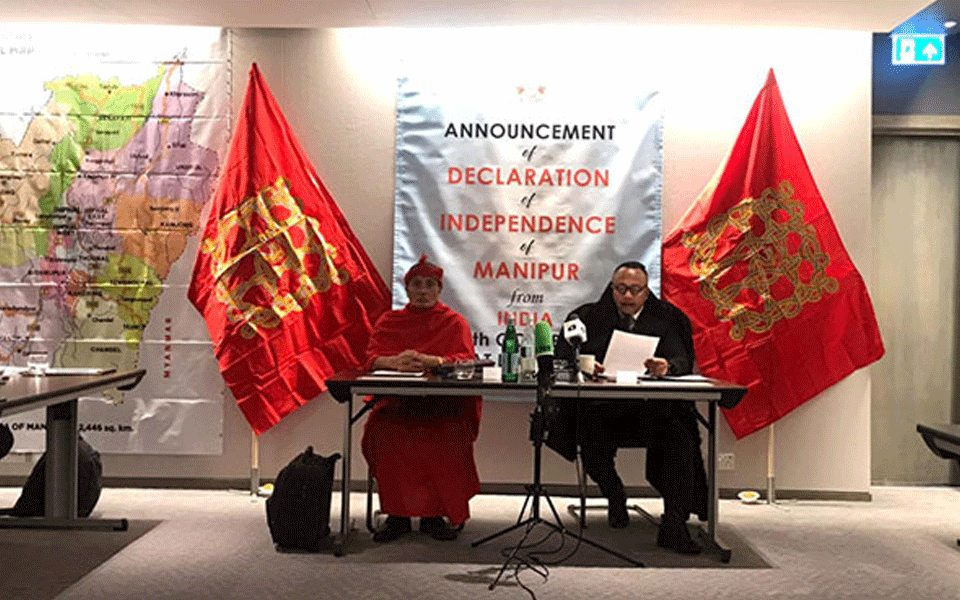
London: Two dissident leaders from Manipur claiming to represent King Leishemba Sanajaoba on Tuesday announced the launch of the "Manipur Government in exile" here in the UK.
Addressing a press conference, Yamben Biren, claiming to be the "Chief Minister of Manipur State Council" and Narengbam Samarjit, claiming to be the "Minister of External Affairs and Defence of Manipur State Council" said they were speaking on behalf of the 'Maharaja of Manipur' to formally launch the government-in-exile -- "The Manipur State Council".
There was no immediate comment from the High Commission of India here. Biren and Samarjit produced documents to show they have been granted political asylum in the UK in August this year. They said after getting their asylum status in the UK, "the de jure government is shifted from Manipur to London".
"We believe that now is the right time to make public the Independent Government of Manipur before the international community and seek recognition. We call on all the Governments of the sovereign states of the members of the United Nations for their recognition of the de jure and exile Government of the Manipur from today onwards.
"The three million Manipuri people want recognition as one of the Precious Native Nations. Our attempts to engage with the Indian government were met with hate and hostilities," they claimed.
They claimed there are "more than 1,528 cases of the extra judicial killing which are pending before the Supreme Court of India".
The duo claimed the "State of Manipur is a de jure Government formed in Manipur under the Manipur State Constitution Act 1947. It received independence from the British Raj on August 14, 1947. They claimed the sovereign State of Manipur was excluded from India by the Order in Council by his Majesty on 27 December 1946 and the Indian Government annexed Manipur State of India by violation of the Act 1949".
The two leaders said that they would make an appeal to Queen Elizabeth II and after getting an order from the Privy Council they would move the United Nations for recognition.
Let the Truth be known. If you read VB and like VB, please be a VB Supporter and Help us deliver the Truth to one and all.
Delhi to adopt fully digital system for time bound traffic challan disposal
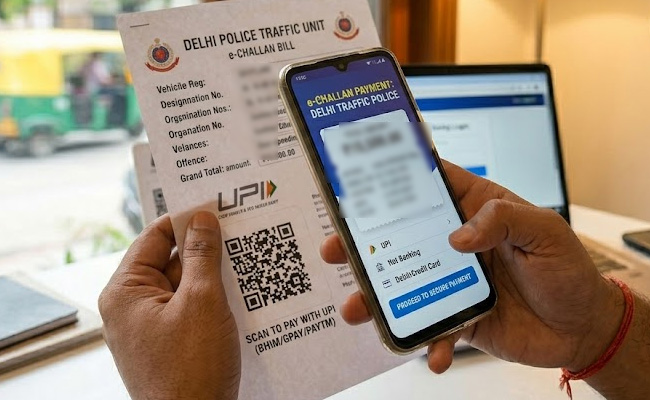
New Delhi (PTI): The Delhi government will soon implement amended Central Motor Vehicles Rules, 1989, making the traffic challan process completely digital and time-bound, to curb violations and enhance road safety, Chief Minister Rekha Gupta said on Sunday.
Under the new framework, avoiding challans will no longer be possible and timely resolution will be mandatory for all citizens. Importantly, violators will not be able to approach courts directly to contest a challan without first going through the prescribed process, said a Delhi CMO statement.
Anyone committing five or more traffic violations within a year will be classified as a "serious offender" and will risk suspension or disqualification of their driving licence under the amended rules, it said.
Gupta noted that the issuance of challans will now be fully modernised.
Police or authorised officers can issue challans either physically or electronically. In addition, violations captured through cameras and digital surveillance systems will automatically generate challans. The e-challans will be delivered within three days to the violators through their mobile numbers, and a physical notice will be delivered within 15 days.
Once a challan is issued, the violator will have 45 days to either pay the fine or challenge it before a grievance redressal officer through the online portal, supported by documentary evidence. If no action is taken within this period, the challan will be deemed accepted, and payment must be made within the next 30 days, the statement said.
If a challenge is rejected, the individual can either pay the fine within 30 days or approach the court after depositing 50 per cent of the challan amount.
Failure to act within the stipulated time will result in the challan being treated as accepted, with payment required within 15 days thereafter.
Payments can be made through electronic modes. The grievance redressal officer will be required to upload a decision on the portal within 30 days, it said.
The chief minister made it clear that once deadlines lapse, daily electronic notices will be issued. Continued non-payment will lead to restrictions on all vehicle-related services, including payment of taxes and processing of driving licence or registration-related requests.
The vehicle will be flagged on the official portal as 'not to be transacted,' effectively blocking any further transactions until the dues are cleared. In cases where necessary, and subject to court orders, police or authorised officers may also impound vehicles involved in violations.
All challans will be issued in the name of the registered vehicle owner, who will be notified via SMS, email or other digital means, it added.