Unnatural sex by husband with wife without her consent not offence: Chhattisgarh HC
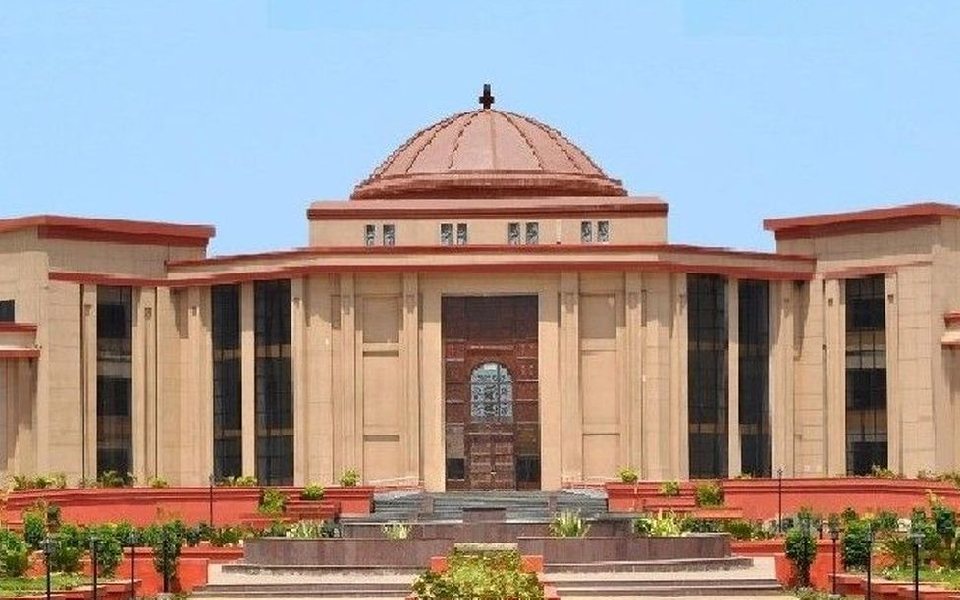
Bilaspur, Feb 11 (PTI): Sexual intercourse, including unnatural act, by a man with his adult wife, even without her consent, can not be treated as an offence, the Chhattisgarh High Court held while acquitting a Jagdalpur resident who was convicted of rape and other charges.
Justice Narendra Kumar Vyas made the observations while acquitting the man, who was arrested in 2017 and convicted by a trial court in Bastar district of charges under IPC sections 376 (rape), 377 (unnatural sex) and 304 (culpable homicide not amounting to murder) after the death of his wife.
The judgement in the case was reserved by the court on November 19 last year and delivered on Monday (February 10).
If the age of wife is not below age of 15 years then any sexual intercourse or sexual act by the husband with his wife cannot be termed as rape as such absence of consent of wife for unnatural act loses its importance, the single bench judge noted.
As per the prosecution, the man, a resident of Jagdalpur, the headquarter of Bastar district, was arrested on December 11, 2017, based on the statement of his wife recorded before an executive magistrate before she died the same day at a government hospital.
On December 11, 2017, the woman complained of pain and told her family members that her husband allegedly committed unnatural sex with her against her will. Dying declaration of the victim was recorded before the magistrate wherein she has made a statement that due to "forceful sexual intercourse" by her husband she became ill, it said.
On February 11, 2019, the Additional Sessions Judge (Fast Track Court or FTC) at Jagdalpur convicted the man under sections 377, 376 and 304 of the IPC and sentenced him to rigorous imprisonment for 10 years.
The man later approached the HC in Bilaspur challenging the lower court's judgement.
During hearings, the counsel for the man submitted that there was no legally admissible evidence available on record against the appellant and only on the basis of the victim's statement, his client has been convicted for multiple offences.
He contended the trial court had not considered the statements of two witnesses who told the court in Jagdalpur the woman was suffering from piles soon after her first delivery, on account of which she used to bleed and experience pain in the abdomen.
He termed the trial court's reliance on the dying declaration as "doubtful".
The counsel appearing for the state government supported the impugned judgment of the trial court and prayed for dismissal of the appeal against the conviction and sentence.
The HC, in its order, stated, "from perusal of sections 375, 376 and 377 of IPC it is quite vivid that in view of amended definition of Section 375 IPC, offence under Section 377 IPC between husband and wife has no place and, as such rape cannot be made out".
It is pertinent to mention here that in the amendment in section 375 IPC in the year 2013, exception- 2 has been provided which speaks that sexual intercourse or sexual acts by a man with his own wife is not a rape. Therefore, if any unnatural sex, as defined under section 377, is committed by the husband with his (major) wife, then it can also not be treated to be an offence, the HC noted.
It is quite vivid that Section 377 (unnatural sex) is not well equipped and offender is not defined therein but body parts are well defined, which are also included in Section 375 ( carnal intercourse against the order of nature), the HC observed.
The five- judge Bench of the Hon'ble Supreme Court in Navtej Singh Johar (case), while testing the constitutionality of said provision, has held that some parts of Section 377 are unconstitutional and finally held that if unnatural offence is done with consent then offence of Section 377 IPC is not made out, it said.
In the light of amended definition of Section 375 and the relationship for which exception provided for not taking consent - ie between husband and wife -- and not making offence of section 376, it is quite vivid the definition of rape as provided under Section 375 for which consent is not required then unnatural sex cannot be made as unnatural offence between husband and wife, the HC said.
As per the definition of Section 375 of IPC, the offender is classified as a 'man'. The appellant is a 'husband' and victim is a 'woman' and here she is a 'wife' and parts of the body which are used for carnal intercourse are also common. Therefore, the offence between husband and wife cannot be made out under Section 375 IPC as per the repeal made by way of amendment and in view of repugnancy between both the sections, it said.
"Thus, it is quite vivid, that if the age of wife is not below age of 15 years then any sexual intercourse or sexual act by the husband with his wife cannot be termed as rape under the circumstances, as such absence of consent of wife for unnatural act loses its importance.
"Therefore, this court is of the considered opinion that the offence under Section 376 and 377 of the IPC against the appellant is not made out," it said.
On the man's conviction under IPC Section 304 IPC, the HC deemed it "perverse" and quashed it.
"The learned trial court has not recorded any finding how the offense under Section 304 of the IPC is attracted to the present facts of the case and proved by the prosecution. Still, it has convicted the appellant under Section 304 IPC, which is nothing but perversity and patent illegality which deserves to be interfered with by this court," the HC observed.
The judge acquitted the man of all charges and ordered his immediate release from jail.
Let the Truth be known. If you read VB and like VB, please be a VB Supporter and Help us deliver the Truth to one and all.
Karnataka to approach SC seeking permission to continue MGNREGA
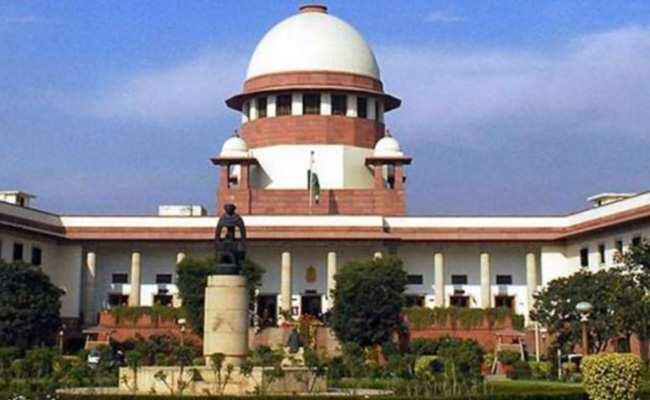
Bengaluru (PTI): The Karnataka Cabinet on Thursday decided to approach the Supreme Court seeking permission to continue implementation of MGNREGA in the state, contending that the Centre had repealed the rural employment guarantee law without consultation and failed to put in place any alternative mechanism under the VB-G RAM G Act.
Briefing reporters after the Cabinet meeting, Karnataka Law and Parliamentary Affairs Minister H K Patil said the state would immediately move the apex court seeking permission to prepare and implement the annual action plan for rural employment works, while also challenging what it described as an infringement on the constitutional rights of states.
The parliament passed VB-G RAM G in December that replaces MGNREGA.
Patil explained that the Cabinet decided to approach the court seeking permission for the State Government to prepare an action plan in this regard. Since the Centre’s stand interferes with the constitutional rights of state governments, the Cabinet has also decided to challenge this issue before the appropriate court
“There are two points here. One is that they have come in the way of our constitutional right of providing the right to work. That has been halted, and, therefore, the State Government has decided to approach the Supreme Court. The second point is that the Government of India has not provided any alternative,” the Minister said.
The Central Government has not yet issued a notification to implement the VB-G RAM G Act, nor has it made any alternative arrangements and hence continuing Mahatma Gandhi National Rural Employment Guarantee Act (MGNREGA) is unavoidable in the public interest, the Minister said.
“Therefore, in the interest of the public, farmers and agricultural labourers, we must continue MGNREGA. For that purpose, the Cabinet has decided to approach the court seeking permission for the State Government to prepare the action plan for this year,” he added.
The Minister also said the Centre had only permitted continuation of pending and spillover MGNREGA works without releasing grants or announcing a fresh action plan.
“The Centre itself has said that pending, spillover and half-done MGNREGA works can continue. That means MGNREGA is actually still functioning in practice. But there is no new action plan,” he said.
Patil said the state had already passed a resolution on the issue, while Chief Minister Siddaramaiah had written to the Prime Minister and the Rural Development Minister had held discussions with Union Ministers.
Replying to questions, the minister said the state would move court “as immediately as possible.”
He clarified that the state was seeking permission to formulate and implement this year’s action plan under the existing framework.
“What we are asking the Supreme Court is to allow us to have the action plan for this year and implement it,” he said.
The Cabinet also held detailed discussions on the final report submitted by the State Education Policy Commission headed by former UGC chairman Professor Sukhadeo Thorat.
Patil said a Cabinet sub-committee would be constituted to examine the report and recommend measures for implementation.
“No decision has been taken yet. The Cabinet sub-committee will recommend what should be accepted and what should be modified,” he said.
He said the report comprised around eight volumes and covered issues relating to financial implications, human resources, curriculum reforms, deemed universities, unitary universities and newly established universities. The Chief Minister has been authorised to constitute the sub-committee.
The Cabinet also approved the Karnataka Motor Transport and Other Related Workers’ Social Security and Welfare Amendment Bill, 2026, transferring welfare administration of transport-related workers from the Labour Department to the Transport Department.
The Cabinet further approved establishment of three new industrial estates in Kalaburagi, Yadgir and Surpur under the Karnataka State Small Industries Development Corporation and Kalyana Karnataka Region Development Board schemes at an estimated cost of Rs 200 crore.
The Cabinet also approved amendments to Karnataka Civil Services (General Recruitment) Rules, 2026, providing two per cent reservation in state civil services appointments for sportspersons.