UP bans sale of halal-certified products with immediate effect
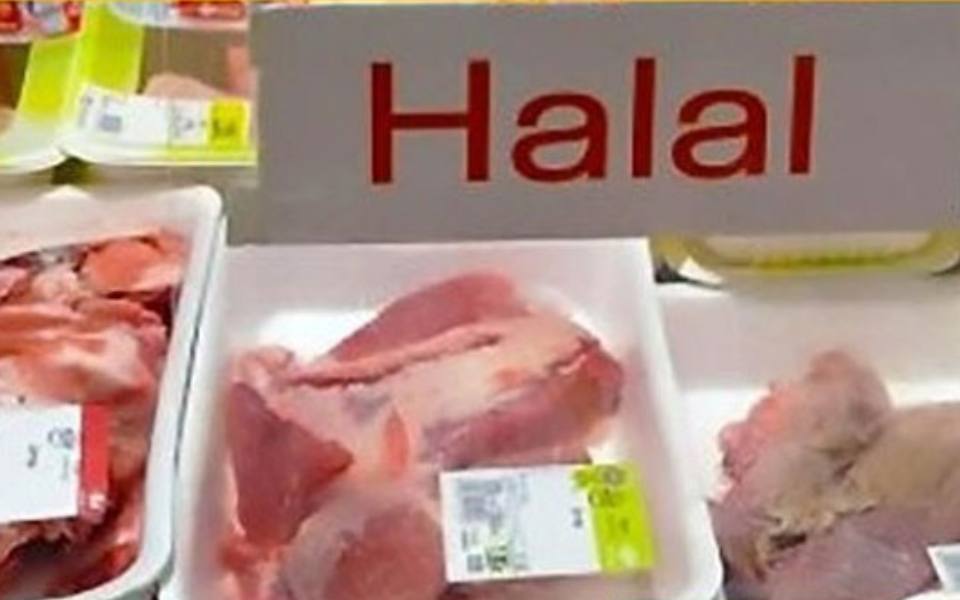
Lucknow, Nov 18: The Uttar Pradesh government on Saturday banned the production, storage, distribution and sale of food products with halal certification with immediate effect while exempting products manufactured for export.
In a statement, the state government alleged "malicious attempts" to discourage the use of products lacking a halal certificate not only seek "unfair financial benefits" but also form part of a "pre-planned strategy to sow class hatred, create divisions in society, and weaken the country" by "anti-national elements".
Strict legal measures will be taken against any individual or firm engaged in the production, storage, distribution, buying, and selling of halal-certified medicines, medical devices, and cosmetics within Uttar Pradesh, the statement said.
"Unrestrained propaganda is being disseminated within a particular section of society to discourage the use of products lacking a halal certificate," the statement said. This harms the business interests of other communities, it added.
There are also fears that the "unfair advantage" is being passed onto "anti-social or anti-national elements", the government said.
However, products manufactured for export will not be subject to the restrictions, it said.
According to the statement, the UP government recently received information which indicated that products such as dairy items, sugar, bakery products, peppermint oil, salty ready-to-eat beverages, and edible oils are being labelled with a halal certification.
"Additionally, certain medicines, medical devices, and cosmetic products are reported to feature the halal certificate on their packaging or labelling," the statement said.
"However, there are no provisions for marking halal certification on labels in the government rules related to drugs, medical devices, and cosmetics, nor is there any mention of halal certification in the Drugs and Cosmetics Act, 1940, and its related rules.
"Any direct or indirect mention of halal certification on the labels of medicines, medical devices, or cosmetics constitutes falsification under the said Act, making it a punishable offence," it said.
As per the Act and rules applicable to food items, the Food Safety and Standards Authority of India has been given the right to determine the standards of food items, the statement said.
"Halal certification, operating as a parallel system, creates confusion regarding food quality, violating government rules in this regard," it added.
An FIR on the matter has also been also registered in Lucknow Commissionerate last Friday.
Entities such as Halal India Private Limited Chennai, Jamiat Ulama-i-Hind Halal Trust Delhi, Halal Council of India Mumbai, Jamiat Ulama Maharashtra, and others have exploited religious sentiments to boost sales by providing halal certificates to customers of a specific religion, the government said citing the FIR.
"Illegal businesses are being run for financial gain. The complainant has raised concerns over a potential large-scale conspiracy, indicating attempts to decrease the sales of products from companies lacking the halal certificate, which is illegal," the statement said.
In a statement, Jamiat Ulama-i-Hind Halal Trust termed the allegations as "baseless" and said it will take "necessary legal measures to counter such misinformation".
"We adhere to government regulations, as emphasised in the Ministry of Commerce & Industry notification, requiring all halal certification bodies to be registered by NABCB (National Accreditation Board for Certification Bodies under Quality Council of India), a milestone that Jamiat Ulama-I-Hind Halal Trust has achieved," it said.
"It is also a matter of choice of individuals and manufacturers preferring to certain certifications for their own satisfaction based upon the credentials which the certifying authorities enjoy. It saves a large number of consumers from using products which they do not want for a variety of reasons and ensures availability of need-based products in the market.
"Those who do not want to use such products are free not to use them," it further said.
The government claimed that through halal certification unfair advantage is being passed on to anti-social and anti-national elements.
"The complainant further alleges that, under the guise of religion, unrestrained propaganda is being disseminated within a particular section of society to discourage the use of products lacking a halal certificate," it added.
This, in turn, harms the business interests of other communities, the government said in its statement.
"Such a malicious attempt not only seeks unfair financial benefits by issuing halal certificates for items meant for common citizens but also forms part of a pre-planned strategy to sow class hatred, create divisions in society, and weaken the country," it said.
"Many individuals beyond the owners and managers of the implicated companies are believed to be part of this criminal conspiracy with potential links to anti-national activities," it added.
Let the Truth be known. If you read VB and like VB, please be a VB Supporter and Help us deliver the Truth to one and all.
Three private doctors arrested in illegal scanning case involving 31 minor pregnant girls in KR Pet
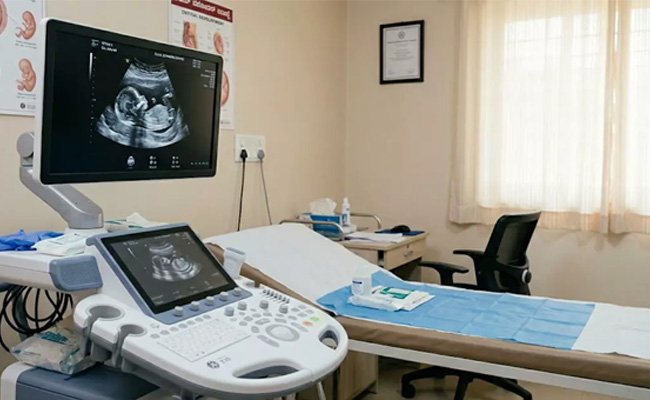
Mandya: Police on Tuesday arrested three private doctors in connection with a case involving alleged illegal scanning of 31 minor pregnant girls at a private diagnostic centre in KR Pet. The accused were later remanded to judicial custody.
The arrested doctors have been identified as Dr. Divyachetan of Chetana Maternity Centre, Dr. Harshit of Navi Diagnostic Centre, and Dr. Harish of Kushal Diagnostic Centre.
Police said Priyanka, a gynaecologist attached to a government hospital, is absconding and efforts are under way to trace her.
The case came to light after Karnataka Lokayukta Police recently conducted raids, during which illegal sex determination tests on minor pregnant girls were allegedly detected at two diagnostic centres in KR Pet town.
Following the raids, District Health and Family Welfare Officer Dr. Mohan, Deputy Director of the Women and Child Development Department P.S. Asha, and District Child Protection Officer Rashmi inspected several diagnostic centres and filed cases at KR Pet Town and Rural police stations.
According to the allegations, Navi Diagnostic Centre conducted scans on 24 minor pregnant girls, including 19 cases in 2024 and five in 2025. Kushal Diagnostic Centre is accused of conducting scans on seven minor pregnant girls.
Meanwhile, Deputy Commissioner Dr. Kumar has directed taluk vigilance committees to inspect all 63 ultrasound scanning centres in the district and submit reports within 10 days.
Officials said the Tahsildar of each taluk has been appointed chairperson of the respective committee.