UP readies for survey of private madrassas, proprietors fear repressive action
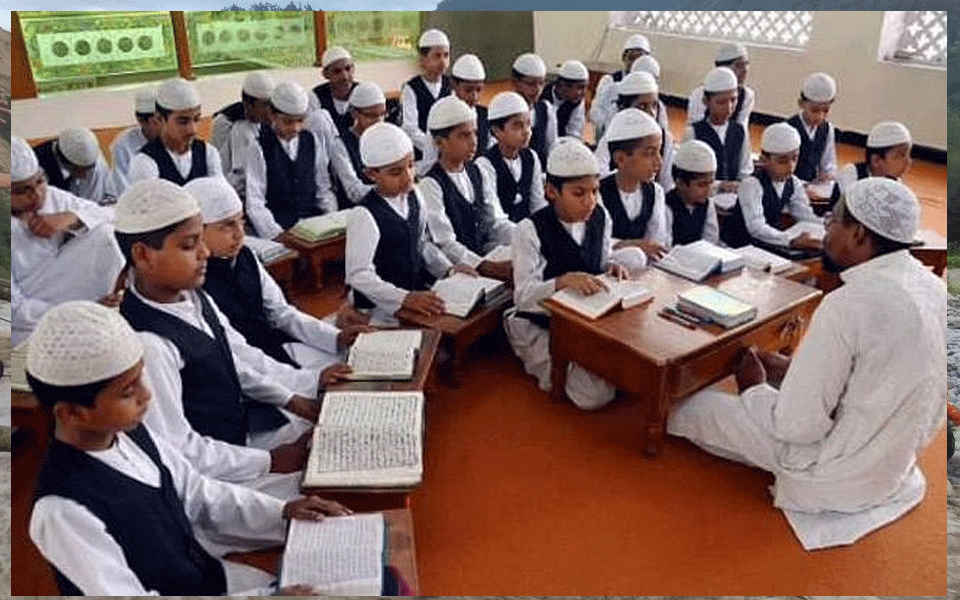
Lucknow (PTI): With the Uttar Pradesh government set to conduct a survey of private madrassas, proprietors of the theological schools fear that their institutions may be declared illegal and "run over by bulldozers".
According to sources, the fear was expressed by them on September 6 in New Delhi at a meeting of the Jamiat Ulema-e-Hind, one of the leading organisations of Islamic scholars belonging to the Deobandi school of thought.
However, state minister Danish Azad Ansari said the apprehension has no basis.
The Muslim body's president Maulana Arshad Madani told PTI, "Nobody has any objection if the government wants to conduct a survey of private madrassas but care should be taken so that it doesn't interfere in their internal matters."
The sources said it was decided at the meeting that views of the Muslim community will be placed before the government, a close eye will be kept on the exercise and a steering committee be formed to protest any wrongdoing.
It was also decided to hold a meeting on September 24 in Darul Ulum Deoband to chalk out the future course of action.
Earlier, AIMIM chief and Hyderabad MP Asaduddin Owaisi and BSP supremo Mayawati had raised questions over the exercise, for which teams were to be formed by September 10.
The government has maintained that the exercise is aimed at streamlining private religious seminaries so that students there could learn science and computers.
AIMIM chief Owaisi had described the exercise as "mini NRC" (National Register of Citizenship).
BSP supremo Mayawati has alleged that the government is trying to interfere in the internal matters of the seminaries with an intention to "terrorise" Muslims.
Meanwhile, UP's Minister of State for Minority Affairs Danish Azad Ansari assured that no centre will be razed.
"Those expressing such an apprehension should tell if any madrassa was brought down by any bulldozer in the previous five years of the state government. The anxiety has no basis," he told PTI.
The lone Muslim minister in Yogi Adityanath government said the state government is working honestly to bring madrassas into mainstream.
"The purpose of the survey is to know the actual condition of the madrassas and help these in lifting their standard," he added.
The minister said during the survey, owners of private madrassas will be asked as to which schemes of the government they wanted.
They will also be given information about development programmes run by the government for minorities.
"Relevant papers and forms regarding schemes for minority communities will be made available to them during the survey so that welfare schemes reach villages and towns deprived of them till now," Ansari said.
Ansari asked critics to stay away from politics "if they are supporters of Muslim upliftment".
All-India Muslim Personal Law Board member and Lucknow city Qazi Maulana Khalid Rasheed Farangi Mahli too criticised Owaisi for dubbing the survey as "mini NRC" and said everything should not be politicised.
He, however, said before carrying out the survey of private madrassas, the state government should strengthen the arrangements in government-affiliated madrassas and a similar survey be conducted in every primary schools run by the government.
The Uttar Pradesh government had on August 31 taken the decision to conduct the survey to assess basic facilities available in private madrassas. There are 16,461 such theological schools in Uttar Pradesh at present, of which 560 are registered with the government and getting financial assistance.
Teams formed for the survey will include the deputy commissioner, district basic education officer and the district minority welfare.
They will complete the exercise by October 15.
The DMs should hand over the reports to the state administration by October 25.
Sources said basic information like the name of a madrassa, its owner, whether it is run from a rented premises, number of students enrolled, arrangements of drinking water, toilet, power supply and furniture will be collected.
It will also seek information about the number of teachers is every theological schools, syllabus followed, source of income and whether the institutions are linked with any NGO.
Let the Truth be known. If you read VB and like VB, please be a VB Supporter and Help us deliver the Truth to one and all.
Karnataka to approach SC seeking permission to continue MGNREGA
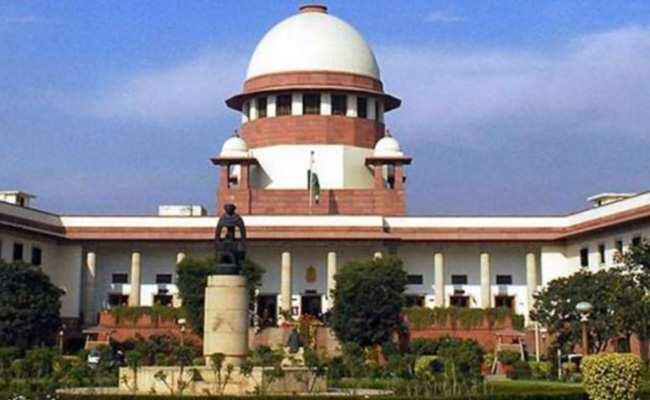
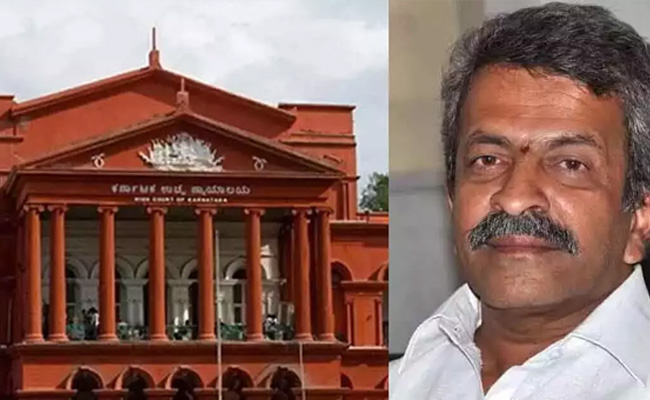
Bengaluru (PTI): The Karnataka Cabinet on Thursday decided to approach the Supreme Court seeking permission to continue implementation of MGNREGA in the state, contending that the Centre had repealed the rural employment guarantee law without consultation and failed to put in place any alternative mechanism under the VB-G RAM G Act.
Briefing reporters after the Cabinet meeting, Karnataka Law and Parliamentary Affairs Minister H K Patil said the state would immediately move the apex court seeking permission to prepare and implement the annual action plan for rural employment works, while also challenging what it described as an infringement on the constitutional rights of states.
The parliament passed VB-G RAM G in December that replaces MGNREGA.
Patil explained that the Cabinet decided to approach the court seeking permission for the State Government to prepare an action plan in this regard. Since the Centre’s stand interferes with the constitutional rights of state governments, the Cabinet has also decided to challenge this issue before the appropriate court
“There are two points here. One is that they have come in the way of our constitutional right of providing the right to work. That has been halted, and, therefore, the State Government has decided to approach the Supreme Court. The second point is that the Government of India has not provided any alternative,” the Minister said.
The Central Government has not yet issued a notification to implement the VB-G RAM G Act, nor has it made any alternative arrangements and hence continuing Mahatma Gandhi National Rural Employment Guarantee Act (MGNREGA) is unavoidable in the public interest, the Minister said.
“Therefore, in the interest of the public, farmers and agricultural labourers, we must continue MGNREGA. For that purpose, the Cabinet has decided to approach the court seeking permission for the State Government to prepare the action plan for this year,” he added.
The Minister also said the Centre had only permitted continuation of pending and spillover MGNREGA works without releasing grants or announcing a fresh action plan.
“The Centre itself has said that pending, spillover and half-done MGNREGA works can continue. That means MGNREGA is actually still functioning in practice. But there is no new action plan,” he said.
Patil said the state had already passed a resolution on the issue, while Chief Minister Siddaramaiah had written to the Prime Minister and the Rural Development Minister had held discussions with Union Ministers.
Replying to questions, the minister said the state would move court “as immediately as possible.”
He clarified that the state was seeking permission to formulate and implement this year’s action plan under the existing framework.
“What we are asking the Supreme Court is to allow us to have the action plan for this year and implement it,” he said.
The Cabinet also held detailed discussions on the final report submitted by the State Education Policy Commission headed by former UGC chairman Professor Sukhadeo Thorat.
Patil said a Cabinet sub-committee would be constituted to examine the report and recommend measures for implementation.
“No decision has been taken yet. The Cabinet sub-committee will recommend what should be accepted and what should be modified,” he said.
He said the report comprised around eight volumes and covered issues relating to financial implications, human resources, curriculum reforms, deemed universities, unitary universities and newly established universities. The Chief Minister has been authorised to constitute the sub-committee.
The Cabinet also approved the Karnataka Motor Transport and Other Related Workers’ Social Security and Welfare Amendment Bill, 2026, transferring welfare administration of transport-related workers from the Labour Department to the Transport Department.
The Cabinet further approved establishment of three new industrial estates in Kalaburagi, Yadgir and Surpur under the Karnataka State Small Industries Development Corporation and Kalyana Karnataka Region Development Board schemes at an estimated cost of Rs 200 crore.
The Cabinet also approved amendments to Karnataka Civil Services (General Recruitment) Rules, 2026, providing two per cent reservation in state civil services appointments for sportspersons.