UP schools to stay open on Christmas Day for Vajpayee centenary programmes, move draws criticism
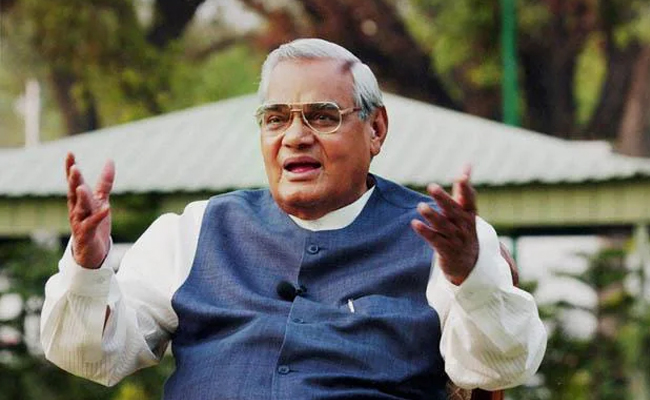
New Delhi: Government primary and upper primary schools across Uttar Pradesh will remain open on December 25 this year, with students required to attend special programmes marking the birth centenary of former prime minister Atal Bihari Vajpayee, replacing the customary Christmas holiday.
An order issued by the state’s Basic Education Department has made attendance compulsory for students on the day and directed schools to organise speeches, cultural events and remembrance activities celebrating Vajpayee’s life and public service. The directive applies to government-run schools across the state and coincides with the closing phase of official centenary year observances for the BJP co-founder.
The decision follows demands raised by Bajrang Dal leaders in Saharanpur, who had submitted a memorandum urging the government to ensure that December 25 is observed as “Good Governance Day” and “Bal Gaurav Day” rather than Christmas. Maktoob Media reported that the delegation argued that the date should not be used to mark the birth of Jesus Christ and called for schools to focus on activities such as poetry recitations, speeches and essay competitions centred on Vajpayee and educationist Madan Mohan Malaviya.
ALSO READ: JMI suspends social work professor over exam question on atrocities against Muslims, orders inquiry
The move has triggered strong reactions from Christian organisations, educators and civil society groups, who see it as a marginalisation of the Christian community. They also described it as a departure from the secular ethos of public education. A spokesperson for a prominent Christian group described the order as insensitive to the religious sentiments of Christians, for whom Christmas marks the birth of Jesus and holds deep spiritual significance.
Dr John Dayal, secretary general of the All India Christian Council and a member of the National Integration Council, criticised the state government for keeping schools open on Christmas to observe Vajpayee’s birth anniversary. He said replacing a longstanding religious holiday with official commemorations amounted to a deliberate sidelining of Christian faith practices and reflected a broader pattern of exclusion. Dayal warned that such measures contribute to fear and insecurity among Christians, particularly in states witnessing repeated incidents of hostility and violence.
The All India Christian Council and other organizations, in a letter to the Union Home Minister presented data from the United Christian Forum, which showed 834 occurrences of violence or hatred against Christians in 2024 and 706 cases through November 2025. Citing reports of fake conversions, burial rejections, mob violence, and police inactivity, the letter singled out Uttar Pradesh and Chhattisgarh as the worst-affected states,
Arguing that schools should uphold constitutional values of equality and coexistence and that national commemorations should not come at the cost of religious inclusion, Dr Nihal Nazim, a government school teacher in Moradabad, said cancelling Christmas sent a message to Christian students that their faith and identity were secondary in public institutions.
Former students echoed similar sentiments. Ansab, an alumnus of a Christian school in Aligarh, said Christmas had long been a shared cultural moment that transcended religious boundaries. Removing it from the school calendar, he said, reinforced a sense of exclusion and aligned with a wider climate of hostility towards minorities.
December 25 has been observed as Good Governance Day since 2014, when the central government declared Vajpayee’s birth anniversary a working day for government offices, effectively removing the Christmas holiday for central government employees. The move had drawn objections from Christian groups at the time as well.
While several other states like Delhi, Punjab and Kerala, continue to recognise Christmas as a school holiday, Uttar Pradesh has extended the observance to schools. Kerala’s education minister has recently cautioned against turning educational institutions into sites of communal contestation, reaffirming the need for inclusive recognition of festivals.
Let the Truth be known. If you read VB and like VB, please be a VB Supporter and Help us deliver the Truth to one and all.
Kerala polls: ‘People rejected 10 years of misrule’, says AICC gen secy
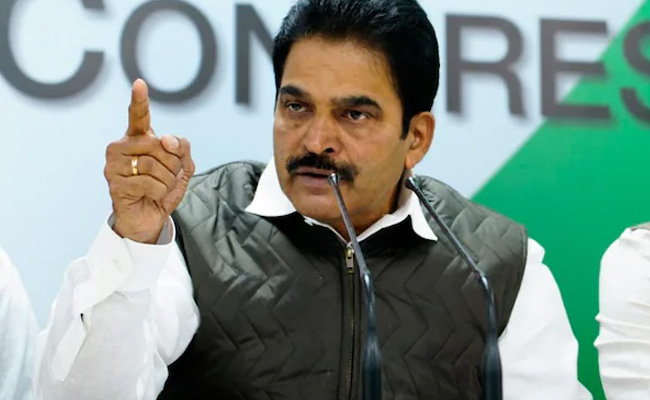
Thiruvananthapuram (PTI): AICC General Secretary K C Venugopal on Monday said the Congress-led UDF’s sweeping victory in the Kerala Assembly polls was a clear verdict against the “arrogance”, corruption, and nepotism of the CPI(M)-led LDF government headed by CM Pinarayi Vijayan.
Addressing a press conference as counting of votes for all 140 Assembly constituencies neared completion, Venugopal said the outcome reflected public anger against what he termed “10 years of misrule” by the Left government.
He claimed that Vijayan’s victory in his home constituency, Dharmadam, was “only technical”, alleging that the CM trailed the UDF candidate in the initial rounds of counting and failed to secure a majority in his own village.
“He just escaped. He suffered a setback even in his home turf. He was the only person who did not realise the people’s mood in this election,” Venugopal said.
Alleging that the CPI(M) and the LDF had resorted to “communal and opportunistic politics”, he further claimed that the ruling front had entered into a “secret understanding” with the BJP in a bid to retain power for a third consecutive term.
He said that when a government driven by power and arrogance attempts to align with anyone to stay in office, even its own cadre turns against it.
Referring to the results, Venugopal said that while the UDF expected rebel CPI(M) leaders, including K Kunhikrishnan in Payyannur, to impact the vote share, their victories came as a surprise.
Describing the UDF’s performance as a “historic victory”, he attributed it to coordinated teamwork, grassroots mobilisation, and the dedication of party workers, adding that the alliance accepted the mandate “with humility”.
Venugopal also credited Rahul Gandhi’s campaign guarantees, calling them a “trump card” that helped voters focus on real issues and reject what he described as the LDF’s “false narratives”.
He claimed that the Congress witnessed one of its lowest levels of rebellion in this election, which contributed to the alliance’s strong performance.
The senior Congress leader further alleged that the BJP managed to win two seats with the help of the CPI(M), and asserted that forces attempting to divide society on communal lines should “learn a lesson” from Kerala’s verdict.
“This is the real Kerala story,” he said.
On the question of the next Chief Minister, Venugopal said the party leadership would decide at the earliest after due consultations.
The counting of votes began on Monday morning for all 140 Assembly constituencies in Kerala, where the Congress-led UDF secured a decisive majority, defeating the CPI(M)-led LDF, which was seeking an unprecedented third consecutive term in office.
Congress MP Rahul Gandhi (@RahulGandhi) posts, "Thank you to my brothers and sisters in Keralam for a truly decisive mandate. Congratulations to every UDF leader and worker for a hard-fought, well-run campaign. As I said before, Keralam has the talent, Keralam has the potential… pic.twitter.com/6T4IZbEmp4
— Press Trust of India (@PTI_News) May 4, 2026