USCIRF says India’s political system enabling discrimination against minorities
Links BJP–RSS ties to ‘discriminatory laws’
New Delhi: The United States Commission on International Religious Freedom (USCIRF) has released a new update on India, stating that the country’s political structure and the close relationship between the Bharatiya Janata Party (BJP) and the Rashtriya Swayamsevak Sangh (RSS) are contributing to discriminatory laws and restrictions on religious freedom.
The bipartisan body, which reports to the US Congress, said in its India-specific issue update that both national and state-level laws have created “severe restrictions on religious freedom across the country”. It added that constitutional protections exist, but India’s political environment “facilitates a climate of discrimination toward religious minority communities”.
The Indian government has not responded to the latest update. Earlier this year, when USCIRF released its 2025 annual report in March, the Ministry of External Affairs dismissed the findings as “biased and politically motivated”.
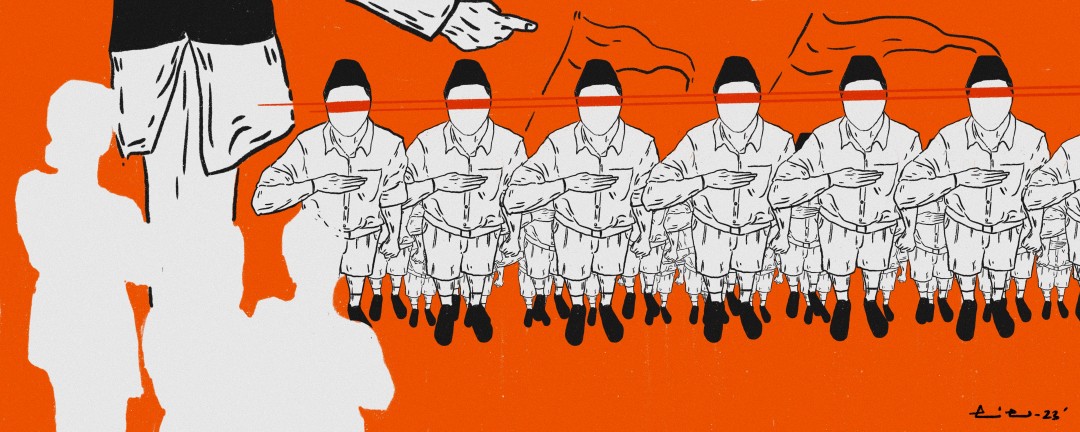
In its latest analysis, the Commission says that the “interconnected relationship” between the ruling BJP and the RSS — which it describes as a Hindu nationalist organisation — has enabled the creation and enforcement of laws such as the Citizenship (Amendment) Act, anti-conversion legislation, and cow-protection measures that disproportionately affect Muslims and Christians.
According to the update, the BJP has, since 2014, “enforced sectarian policies seeking to establish India as an overtly Hindu state, in contrast with the secular principles of the Constitution.” It says this enforcement has restricted the ability of minority communities to practise their religion freely, in violation of Article 18 of the International Covenant on Civil and Political Rights, to which India is a signatory.
USCIRF says the RSS’s stated mission of creating a “Hindu Rashtra” excludes multiple minority groups. It also notes that while the RSS does not contest elections, it provides key organisational support to BJP candidates, including Prime Minister Narendra Modi, who was an RSS volunteer before becoming Gujarat chief minister. The update repeats long-standing allegations that Modi faced accusations of inaction during the 2002 Gujarat riots.
The report comes days after a US media investigation revealed that the RSS allegedly hired the lobbying firm Squire Patton Boggs (SPB) to promote its interests in Washington DC, reportedly paying $330,000 over the first three quarters of 2025.
USCIRF’s update highlights several laws it says restrict religious freedom. The Citizenship (Amendment) Act, which excludes Muslims from its list of protected communities; Article 295A of the Penal Code, which functions like a blasphemy provision; and state-level anti-conversion and cow-slaughter laws. The Commission said hundreds of Christians and Muslims have been arrested under these laws and noted that 70% of India’s prison population consists of pre-trial detainees, with minorities disproportionately represented.
It also cited the case of activist Umar Khalid, jailed since 2020 over protests against the CAA, as an example of prolonged detention without trial.
The report says India’s federal structure, which places policing under state jurisdiction, limits accountability for human rights violations. It claims law enforcement frequently fails to act on mob violence targeting minorities.
In its 2025 annual report, USCIRF, for the sixth year, recommended that the US State Department designate India a “Country of Particular Concern” for what it called systematic and egregious violations of religious freedom. Washington has so far not acted on this recommendation.
Let the Truth be known. If you read VB and like VB, please be a VB Supporter and Help us deliver the Truth to one and all.
Power tariffs under BESCOM to rise from May 1
Bengaluru (PTI): Power bills for consumers under the Bangalore Electricity Supply Company Limited (BESCOM) will go up from May 1, following an order issued by the Karnataka Electricity Regulatory Commission (KERC) on Friday.
The hike comes after KERC allowed the BESCOM to recover a revenue deficit of Rs 2,068 crore incurred in 2024-25, from the consumers.
As a result, for every unit of electricity consumed in 2024-25, the customers will be charged an additional 56 paise, it said.
"BESCOM shall calculate, for each of the active consumers of FY2024-25 the amount to be recovered based on their actual energy consumption during FY2024-25. Such amount shall be recovered during FY 2026-27 in equal monthly instalments, to be called as 'FY25 True up Charges', commencing from the first meter reading date falling on or after 1 May 2026 and concluding with the reading date ending on 30 April 2027," the order said.
"It is further ordered that BESCOM shall maintain a separate head of account, allocated for the purpose, to record the adjustment of the said amount to ensure full recovery of the deficit," it added.
Similarly Chamundeshwari Electricity Supply Corporation Limited (CESC) has also recorded a revenue deficit of Rs 121.71 crore and can collect an additional 15 paisa per unit for consumption in 2024-25, official sources said.