Uttarakhand Congress terms Minority Education Bill 'unconstitutional'
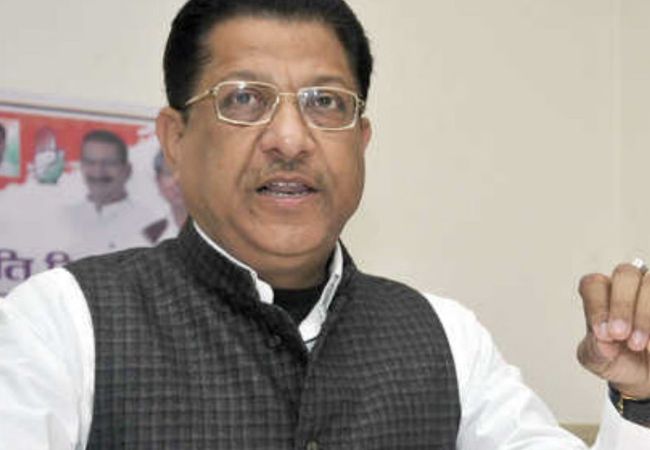
Dehradun (PTI): Uttarakhand Congress on Wednesday termed the Minority Education Bill, 2025, as "unconstitutional", accusing the BJP-ruled state government of "religious polarisation".
They said the Bill has nothing to do with improving the education of minority communities.
The Bill was passed in August during the Assembly's monsoon session held in Gairsain and got the Governor Lt. Gen. Gurmeet Singh (Retd)'s assent on Monday.
The Bill is set to become law in the state after the notification is issued.
Suryakant Dhasmana, vice president (Organisation) of the Uttarakhand Congress unit, stated that the law is "unconstitutional and a blatant violation of Articles 25 and 26" of the Indian Constitution.
He also claimed that if challenged in court, the government will face defeat on this issue.
He alleged, "The Dhami government has introduced this law solely to further its agenda of religious polarisation and has nothing to do with improving the education of minority communities in the state or improving the quality of education."
Questioning the new law requiring all educational institutions for minority communities to affiliate with the Uttarakhand Board of School Education (UBSE), Dhasmana stated that these institutions operate only after obtaining a No Objection Certificate (NOC) from the state government's Education Department.
They comply with the Societies Registration Act, but they have the freedom to decide which board they affiliate their institutions with.
He said that "many schools in the state run by Sikh institutions and Christian missionaries are affiliated with the CBSE, ICSE or international boards. So, how can the state government force any minority educational institution to become affiliated with the Uttarakhand Board?"
Dhasmana alleged, "The government's intention is not to uplift the education of any minority community, but to pursue religious polarisation by targeting madrasas run solely by the Muslim community."
He reiterated that the government already has rules and regulations for the registration and operation of madrasas operating in the state. However, if any are not following them, the Madrasa Board, which operates under the state government, is responsible for this and madrasas operating as per the rules cannot be blamed for this.
Meanwhile, Mufti Shamoon Qasmi, Chairman of the Uttarakhand Madrasa Education Board, called this Bill "a very good step" by the government and said that this will also provide good and quality education to children from the Muslim community and help them join the mainstream.
Under the new law, educational institutions belonging to other minority communities like Sikh, Jain, Buddhist, Christian, and Parsi will also receive minority educational institution status in the state, along with the Muslim community.
Previously, recognition of minority institutions was limited to the Muslim community.
The new law provides for the establishment of an authority that will mandate recognition for all educational institutions established by minority communities.
The authority will also ensure that education in these institutions conforms to the standards set by the UBSE and that student evaluations are fair and transparent.
With the enactment of this law, the Madrasa Education Board Act 2016, passed during the Congress government's tenure, will be repealed.
After receiving the governor's assent, Dhami stated that this law will undoubtedly contribute to making the state's education system more "transparent, accountable and quality-oriented".
The chief minister had previously stated that the Madrasa education system had been facing serious problems for years, including irregularities in central scholarship distribution, irregularities in the mid-day meal scheme and a lack of transparency in management.
He had said that this Bill would empower the government to effectively monitor the functioning of minority educational institutions and issue necessary instructions, which would further strengthen educational excellence and social harmony in the state.
Let the Truth be known. If you read VB and like VB, please be a VB Supporter and Help us deliver the Truth to one and all.
KKR defeat LSG via Super Over

Lucknow (PTI): Kolkata Knight Riders edged Lucknow Super Giants via Super Overs in a battle between two bottom-placed teams in the IPL, here on Sunday.
Chasing a modest 156, LSG suffered a batting collapse and managed to tie the contest and take it to Super Over with No. 9 Mohammed Shami striking a last-ball six against a wayward Kartik Tyagi, who leaked 16 runs in the final over.
But Sunil Narine bowled a stunning Super Over conceding just one run and taking two wickets to give KKR an easy target.
Rinku Singh then finished the chase with a boundary off first ball from Prince Yadav.
Earlier the KKR were in deep trouble with 93/7 in 15 overs but Rinku smashed a sensational 83 not out from 51 balls including four sixes in a row in the final over to lift them to 155/7.
Cameron Green (34) was the only other batter to reach double-digit scores as KKR suffered a familiar batting meltdown with Mohsin taking his maiden fifer.
In reply, LSG continued their dismal show with the bat to succumb to their fifth loss in a row.
Brief Scores:
Kolkata Knight Riders 155/7; 20 overs (Rinku Singh 83 not out, Cameron Green 34; Mohsin Khan 5/23). Lucknow Super Giants 155/8; 20 overs (Rishabh Pant 42). KKR won via Super Over.