Varanasi court gives 10 more days to ASI to submit Gyanvapi mosque survey report
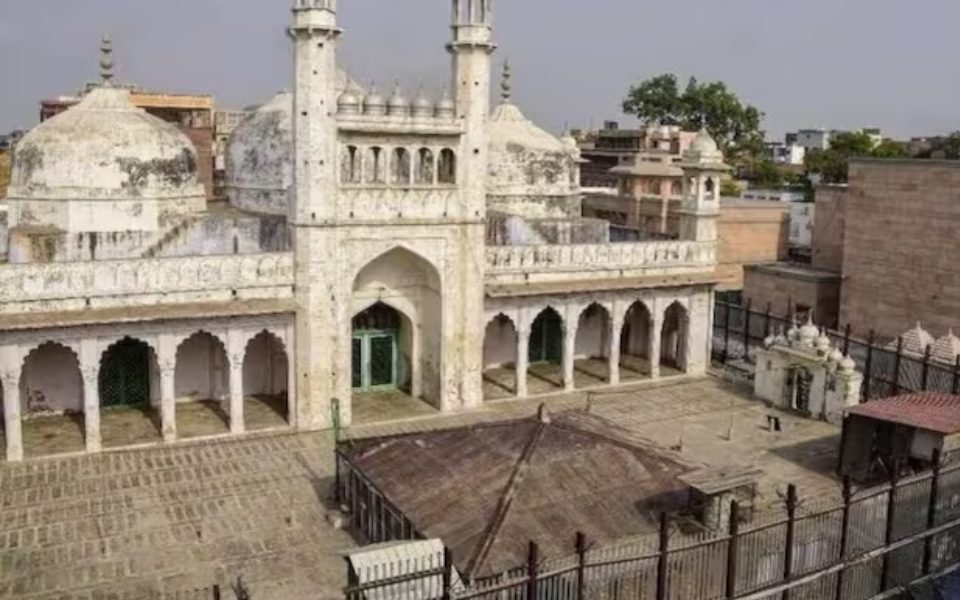
Varanasi, Nov 30: The Varanasi district court on Thursday gave 10 more days to the Archaeological Survey of India to complete and submit a scientific survey report of the Gyanvapi mosque complex here.
Taking up the plea of the ASI seeking three additional weeks to submit the report, District Judge A K Vishvesh said he hoped that the ASI would not ask for more time, according to counsel for the Hindu side Madan Mohan Yadav.
The court fixed December 11 as the next date of hearing in the matter, Yadav said.
The court was hearing the ASI plea moved on Tuesday seeking three more weeks for submitting the report, saying it needed more time for the assimilation of information generated by different experts.
The ASI started the survey in the barricaded area of the Gyanvapi premises, excluding its sealed section, on August 4, following court orders to determine whether the 17th-century mosque was constructed over a pre-existing structure of a Hindu temple.
The Muslim side represented by lawyer Mohammad Ikhlaq strongly objected to the request for more time and argued that the ASI is seeking time to file the report again and again without any proper reason. He also argued that there should be some end to this process of taking time again and again to file the report.
The ASI be directed to file the report positively within the time granted by the court, Ikhlaq said.
In its order, the court said it expects that within the provided time, the ASI shall positively file the report and will not seek further time.
On Wednesday, taking up the plea of the ASI, District Judge Vishvesh asked a senior ASI official from Delhi to explain the need for more time, to which the ASI counsel said that officials in Varanasi had been handling the task and would apprise the court about it.
Earlier, the district court had asked the ASI to submit the survey report of the Gyanvapi complex by November 28.
In its application, the ASI had stated that its experts are working on various types of data collected by archaeologists, surveyors and other experts, etc., and assimilation of information generated by different experts and different tools is a difficult and slow process and it will take some more time to complete the report for final submission.
On November 2, the ASI told the court it had "completed" the survey but may take some more time to compile the report, along with the details of the equipment used in the survey work. The court then granted additional time till November 17 for submitting the document.
But its counsel again sought 15 more days due to the non-availability of the technical report and the district judge then asked it to submit its report by November 28.
The ASI is carrying out the scientific survey of the Gyanvapi premises, located next to the Kashi Vishwanath temple, to determine whether the 17th-century mosque was constructed over a pre-existing structure of a Hindu temple.
On October 5, the court granted four more weeks to the ASI and said the duration of the survey would not be extended beyond this. It had earlier given extensions on August 4 and September 6.
The survey had begun after the Allahabad High Court upheld the Varanasi district court order and ruled that the step was "necessary in the interest of justice" and would benefit both the Hindu and Muslim sides in the dispute.
During an earlier hearing, the mosque management committee had objected to the survey, alleging that the ASI was digging the basement and other places of the mosque complex without permission and accumulating debris on the western wall, posing a risk that the structure might collapse.
The ASI team was not authorised to survey the premises by removing debris or garbage, the mosque panel had said.
The Gyanvapi committee had also moved the Supreme Court against the high court's order. The apex court had, on August 4, refused to stay the high court's order on the ASI survey.
In its order, the bench of Chief Justice of India D Y Chandrachud and justices J B Pardiwala and Manoj Misra, however, asked the ASI not to carry out any invasive act during the survey. This ruled out any excavations, which the Varanasi court had said could be conducted if necessary.
Let the Truth be known. If you read VB and like VB, please be a VB Supporter and Help us deliver the Truth to one and all.
4 held for sexually assaulting woman, girl on moving bus after social media alert in UP's Agra

Agra (UP) (PTI): Four people were arrested, after a prompt response by police following a social media alert, for allegedly sexually assaulting a woman and a girl inside a moving bus here, officials said on Tuesday.
According to an official police statement, at 12:27 am on April 27, information was received on the social media platform X about an incident of sexual assault on a bus travelling from Kanpur to Ahmedabad, which was approaching Namner crossing in Agra.
Acting under the direction of Police Commissioner Deepak Kumar, the Agra Police social media team immediately alerted the Rakabganj police station within minutes and coordinated with the victims to confirm the incident and obtain the exact location, it stated.
Police teams launched intensive checking at Namner crossing and intercepted the bus as it reached the spot. The four accused involved in the incident were apprehended on the spot, and legal action was initiated against them, the statement said.
The police said the swift response and coordination between the social media team and field units ensured timely action, bringing relief to the victims and other passengers, who expressed gratitude towards the police, it added.