VB Election Coverage: Here are all the updates from Madhya Pradesh's Assembly Election 2023
New Delhi: Vote counting for three key states in the heartland and one significant southern state, considered a crucial indicator before the upcoming Lok Sabha elections, is set to commence at 8 am. The Mizoram votes, initially scheduled for counting on Sunday, will now take place on Monday following objections raised about the Sunday counting schedule.
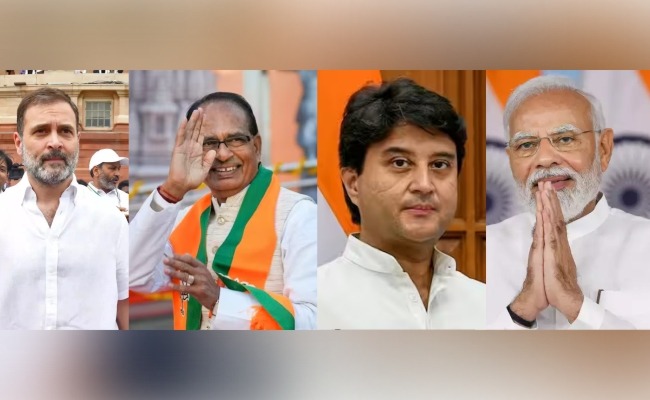
The battle for the 230 seats in Madhya Pradesh holds importance as it represents a major prestige showdown between the Congress and the BJP, particularly following the collapse of the Kamal Nath-led Congress government in 2020. The Congress had initially secured a narrow victory in the election, but its government could not withstand the defection of Jyotiraditya Scindia to the BJP, along with more than 20 loyalists. Exit polls now suggest that the BJP is poised to maintain its grip on Madhya Pradesh.
Here are all the updates from Madhya Pradesh's vote counting for 2023 Assembly Election:
8:03 PM: "The impact of these results will not be confined to Madhya Pradesh, Chhattisgarh, and Rajasthan. The eco will extend far beyond... eco of these elections will be heard around the world," states PM Modi.
4:30 pm: Madhya Pradesh: On Shajapur clash, Madhya Pradesh Chief Election Officer Anupam Rajan says "In Shajapur, the margin of votes during counting was less...So the process of re-verification of the rejected postal ballots is underway..."
4:00 pm: Congress' performance in Madhya Pradesh assembly polls disappointing: Party chief Mallikarjun Kharge
3:15 pm: MP Election Results 2023: BJP leading in 164 of 230 seats in Madhya Pradesh, Congress ahead in 64 as per trends: Election Commission
1:35 pm: Union minister Narendra Singh Tomar attributes MP's landslide victory to PM Modi
1:00 pm: People have given an answer to Congress: Chief Minister Shivraj Chouhan
12:40 pm: Jyotiraditya Scindia says while Congress was buying sweets to celebrate victory in MP, BJP was working tirelessly and hence the results.
12:40 pm: Jyotiraditya Scindia than voters for electing BJP for fifth time to govern the state. Credits BJP workers for party’s victory in MP.
12:25 pm: Shivraj Singh Chouhan meets supporters in Bhopal
12:15 pm: Shivraj Singh Chouhan credits "able leadership" of Prime Minister Narendra Modi for MP trends
12:10 pm: Congress Spokesperson Supriya Shrinate says MP results disappointing, unfortunate for Congress. Shrinate further said. "Maybe we underestimated something like 'Ladli Behna scheme' of Shivraj Singh Chouhan.
12:05 pm: MP Home Minister Narottam Mishra trailing from Datia constituency.
12:00 pm: Jaivardhan Singh regains lead on Raghogadh seat.
11:50 am: BJP is set to claim a massive win in the Madhya Pradesh Assembly election, trends suggest
11:35 am: Kamal Nath regains lead. Jaivardhan Singh still trailing in MP.
11:20 am: BJP leading on 155 seats, Congress on 72, BSP holding lead on 3 seats.
11:00 am: We will win with a comfortable majority, says Chief Minister Shivraj Chouhan.
10:45 am: The difference between the Congress and the BJP is that they play the T20 match, whereas the BJP plays till the last ball, says political analyst Shankar Aiyar
10:30 am: BJP leads on 147, Congress down on lead with 80.
10:15 am: Congress leader Kamal Nath now trailing from Chhindwara constituency.
10:00 am: BJP leading on 128 seats, Congress just short of three-figure mark with lead on 98 seats.
9:45 am: Jyotiraditya Scindia arrives at CM Shivraj Singh Chouhan's house for a one-on-one meeting with the latter.
9:30 am: BJP's Narendra Singh Tomar loses lead. Now trailing on Dimani seat.
9:30 am: Digvijaya Singh's son Jaivardhan Singh from Raghogadh constituency.
9:25 am: BJP leading on 122 seats, Congress on 96
9:15 am: BJP gains lead on 101 seats. Congress leading on 83.
9:05 am: Shivraj Singh Chouhan, Kamal Nath both maintain leads on their respective seats.
9:00 am: Close contest continues in MP as BJP leads on 79 seats, Congress follows with lead on 66 seats. BSP maintains lead on 3.
8:50 am: BJP, Congress both cross lead on 50+ seats. BJP leads on 58, Congress on 55.
8:45 am: BSP opens account in MP, gains lead on 3 seats.
8:40 am: BJP's Narendra Singh Tomar gain leads on Dimani seat.
8:35 am: MP CM Shivraj Singh Chouhan leads on Budhni constituency.
8:30 am: BJP extends lead on 24 seats, Congress lead on 17.
8:25 am: On 24 seats, Congress leads on 13, BJP on 11.
8:20 am: Congress maintain lead on 11 seats, BJP on 9.
8:15 am: Early trends show Congress leading on six seats while BJP has gained momentum on four seats.
8:00 am: Counting of votes begin in Madhya Pradesh's 230 constituencies.
Let the Truth be known. If you read VB and like VB, please be a VB Supporter and Help us deliver the Truth to one and all.
4 held for sexually assaulting woman, girl on moving bus after social media alert in UP's Agra

Agra (UP) (PTI): Four people were arrested, after a prompt response by police following a social media alert, for allegedly sexually assaulting a woman and a girl inside a moving bus here, officials said on Tuesday.
According to an official police statement, at 12:27 am on April 27, information was received on the social media platform X about an incident of sexual assault on a bus travelling from Kanpur to Ahmedabad, which was approaching Namner crossing in Agra.
Acting under the direction of Police Commissioner Deepak Kumar, the Agra Police social media team immediately alerted the Rakabganj police station within minutes and coordinated with the victims to confirm the incident and obtain the exact location, it stated.
Police teams launched intensive checking at Namner crossing and intercepted the bus as it reached the spot. The four accused involved in the incident were apprehended on the spot, and legal action was initiated against them, the statement said.
The police said the swift response and coordination between the social media team and field units ensured timely action, bringing relief to the victims and other passengers, who expressed gratitude towards the police, it added.