VB Election Coverage: Here are the updates from Mizoram Assembly Election 2023
Aizawl: The counting for the Mizoram Legislative Assembly elections this year is to be held on Monday, December 4, after the results four states were declared on Sunday.
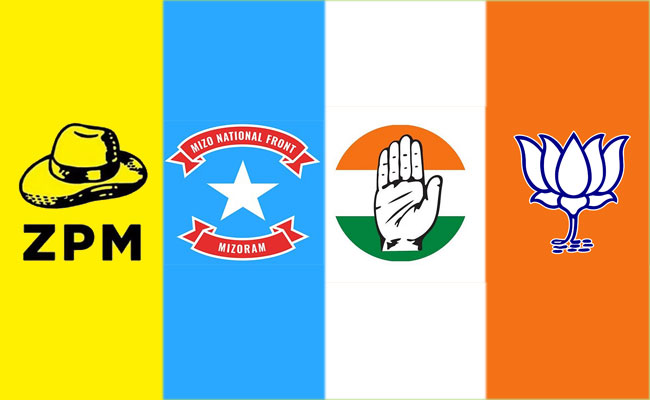
The voting in Mizoram was held on November 7, with over 80 per cent of the voters exercising their franchise. With 174 candidates, including 18 women and 17 Independents, contesting the elections, Mizoram is expecting a triangular fight among the ruling Mizo National Front (MNF), the Congress and the Zoram People's Movement (ZPM), although the BJP hopes to prove itself the 'kingmaker' in the state.
As the Aam Aadmi Party (AAP) contesting the elections in Mizoram for the first time, sending its candidates to the fray for four seats, the exit polls have predicting a hung Assembly in the state.
Here are all the updates from Mizoram's vote counting for 2023 Assembly Elections:
4:30 PM: Fortieth seat of Mizoram Assembly claimed by MNF as Lalrintluanga Sailo wins with 6,218 votes. BJP state head Vanlalhmuaka, at a distant 4th, get 2,060 votes
4:10 PM: Mizoram CM Zoramthanga submits resignation to Governor Hari Babu Kambhampati after MNF loses Assembly elections
3:25 PM: Dampa, where BJP state chief Vanlalhmuaka is contesting the Mizoram elections, only seat waiting for result
3:00 PM: Breather for Congress as C. Ngunlianchunga wins Lawngtlai West, beating V. Zirsanga of MNF by 432 votes
2:15 PM: Results of only 5 seats of Mizoram Assembly left to be declared, but Congress has not made a breakthrough in the polls yet – ZPM has 26 seats, MNF 7, BJP 2
1:00 PM: Major setback for ruling party in Mizoram as CM Zoramthanga loses battle against ZPM candidate Lalthansangsa by more than 2,100 votes in Aizawl East-1
12:45 PM: With ZPM eyeing an easy victory in Mizoram, the party's CM candidate Lalduhoma said that he would be meeting the Governor within two days and that the swearing-in ceremony would be held this month
12:35 PM: ZPM Chief Ministerial candidate Lalduhoma wins from Serchhip, beats J Malsawmzual Vanchhawng of MNF by 2,982 votes
12:15 PM: First good news for ruling party MNF from Thorang - R. Rohmingliana scrapes through, beats Congress candidate Zodintluanga Ralte by 62-vote margin
12:10 PM: BJP leader Alok Vats admits that regional party in Mizoram will have say as national parties fail to make impact on the people of the state
12:00 PM: BJP registers first win in Mizoram: K. Hrahmo wins from Palak beats MNF candidate K.T. Rokhaw by 1,241 margin
11:35 AM: All 6 victories so far in Mizoram Assembly polls go to ZPM; Mizoram Health Minister R Lalthangliana among early losers; defeated by ZPM's Jeje Lalpekhlua in South Tuipui
11:15 AM: BJP gains lead on 3 seats, edges past Congress, which leads on 1 seat while BJP state head Vanlalhmuaka stands at 4th position in Dampa with 568 votes
11:05 AM: ZPM members and supporters gather at party office in Aizawl, celebrate party's win in 2 seats and prominent lead on 25 other seats in Assembly elections
10:50 AM: Another victory for ZPM: Lalnghinglova Hmar wins Aizawl West-II with 10,398 votes, beating Lalruatkima of MNF by 4,819 margin
10:40 AM: Lalduhoma, leader of ZPM, leads in Serchhip by over 2,500 votes; MNF debutant candidate J Malsawmzual Vanchhawng in second position
10:25 AM: ZPM retains surge in polls on 28 seats, ruling MNF on 7 - CM Zoramthanga trails by 640-margin in Aizawl East-1
10:05 AM: Breaking news – Deputy CM Tawnluia loses battle; W Chhuanawma of ZPM beats him in Tuichang constituency by 909 margin
9:50 AM: CM Zoramthanga-led Mizo National Front (MNF), leading on 10 seats, struggles to surpass rival ZPM, which is surging ahead, with lead on 22 seats
9:35 AM: ZPM leads on 8 seats; MNF in second position, leading on 8; Congress on 2, BJP leads on 1
Let the Truth be known. If you read VB and like VB, please be a VB Supporter and Help us deliver the Truth to one and all.
4 held for sexually assaulting woman, girl on moving bus after social media alert in UP's Agra

Agra (UP) (PTI): Four people were arrested, after a prompt response by police following a social media alert, for allegedly sexually assaulting a woman and a girl inside a moving bus here, officials said on Tuesday.
According to an official police statement, at 12:27 am on April 27, information was received on the social media platform X about an incident of sexual assault on a bus travelling from Kanpur to Ahmedabad, which was approaching Namner crossing in Agra.
Acting under the direction of Police Commissioner Deepak Kumar, the Agra Police social media team immediately alerted the Rakabganj police station within minutes and coordinated with the victims to confirm the incident and obtain the exact location, it stated.
Police teams launched intensive checking at Namner crossing and intercepted the bus as it reached the spot. The four accused involved in the incident were apprehended on the spot, and legal action was initiated against them, the statement said.
The police said the swift response and coordination between the social media team and field units ensured timely action, bringing relief to the victims and other passengers, who expressed gratitude towards the police, it added.