Venkaiah Naidu calls for building 'new India' by 2047
Dandi, Apr 6: Vice President M Venkaiah Naidu on Tuesday said he is confident that the country would prepare a detailed outline to build a "new India" by 2047, the 100th year of India's independence.
Naidu was speaking here at the conclusion of the 25- day-long Dandi yatra, taken out by 81 participants from the Sabarmati Ashram in Gujarat's Ahmedabad city as part of the 'Aazadi Ka Amrut Mahotsav' to mark 75 years of India's independence.
"From 1947 till now, we have walked on the footsteps shown by our freedom fighters, 'sabka saath sabka vikas' is our motto. We have achieved many things," Naidu said.
"Ideas at 75, achievements at 75, actions at 75 and resolve at 75 should be our aim," he added.
Naidu said the entire world today respects and recognises the strengths of India, thanks to the leadership of Prime Minister Narendra Modi and all the states, irrespective of political parties (ruling the states).
"I am confident that on this occasion, taking into account India at 2047, the completion of 100 years of our independence, we will prepare a detailed outline to make a new India in the next 25 years. We will work to achieve it also in the next 25 years," he said.
He said one often comes across watershed moments in history and Mahatma Gandhi's 'Salt March' was one such defining milestone, which stands out as an iconic movement of non-violence and civil disobedience against the British empire.
"Leaders like Mahatma Gandhi and Sardar Vallabhbhai Patel inspire us to build a new India of our dreams," he said.
Naidu said gaining freedom from foreign powers by non-violent means was a great achievement for the country.
"In the last 75 years, we have been able to build a country that freedom fighters and Constitution makers had dreamt of, an India which has been built by successive governments, it is a healthy, literate, educated and self- reliant India," Naidu said.
It is "Ek Bharat Shreshtha Bharat", strong but a non- violent India that shares its prosperity with other nations, Naidu said.
He gave the example of the Indian government sending doses of vaccine against COVID-19 to many countries, including its neighbours, amid the coronavirus pandemic.
"It is an India that cherishes its constitutional values and democratic routes, and is committed to development," he said.
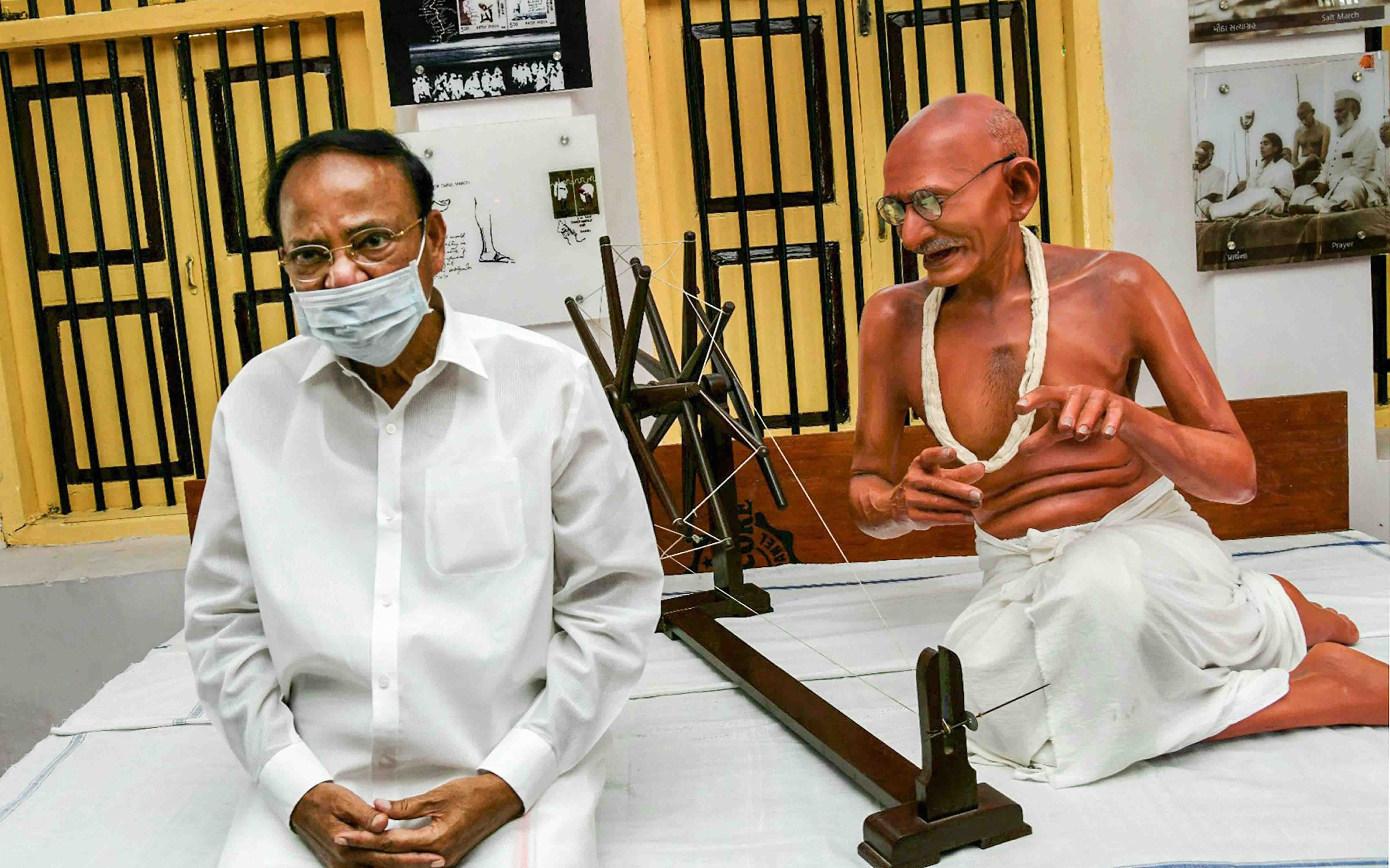
Naidu interacted with the 81 participants of the Dandi yatra and also visited the Dandi memorial and museum.
Gujarat Governor Acharya Devvrat, state Chief Minister Vijay Rupani, his Sikkim counterpart Prem Singh Tamang, Union Minister of State for Culture Prahlad Singh Patel and Gujarat Deputy Chief Minister Nitin Patel also attended the function.
Prahlad Singh Patel in his address said the real heroes of the 25-day Dandi yatra are the participants who walked from the Sabarmati Ashram in Ahmedabad to Dandi.
On March 12 this year, Prime Minister Narendra Modi flagged off the Dandi yatra from the Sabarmati Ashram as part of celebrations over the completion of 75 years of India's independence.
After travelling a distance of 268 km on foot, the 81 participants reached Dandi in Gujarat's Navsari district on Tuesday morning.
On March 12, 1930, Mahatma Gandhi along with 78 other people undertook the Dandi March to challenge the salt tax imposed by the British.
Gandhi reached Dandi on April 5, 1930 and broke the law on April 6, 1930.
The Dandi March is considered a defining moment in the Indian independence movement after which the entire nation stood behind Mahatma Gandhi against the British rule.
Let the Truth be known. If you read VB and like VB, please be a VB Supporter and Help us deliver the Truth to one and all.
Bhojshala case: Disputed structure built from remains of pre-existing temples, claims ASI
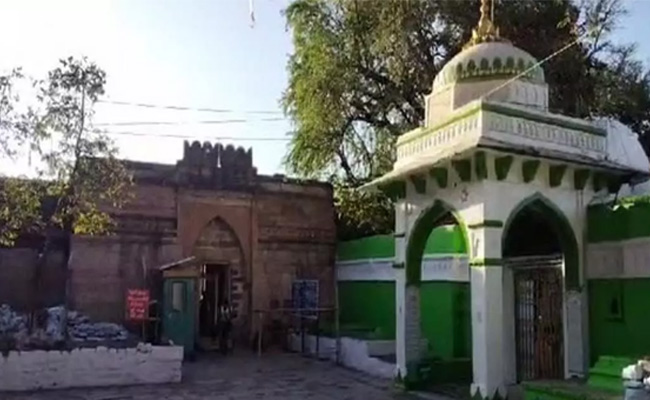
Indore (PTI): The ASI has told the Madhya Pradesh High Court that a massive structure dating back to the Paramara kings' rule existed at the disputed Bhojshala temple-Kamal Maula mosque complex, and the current structure was built from the remains of temples.
The Archaeological Survey of India (ASI) made the claim on Tuesday based on its 98-day scientific survey and over 2,000-page report.
The Hindu community considers Bhojshala a temple dedicated to Vagdevi (Goddess Saraswati), while the Muslim side claims the monument as the Kamal Maula Mosque. The disputed complex is protected by the ASI.
During the hearing before Justices Vijay Kumar Shukla and Alok Awasthi of the HC's Indore bench, Additional Solicitor General Sunil Kumar Jain, representing the ASI, presented a detailed account of the scientific survey conducted two years ago at the complex.
Referring to the ASI's survey report, he said, "Retrieved architectural remains, sculptural fragments, large slabs of inscriptions with literary texts, Nagakarnika inscriptions on pillars, etc, suggest that a large structure associated with literary and educational activities existed at the site. Based on scientific investigations and archaeological remains recovered during the investigations, this pre-existing structure can be dated to the Paramara period."
It can be said that the existing structure was made from the parts of earlier temples, based on scientific investigations, survey and archaeological excavations conducted, study and analysis of retrieved finds, study of architectural remains, sculptures, and inscriptions, art and sculptures, Jain said quoting the report.
Summarising the report, he also drew the court's attention to the fact that the archaeological study identifies that many architectural components, such as pillars and beams, were originally part of temple structures before being repurposed for a mosque.
"The evidence of this transition includes Sanskrit and Prakrit inscriptions that were damaged or hidden, alongside sculptures of deities and animals that were often mutilated or defaced," Jain contended.
The report also states that "all Sanskrit and Prakrit inscriptions are older than the Arabic and Persian inscriptions, indicating that users or engravers of the Sanskrit and Prakrit inscriptions occupied the place earlier".
In light of the Muslim side's earlier objections, the bench wanted to know why there were some discrepancies in the ASI's responses regarding the status of the disputed complex in the cases filed over the years.
The Additional Solicitor General argued that earlier studies of the complex involved only officials, while the current survey involved scientists and the use of advanced technologies such as Ground Penetrating Radar (GPR).
The hearing in the Bhojshala case will continue on Wednesday.
The high court has been regularly hearing four petitions and one writ appeal regarding the religious nature of the Bhojshala temple-Kamal Maula mosque complex since April 6.