Very special experience: President Murmu after over 2-hour submarine sortie onboard INS Vaghsheer
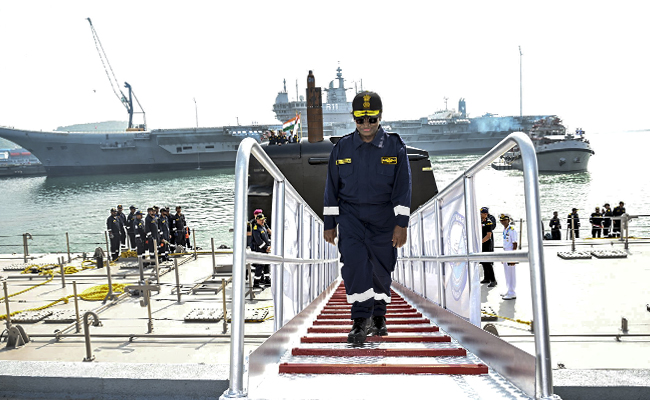
New Delhi (PTI): President Droupadi Murmu on Sunday undertook an over two-hour sortie onboard the indigenously-built submarine INS Vaghsheer on the Western seaboard, signalling India's focus on boosting undersea warfare capabilities.
Murmu became the second President to experience a submarine sortie. In February 2006, APJ Abdul Kalam undertook a similar sortie onboard INS Sindhu Rakshak.
Chief of Naval Staff Admiral Dinesh K Tripathi accompanied President Murmu during the over two-hour sortie in the Kalvari class "silent sentinel" from the Karwar naval base in Karnataka, officials said.
ALSO READ: Pawan Khera distances Congress from Digvijaya Singh’s remarks praising RSS
The President's office said she undertook a "dived sortie" onboard INS Vaghsheer and interacted with the submarine crew and witnessed the operational demonstrations."
The President is also the Supreme Commander of the armed forces.
Murmu, writing in the visitor's book later, said it was a "very special experience" for her to "sail, dive and spend time" with the sailors and officers onboard the submarine.
"The multiple successful firings and challenging operations carried out by INS Vaghsheer demonstrate the crew's exceptional preparedness and dedication, in accordance with its motto 'Veerta Varchasva Vijaya'," she wrote.
"Witnessing the discipline, confidence and enthusiasm of the Vaghsheer crew assures me that our submarines and the Indian Navy are combat-ready against any threat and under all circumstances."
The President's Secretariat said Murmu's embarkation onboard the submarine reflected the continued engagement of the Supreme Commander with the armed forces in operational settings.
In November last year, the President witnessed an operational demonstration by the Indian Navy onboard the indigenous aircraft carrier INS Vikrant.
Murmu was briefed on the role of the submarine arm in India's maritime strategy, and the operational capabilities as well as contributions in safeguarding national maritime interests.
"She said that this indigenous submarine is a shining example of the Indian Navy's professional excellence, combat preparedness and unwavering commitment to national security," the Secretariat said on social media.
The President, donning a naval uniform, waved at naval personnel before entering the submarine.
People familiar with the sortie said it was a powerful reaffirmation of India's confidence in indigenous submarine construction and the centrality of undersea warfare in safeguarding national maritime interests.
The submarine sortie by the Supreme Commander is unique, as the underwater environment is defined by isolation, high risk, stealth and precision, and reflects the highest standards of operational readiness, they said.
The presence of the Supreme Commander on board the submarine reaffirmed the image of the underwater force as a cornerstone of credible deterrence and maritime security, they added.
Submarines operate unseen, unheard and often unacknowledged, yet their impact on national defence is decisive, said one of the people cited above.
This sortie would reaffirm the trust placed by the Supreme Commander in these silent sentinels operating in one of the most hazardous conditions in the world, the people said.
For the Indian Navy, the sortie is an opportunity to present its combat preparedness and operational prowess, while showcasing its unwavering commitment to safeguarding the nation's maritime interests, they said.
It would also serve as a clear demonstration of a force that is trained to the highest standards, capable of sustained operations and ready to respond decisively across the spectrum of conflict, they added.
INS Vaghsheer, the sixth and final submarine of the P75 Scorpene project, was commissioned into the Navy in January.
It is one of the most silent and versatile diesel-electric submarines in the world, according to Navy officials.
It is designed to undertake a wide range of missions, including anti-surface warfare, anti-submarine warfare, intelligence gathering, area surveillance, and special operations.
Armed with wire-guided torpedoes, anti-ship missiles and advanced sonar systems, the submarine also features modular construction, allowing for future upgrades such as the integration of Air Independent Propulsion (AIP) technology.
The Indian Navy is developing the Karwar base considering India's long-term security interests in the Indian Ocean region.
Let the Truth be known. If you read VB and like VB, please be a VB Supporter and Help us deliver the Truth to one and all.
Man allegedly arrives with deadly weapon to attack another, caught by public in Jokatte
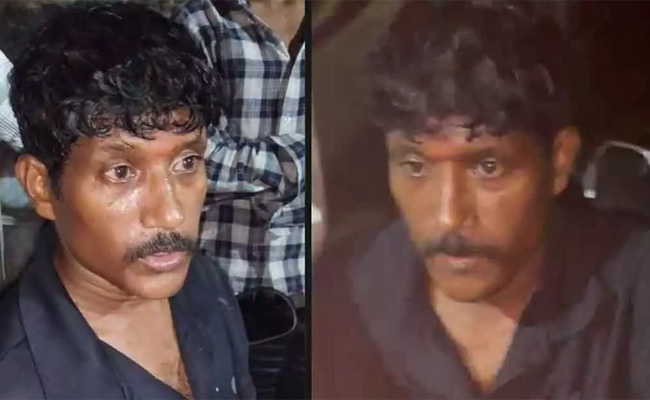
Panambur: A man who allegedly came armed to attack another person was caught by members of the public and later handed over to police in Jokatte late on Friday night.
The accused has been identified as Naveen Poojari, originally from Vamanjoor and presently residing in Jokatte.
According to police sources, Naveen was married and has an eight-year-old son. The couple are now divorced.
Police said Naveen suspected that his former wife, who is employed at a showroom in Padil, was moving closely with Devi Prasad Acharya, a mechanic working there.
Based on this suspicion, Naveen allegedly went to the house of Devi Prasad Acharya on Friday night carrying a deadly weapon, created a scene and issued threats.
During the incident, Devi Prasad Acharya reportedly contacted the 112 emergency helpline, following which Naveen fled from the spot.
While escaping, Naveen is said to have fallen from his two-wheeler near the Jokatte Panchayat area. Local residents who rushed to help noticed a deadly weapon on the vehicle and immediately alerted police.
Officials from Panambur Police Station rushed to the spot, took Naveen into custody and brought him to the station.
A case has been registered based on the complaint filed by Devi Prasad Acharya, and further action is under way.