West Asia war: Vessel carrying 20,000 tonnes of LPG reaches Gujarat crossing Strait of Hormuz
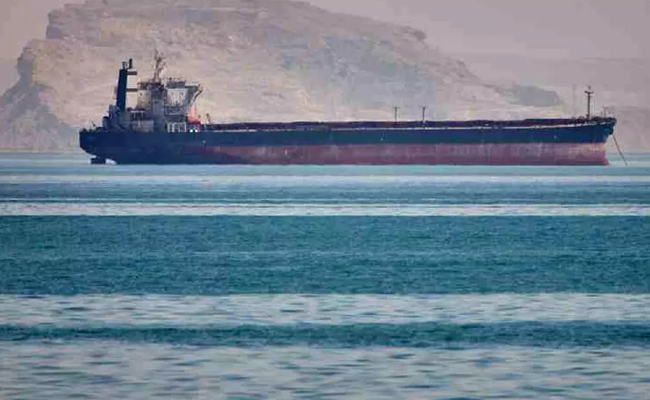
Kandla (Gujarat) (PTI): A vessel carrying 20,000 metric tonnes of Liquefied Petroleum Gas (LPG) arrived at Deendayal Port Authority in Kandla in Gujarat after crossing the Strait of Hormuz amid the West Asia crisis, officials said on Sunday.
The Marshall Islands-flagged MV SYMI started its journey from Qatar and docked at the port in Kandla around 11.30 pm on Saturday after crossing the Strait of Hormuz on May 13, they added.
Since early March, 13 India-flagged vessels, comprising 12 LPG tankers and one crude oil tanker, have crossed the Strait of Hormuz, a narrow waterway close to the coast of Oman through which roughly one-fifth of the world's energy supplies pass.
It has been severely disrupted by the conflict in West Asia that started on February 28, with the US and Israel launching joint attacks on Iran, triggering retaliatory strikes. It has resulted in one of the worst energy crisis the world has seen in recent decades.
Incidentally, at a special meeting of the United Nations Economic and Social Council (UNECOSOC) on safeguarding energy and supply flows, India’s Permanent Representative to the UN Parvathaneni Harish said targeting commercial shipping, endangering civilian crew and impeding freedom of navigation in the Strait of Hormuz is "unacceptable".
On May 13, an India-flagged commercial vessel came under attack off the coast of Oman.
Omani authorities rescued all 14 crew members of the vessel sailing from Somalia, but it was not immediately known who carried out the strike.
Let the Truth be known. If you read VB and like VB, please be a VB Supporter and Help us deliver the Truth to one and all.
Ordinance issued to increase number of Supreme Court judges from 34 to 38
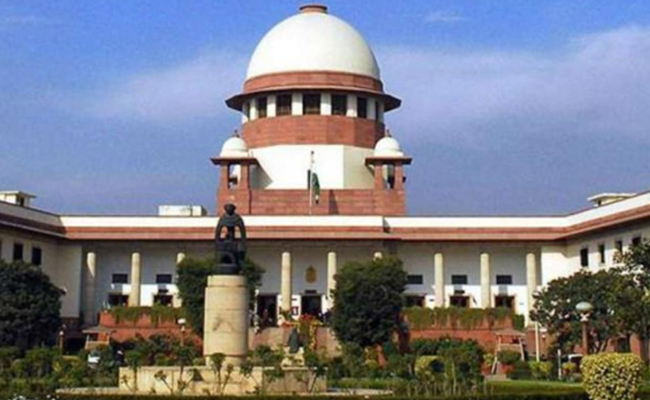
New Delhi (PTI): The government has promulgated an ordinance to increase the strength of the Supreme Court from the present 34 judges to 38, including the Chief Justice of India.
The law ministry notified the ordinance on Saturday, which amended the Supreme Court (Number of Judges) Act, 1956, to increase the sanctioned strength of the top court.
So far, the sanctioned strength of the top court was 34, including the Chief Justice of India (CJI). Now, the number of judges has been increased by four, taking the sanctioned strength to 38.
The top court will now have 37 judges, other than the CJI.
With the apex court having two vacancies at present, and the ordinance coming into force immediately, the Supreme Court Collegium will now have to recommend six names for appointment as judges in the top court.
A bill will be brought in the Monsoon Session of Parliament to convert the ordinance – an executive order – into a law passed by Parliament.
The Union Cabinet had cleared a draft bill on May 5 to increase the number of apex court judges.
The strength of the Supreme Court was last increased from 30 to 33 (excluding the CJI) in 2019.
The Supreme Court (Number of Judges) Act, as originally enacted in 1956, put the maximum number of judges (excluding the CJI) at 10.
This number was increased to 13 by the Supreme Court (Number of Judges), Amendment Act, 1960, and to 17 by another amendment to the law.
The Supreme Court (Number of Judges) Amendment Act, 1986, augmented the strength of judges from 17 to 25, excluding the CJI.
A fresh amendment in 2009 further increased the strength from 25 to 30.
Article 124(3) of the Constitution lists the qualifications required to become a Supreme Court judge.
An Indian citizen who has either served as a high court judge for at least five years, or as an advocate for 10 years, or is a distinguished jurist, can be appointed to the top court.
The strength of the Supreme Court is increased based on the recommendations of the CJI, who writes to the Union law minister. After consulting the finance ministry, the Department of Justice under the law ministry moves the Cabinet with a draft bill.