'Why India' to 'Why Not India': PM Modi on change his reforms have brought
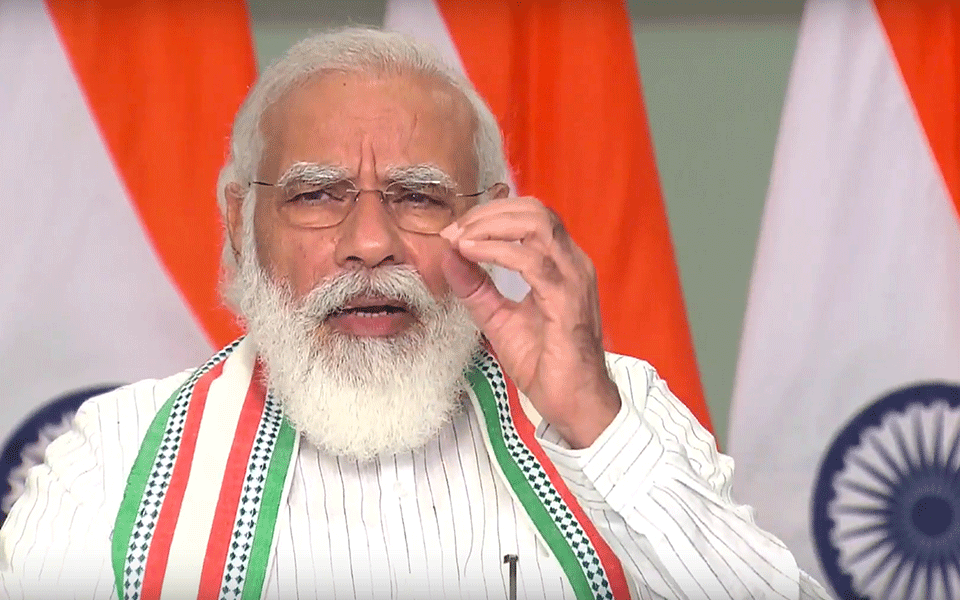
New Delhi: Prime Minister Narendra Modi on Saturday hard sold his government's reforms spanning from manufacturing to taxation to labour, saying they have changed the world perception about the country from 'why India' to 'why not India' and went on to quote record foreign investment during the pandemic as a testimony to that.
Speaking at industry association Assocham's Foundation Week event, Modi also said agriculture reforms brought by his government six months back have started benefiting farmers.
The reforms in the last six years have influenced in changing the sentiment of the industry from 'why India' to 'why not India' in investing.
"There was a situation in the past when investors would question 'why India' (for investing in the country). With reforms (of past six years) and their effects, its proposition has changed to 'why not India'," he said.
He cited scrapping of 1,500 old and obsolete laws and farming new ones that are in tune with the changing investment order as an example of his government's outlook.
"Earlier investors cited high tax rates to say why India' but today (corporate) tax rates are so competitive that they say 'why not India'," he said.
Previously, a web of regulations and rules were cited by investors to ask why to invest in India but easing compliance burden in the new labour laws have made them say 'why not India', he said.
Red tape previously made investors say why India' but a red carpet is now making them say why not India', he said.
"From a non-existent culture for innovation to a new ecosystem promoting and nurturing startups has given the world confidence to say 'why not India'.
"Earlier there was so much government interference that investors said why India'. Today the faith reposed by the government in the private sector and encouragement of foreign investors have made the same people say 'why not India'," he said. He stated that new India is pushing towards AatmaNirbhar Bharat (self-reliant India).
The government in September last year cut the headline corporate tax rate to 22 per cent from 30 per cent, and to 15 per cent from 25 per cent for new manufacturing companies.
In September this year, the Parliament passed the labour reforms bill that among other things exempts companies employing up to 300 workers to seek government permission to lay off workers or close plants - a major demand from industry over the years.
Stating that there is a lot of positivity across the globe on India's growth and development, Modi said India will play an important role in the global supply chain of vaccines.
Listing recent measures, he said the definition of small businesses has been changed to allow them access to credit while 10 sectors have been given efficiency and production linked incentives. "We have solved liquidity-related issued for MSMEs," he said.
Also, public sector banks are being strengthened and bond markets deepened. Similarly, Sovereign Wealth Funds and Pension Funds are being tax exempted, REITs and INVITs are being promoted and infrastructure-related assets being monetised, he said.
The Prime Minister said the government's main focus is on manufacturing and production linked incentives have been given to 10 sectors to boost domestic capabilities and capacity.
He called on the industry to make all efforts to make India self-reliant.
"Reforms have changed global perception from 'why India' to 'why not India'," he said. "The world trusts the Indian economy. Record FDI and FPI during pandemic testimony of that."
Modi asked the industry to adopt the best corporate governance and profit-sharing practices. He also said investment in research and development (R&D) must be increased and the private sector must scale up investments.
"There is a great need to increase investment in R&D. In the US, 70 per cent of investments in R&D is done by the private sector, in India the same is done by the public sector. A big chunk of this is in the IT, pharma and transport sectors. Today the need is of increasing the private sector share of investment in R&D," he said.
More R&D funds should be set aside across sectors such as agriculture, defence, space, energy, and construction.
"Today when we are on mission mode to make local global, we have to react fast to geopolitical developments. A mechanism has to be developed to see how India can meet any sudden spurt in demand in the global supply chain," he said adding there was a need for better coordination between the Ministry of External Affairs, Commerce and Trade, and industry associations.
Modi said the government can provide the necessary facilities, create the right environment, give incentives and change policies. But it is the industry partners, who can convert this support into success.
The government, he said, is continuing efforts to build an efficient and friendly ecosystem.
The Prime Minister remarked that the world is moving rapidly towards the fourth industrial revolution, challenges will come in the form of new technology and many solutions will also come. Today is the time to plan and act, he said.
The coming 27 years, when free India will reach its century, will not only determine India's global role, but it will test both the dreams and dedication of Indians, he said.
Let the Truth be known. If you read VB and like VB, please be a VB Supporter and Help us deliver the Truth to one and all.
Ordinance issued to increase number of Supreme Court judges from 34 to 38
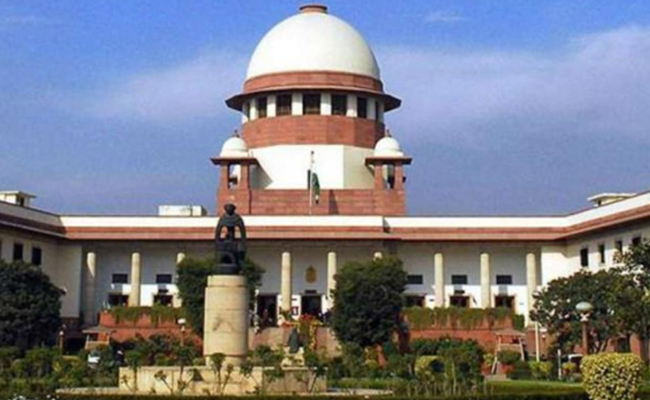
New Delhi (PTI): The government has promulgated an ordinance to increase the strength of the Supreme Court from the present 34 judges to 38, including the Chief Justice of India.
The law ministry notified the ordinance on Saturday, which amended the Supreme Court (Number of Judges) Act, 1956, to increase the sanctioned strength of the top court.
So far, the sanctioned strength of the top court was 34, including the Chief Justice of India (CJI). Now, the number of judges has been increased by four, taking the sanctioned strength to 38.
The top court will now have 37 judges, other than the CJI.
With the apex court having two vacancies at present, and the ordinance coming into force immediately, the Supreme Court Collegium will now have to recommend six names for appointment as judges in the top court.
A bill will be brought in the Monsoon Session of Parliament to convert the ordinance – an executive order – into a law passed by Parliament.
The Union Cabinet had cleared a draft bill on May 5 to increase the number of apex court judges.
The strength of the Supreme Court was last increased from 30 to 33 (excluding the CJI) in 2019.
The Supreme Court (Number of Judges) Act, as originally enacted in 1956, put the maximum number of judges (excluding the CJI) at 10.
This number was increased to 13 by the Supreme Court (Number of Judges), Amendment Act, 1960, and to 17 by another amendment to the law.
The Supreme Court (Number of Judges) Amendment Act, 1986, augmented the strength of judges from 17 to 25, excluding the CJI.
A fresh amendment in 2009 further increased the strength from 25 to 30.
Article 124(3) of the Constitution lists the qualifications required to become a Supreme Court judge.
An Indian citizen who has either served as a high court judge for at least five years, or as an advocate for 10 years, or is a distinguished jurist, can be appointed to the top court.
The strength of the Supreme Court is increased based on the recommendations of the CJI, who writes to the Union law minister. After consulting the finance ministry, the Department of Justice under the law ministry moves the Cabinet with a draft bill.