'You invented new law': SC dismayed over MP HC refusing bail
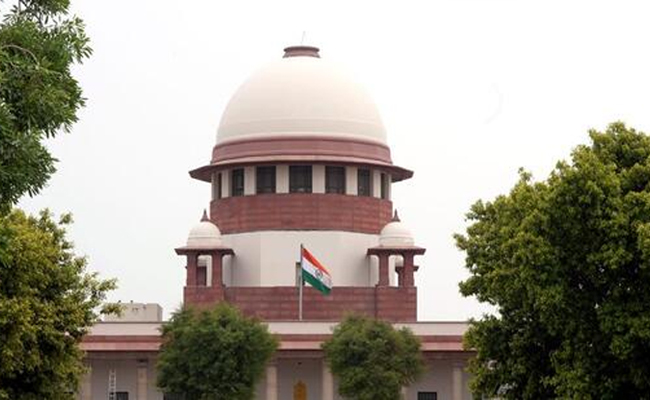
New Delhi (PTI): The Supreme Court has expressed anguish over an order of the Madhya Pradesh High Court which held a convict's plea for the suspension of sentence could be allowed only when they had served half of their sentence.
A bench of Justices Abhay S Oka and Ujjal Bhuyan granted bail to a man and said a convict should be granted bail if there was no chance of appeal against conviction being heard in near future in high courts due to huge pendency of cases.
"We are surprised that the high court invented a new proposition of law that has no basis," the bench said on April 17.
The top court said the high court should have applied the law as it exists and the petitioner should not have been forced to move before it for bail.
The high court order said, "In view of the fact that tainted currency notes have been recovered from the pocket of pant of the appellant and there is no explanation for the same, no case is made out for grant of suspension of sentence and grant of bail
It added, "Second application has been filed... just less than two months of rejection of first application. Accordingly, it is clarified that appellant may revive his prayer for suspension of sentence after undergoing half of the jail sentence including remission."
The apex court also took exception to trial courts and high courts denying bail to the accused in cases involving ordinary violation of law despite its several rulings.
Let the Truth be known. If you read VB and like VB, please be a VB Supporter and Help us deliver the Truth to one and all.
4 workers die after being buried under coal slurry in Jharkhand's Dhanbad
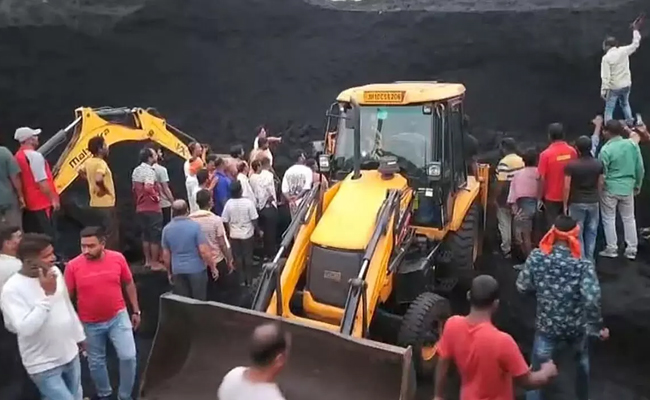
Dhanbad (Jharkhand) (PTI): At least four workers died after being buried under coal slurry in Jharkhand's Dhanbad district on Saturday, a police official said.
The incident took place at Moonidih coal washery in the command area of Bharat Coking Coal Limited (BCCL).
"Bodies of all four workers were dug out of debris during a rescue operation," Putki police station in-charge Waqar Hussain told PTI.
The incident took place when coal slurry was being loaded into trucks by workers, during which a large chunk of slurry fell and trapped several workers underneath, officials said.
The deceased have been identified as Manik Bauri, Dinesh Bauri, Deepak Bauri, and Hemlal Gope.
Meanwhile, the family members of the deceased and local villagers placed the bodies in front of the washery gate and began a protest.
They demanded compensation, jobs for dependents and action against those responsible for the incident.
Police and administration officials are trying to pacify the protesters, an official said.