22-year-old Udupi girl bags 3rd Runner-up Spot at Miss Universe 2020

Florida, May 17: Andrea Meza of Mexico has been crowned Miss Universe for the year 2020, besting contestants from 73 other countries, including Miss India Adline Castelino, who came in fourth at the beauty pageant.
The 69th edition of the event, which was held on Sunday night at the Seminole Hard Rock Hotel & Casino in Hollywood here, was a scaled-down affair in the wake of the novel coronavirus pandemic. The competition was postponed from late 2020 to May 2021 due to COVID-19.
According to the official Miss Universe website, the 26-year-old Meza was crowned by her predecessor Zozibini Tunzi of South Africa, who won the pageant in 2019.
When asked if she were the leader of her country, how she would have handled the pandemic, the Mexican contestant said there was "not a perfect way to handle this hard situation".
"However, I believe that what I would have done is create a lockdown even before everything was that big. Because we lost so many lives and we can not afford that, we have to take care of our people. I would have taken care of them since the beginning," Meza said in her response.
In her final statement, she was asked about her take on beauty standards.
"We live in a society that is more and more advanced... Nowadays, beauty is the only way we look. For me, beauty radiates not only in our spirit but in our hearts and the way that we conduct ourselves," Meza added.
While Brazil's Julia Gama, 28, emerged the runner-up at the contest, Janick Maceta (27) from Peru finished third.
India's Castelino expressed her gratitude towards her country, which is battling a deadlier, second wave of the coronavirus pandemic, for support.
"Grateful for the love and support of the organisation and the country during such difficult times," the 22-year-old model said in a statement.
Miss Diva Universe India also congratulated Castelino via its official Twitter page.
"India places 3rd Runner Up at @MissUniverse! Our hearts are filled with immense pride for our LIVA Miss Diva Universe 2020, @AdlineCastelino who has done such an exceptional job at the Miss Universe Pageant! We couldn't have asked for a better representative than you," the post read.
Singer Luis Fonsi of "Despacito" fame performed at the three-hour competition, hosted by Mario Lopez and Olivia Culpo.
This is the third Miss Universe victory for Mexico, with Ximena Navarrete and Lupita Jones being declared winners in 2010 and 1991, respectively.
The pageant was livestreamed on Voot Select in India and is currently available on the platform.
What a powerful final answer from India. #MISSUNIVERSE
— Miss Universe (@MissUniverse) May 17, 2021
LIVE on @FYI from @hardrockholly in #HollywoodFL pic.twitter.com/gmAjzt6n3T
3rd Runner-Up for India ?? at @MissUniverse ?
— Miss Diva (@MissDivaOrg) May 17, 2021
Congratulations @AdlineCastelino You have made us immensely proud! Your resilience, determination & grace shined throughout the competition and the hard work you’ve put in your journey reflected in you this night! We are proud of u❤️ pic.twitter.com/hoi54G7d8A
Let the Truth be known. If you read VB and like VB, please be a VB Supporter and Help us deliver the Truth to one and all.
Lebanon appoints new representative for talks with Israel, rejects linkage to Iran
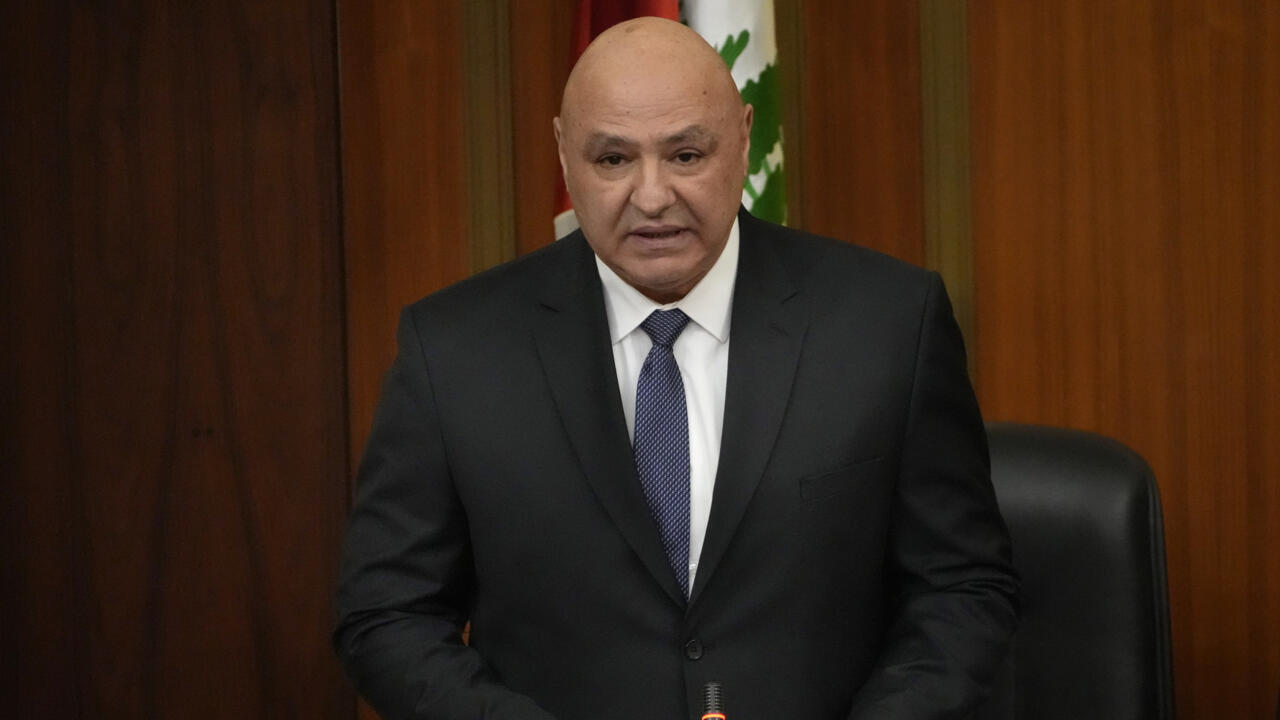
Beirut: Lebanon’s has moved to underline its independent position in ongoing regional developments, amid attempts to link the country to the broader conflict involving Iran, the United States and Israel.
President Joseph Aoun, while announcing the appointment of former US ambassador Simon Karam as Lebanon’s representative in talks with Israel, made it clear that Karam would be the sole representative for Lebanon and that there would be no substitute.
The move comes in response to what the Lebanese officials see as efforts by Iran to tie Lebanon’s situation to the wider regional conflict. Iran had indicated that there would be no ceasefire involving the US, Israel and Iran unless it also included a ceasefire in Lebanon.
Some groups, including Hezbollah and its supporters, had expressed support for linking the situations, citing concerns that the Lebanese government has limited leverage in negotiations with Israel. Lebanon is not formally a party to the conflict, and its army is considered weak.
However, others, including Prime Minister Nawaf Salam, have opposed this approach. They view Iran’s stance as an attempt to influence Lebanon’s internal affairs and see it as undermining the country’s sovereignty.
Officials backing the government’s position say the move is aimed at reaffirming Lebanon’s sovereignty and ensuring that decisions about peace and ceasefire within the country are not dictated externally.
They also see it as a safeguard, so that any breakdown in talks between the US, Israel and Iran does not automatically lead to renewed conflict in Lebanon.