CPI(M) slams FIR against Munir Katipalla, Abdussalam Puthige, calls it anti-democratic

Mangaluru: The Dakshina Kannada District Committee of the Communist Party of India (Marxist) has strongly condemned the filing of an FIR against its district secretary Munir Katipalla and Vartha Bharati Editor-in-Chief Abdussalam Puthige, calling it an act of "desperation" and "anti-democratic behavior."
In a press statement issued on Monday, the CPI(M) accused the Puttur unit of the Indian Medical Association (IMA) and its secretary Dr. Ganesh Prasad Mudraje of targeting Munir Katipalla over his persistent criticism of private hospitals and his role in exposing the alleged communal role of certain doctors in the Puttur Government Hospital incident.
The FIR was reportedly filed through a court directive by the Puttur Medical Association, which the CPI(M) claims is politically motivated and intended to silence dissenting voices. The party alleged that some office bearers of the association have communal inclinations, and the move to file a complaint is an attempt to divert attention from the larger issues affecting the public health sector in the region.
“This is a private complaint aimed at damaging the dignity of the medical profession,” the CPI(M) said. It further stated that false allegations are being made to suppress those speaking up against the corporatization of healthcare and the alleged communalization of medical spaces.
The party said it will launch a legal battle and a public protest movement against the FIR. It also announced plans to hold condemnation meetings in association with like-minded groups and to file a detailed petition with documents to the party's Central Committee, demanding that action be taken to seek the cancellation of the medical registration of the Puttur and Mangaluru branches of the association.
The CPI(M) also criticised the silence of the Doctors' Association on pressing issues such as corporate control over the health sector and the rising cost of treatment. According to the statement, the association has failed to speak up for the common people but is now targeting individuals raising their voice for justice.
“The misuse of the regulations to shield vested interests is unacceptable and will be strongly opposed,” the party said. It called the recent press releases from the Puttur and Mangaluru branches of the association oppressive and dictatorial in tone, accusing them of trying to intimidate the public through goon-style tactics.
Let the Truth be known. If you read VB and like VB, please be a VB Supporter and Help us deliver the Truth to one and all.
Ordinance issued to increase number of Supreme Court judges from 34 to 38
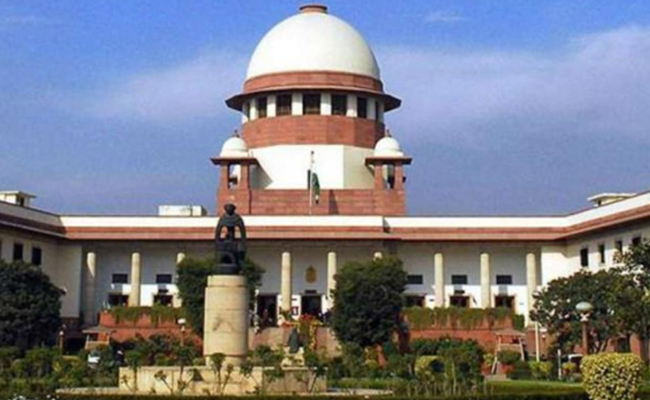
New Delhi (PTI): The government has promulgated an ordinance to increase the strength of the Supreme Court from the present 34 judges to 38, including the Chief Justice of India.
The law ministry notified the ordinance on Saturday, which amended the Supreme Court (Number of Judges) Act, 1956, to increase the sanctioned strength of the top court.
So far, the sanctioned strength of the top court was 34, including the Chief Justice of India (CJI). Now, the number of judges has been increased by four, taking the sanctioned strength to 38.
The top court will now have 37 judges, other than the CJI.
With the apex court having two vacancies at present, and the ordinance coming into force immediately, the Supreme Court Collegium will now have to recommend six names for appointment as judges in the top court.
A bill will be brought in the Monsoon Session of Parliament to convert the ordinance – an executive order – into a law passed by Parliament.
The Union Cabinet had cleared a draft bill on May 5 to increase the number of apex court judges.
The strength of the Supreme Court was last increased from 30 to 33 (excluding the CJI) in 2019.
The Supreme Court (Number of Judges) Act, as originally enacted in 1956, put the maximum number of judges (excluding the CJI) at 10.
This number was increased to 13 by the Supreme Court (Number of Judges), Amendment Act, 1960, and to 17 by another amendment to the law.
The Supreme Court (Number of Judges) Amendment Act, 1986, augmented the strength of judges from 17 to 25, excluding the CJI.
A fresh amendment in 2009 further increased the strength from 25 to 30.
Article 124(3) of the Constitution lists the qualifications required to become a Supreme Court judge.
An Indian citizen who has either served as a high court judge for at least five years, or as an advocate for 10 years, or is a distinguished jurist, can be appointed to the top court.
The strength of the Supreme Court is increased based on the recommendations of the CJI, who writes to the Union law minister. After consulting the finance ministry, the Department of Justice under the law ministry moves the Cabinet with a draft bill.