Draft voter list for Dakshina Kannada released: 51,815 new voters, 22,948 names deleted
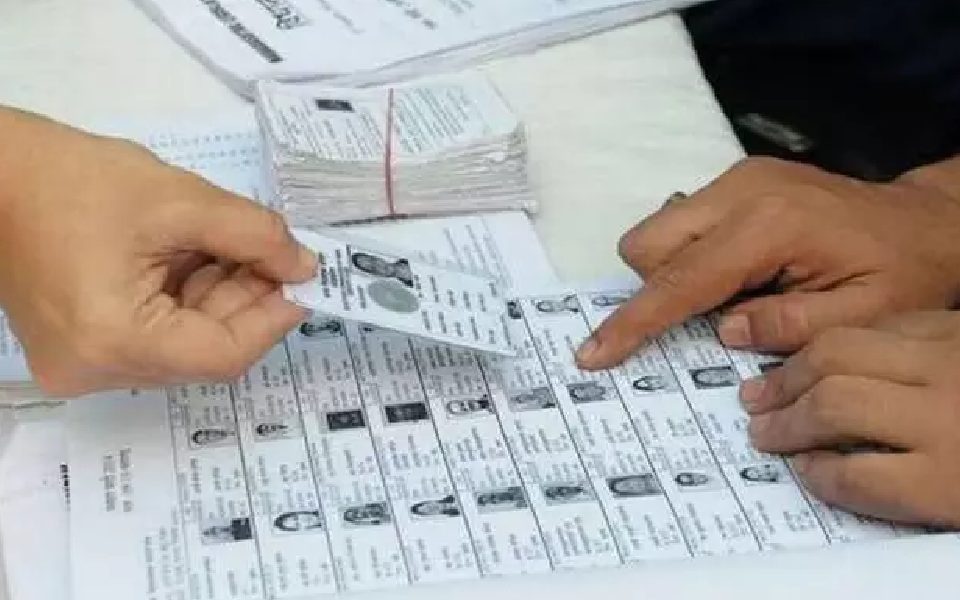
Mangaluru: The Election Commission of India (ECI) has announced the release of the draft voter list for Dakshina Kannada district as part of its 2025 voter list revision schedule. The draft, published on October 29, includes 51,815 new voters added and 22,948 names removed from the district’s list. A total of 28,827 corrections have also been made, according to officials.
The revision schedule allows citizens to raise claims and objections from October 29 to November 28. Special registration campaigns are scheduled at polling booths on November 9, 10, 23, and 24 to assist new voters in the registration process. All claims and objections will be addressed by December 24.
Voter Statistics by Constituency
The draft list outlines the following voter numbers across key constituencies in the district:
- Belthangadi: 2,32,269 voters
- Moodbidre: 2,10,211 voters
- Mangalore City North: 2,56,112 voters
- Mangalore City South: 2,53,407 voters
- Mangalore: 2,09,955 voters
- Bantwala: 2,29,236 voters
- Puttur: 2,16,821 voters
- Sullia: 2,09,261 voters
In addition, 19,905 voters between the ages of 18 and 19 have registered, while 23,894 voters in the district are above the age of 85. The list also includes 14,268 specially-abled voters, 258 NRI voters, and 514 service voters.
Voter Registration Process
New voters who turned 18 by January 1, April 1, July 1, or October 1 of this year can apply for inclusion. Those eligible can register online through the Voter Helpline App (VHA) or on the ECI’s official website at [https://voters.eci.gov.in](https://voters.eci.gov.in). Applicants are required to submit proof of age, residence, and a passport-sized photograph.
Forms for Various Purposes
The ECI has issued specific forms to streamline the voter list update process:
- Form 6: For adding new voters and NRIs; can also be used to link Aadhaar to voter ID.
- Form 7: For deleting names from the list.
- Form 8: For updating address, personal details, and EPIC card information.
Residents can also visit polling booth officers, AC offices, and Tahsildar offices for assistance. Additional information can be accessed through [www.ecokarnataka.kar.nic.in](http://www.ecokarnataka.kar.nic.in), [https://voters.eci.gov.in](https://voters.eci.gov.in), and [www.dk.nic.in](http://www.dk.nic.in). Queries can also be directed to the ECI’s toll-free number 1950, as stated by the Dakshina Kannada District Commissioner’s office in the official release.
Let the Truth be known. If you read VB and like VB, please be a VB Supporter and Help us deliver the Truth to one and all.
Mamata betrayed Bengal's women by conspiring with parties like Cong: BJP chief
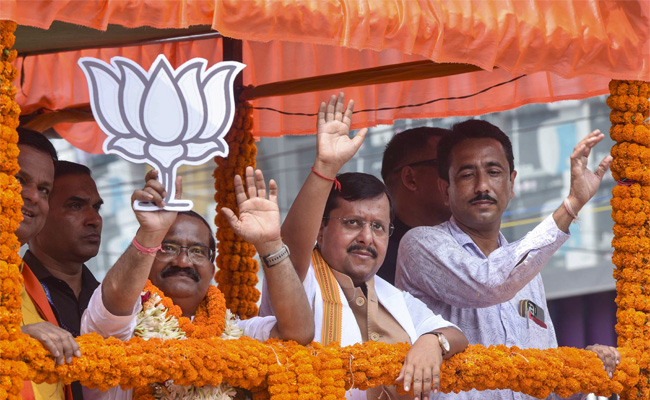
Balurghat (WB) (PTI): BJP president Nitin Nabin on Sunday blamed West Bengal Chief Minister Mamata Banerjee and opposition parties such as the Congress for the setback to the implementation of women's reservation in legislatures.
Addressing a rally in support of BJP candidate Bidyut Roy in Balurghat, Nabin said removing the TMC from power had become essential to drive out infiltrators from Bengal, prevent demographic change and safeguard national security.
"Despite being a woman, Mamata Banerjee betrayed the women of Bengal by conspiring with parties like the Congress so that the women's reservation bill could not be passed in the Lok Sabha," he alleged.
Urging women voters in the state to "teach her a lesson", he claimed that the TMC government had failed to ensure the safety and security of women, citing incidents such as those at RG Kar hospital and the medical college in Durgapur.
A Constitution Amendment Bill to implement 33 per cent reservation for women in legislatures in 2029 and increase the number of Lok Sabha seats to 816 was defeated on Friday.
Nabin also accused the chief minister of protecting infiltrators and said the BJP, if voted to power, would ensure good governance.
"Infiltrators will be driven out, and every bona fide citizen will be able to live peacefully in a secure environment if the BJP comes to power," he said.
Nabin said Prime Minister Narendra Modi had delivered on promises and prioritised national security, citing the abrogation of Article 370 and surgical strikes against Pakistan-backed terrorists.
"We need a government in Bengal which will ensure the state's well-being and security in every aspect," he said.
Appealing to voters to back the BJP, Nabin said, "If not now, then never."
"Let it be a historic victory. A new dawn will come, and after May 4, a government that will look after the aspirations of mothers, sisters, youth, the elderly and farmers will be installed in Bengal," he said.
At another election rally at Ratua in Malda district, Nabin claimed that time has come for the chief minister to “bid goodbye”.
Alleging deterioration in law and order, he said women were unsafe “from Park Street to Kamduni, and from R G Kar to Durgapur Medical College”, while there were many “unreported cases”.
He also alleged the involvement of ruling party leaders in various illegal activities.
“Wait for a few days. Members of the ‘bhaipo (nephew) syndicate’ of the TMC will be on the run, and caught one by one with legal action taken against them,” Nabin asserted.
He was referring to allegations by state BJP leaders about extortion syndicates “patronised by top TMC leaders” running into crores of rupees.
“At least one minister had been jailed, while many officials are behind the bars. Those involved in corruption would face strict action after May 4,” the BJP chief said.
Promising employment and welfare measures, Nabin said a BJP government would create job opportunities for the youth and ensure support for farmers.
He also assured the people of transparent recruitment based on merit, implementation of the Seventh Pay Commission, and direct transfer of benefits to bank accounts without “cut money” (commission).
Referring to the ‘Sabka Sath Sabka Vikas’ slogan of the Narendra Modi government, Nabin said “there will be inclusive growth involving all sections of society under the double engine government.”
“There will be no appeasement for one particular community, which caused change in the demography in several border districts of Bengal,” he said.
Nabin also took part in a programme of the ‘Balmiki Samaj’ – an outfit of backward Hindu castes – where he stressed on the need for inclusive growth.
Earlier, the BJP president led a colourful roadshow covering around 2 km in Balurghat town and adjoining areas of Dakshin Dinajpur district.