Drug case: TV anchor Anushree quizzed by police
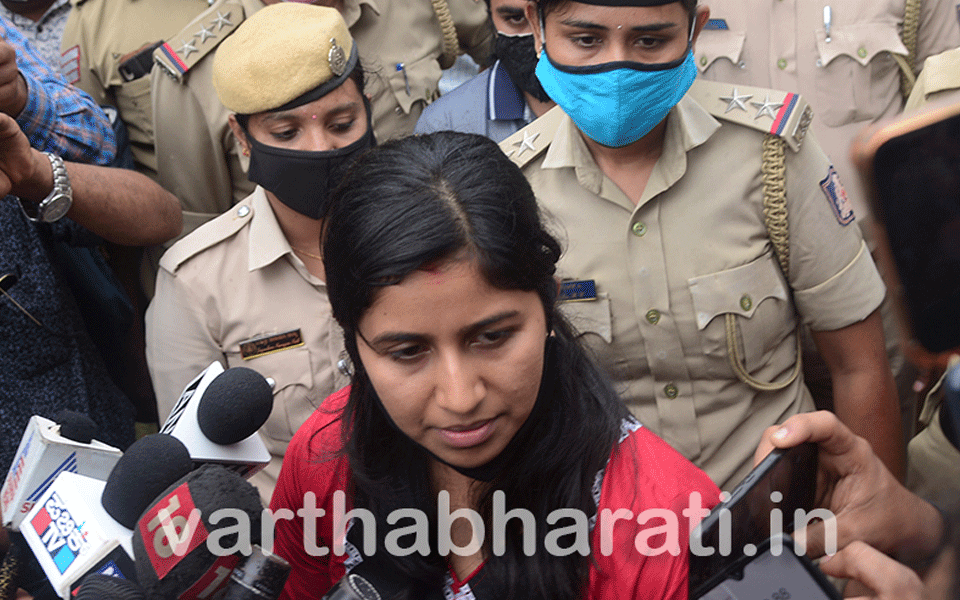
Mangaluru: Television anchor Anushree was on Saturday questioned in connection with the drug consumption and peddling case involving dancer-choreographer Kishore Aman Shetty.
Anushree, who appeared before the police at 9 am, was interrogated for three-and-a-half hours, police sources said.
Anushree told the probe team that she knew Tarun Raj, the close friend of Shetty, who is also an accused in the drug case, for the last 12 years.
He had done dance choreography for her for six months. The anchor said she had no links with Tarun relating to drug use and had not attended any party with him, the sources added.
Talking to reporters after coming out of the police station, Anushree said she had given answers to all the questions put to her by the investigating team.
She said she would come for further interrogation if the police summoned her again. The police have not confirmed whether there will be further questioning, she said.
"Drug mafia is a ghost that has haunted our state and the police are trying their best to root out the mafia.
We will cooperate with the investigation," she added. Anushree was summoned after Tarun disclosed to the police that she had also attended Shetty's party. DCP Vinay Gaonkar and inspector Shivaprakash led the probe team.
The state CCB police is investigating drug abuse among bigwigs, including those in the film industry, after the Narcotics Control Bureau arrested three people from Bengaluru with a drug haul.
They were allegedly supplying drugs to Kannada film actors and singers.
Let the Truth be known. If you read VB and like VB, please be a VB Supporter and Help us deliver the Truth to one and all.
TN CM Vijay calls fuel price hike ‘unacceptable’, seeks rollback
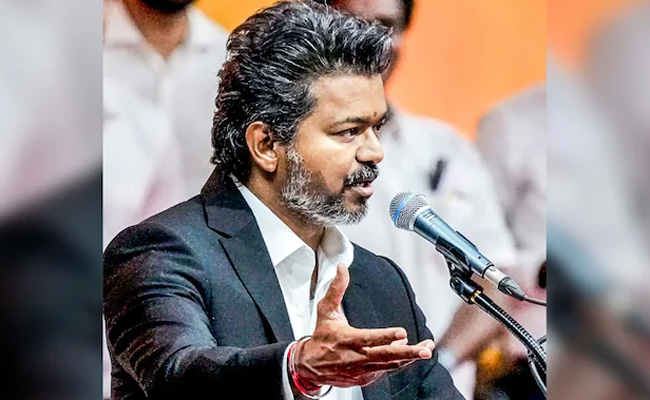
Chennai (PTI): Tamil Nadu Chief Minister C Joseph Vijay on Friday slammed the increase of Rs 3 per litre in petrol and diesel prices, calling it "unacceptable", and demanded its immediate rollback, claiming the revision would affect various sections of society.
He said oil marketing companies do not reduce prices in line with global crude price trends and "take the profits".
"Union government oil marketing companies have increased the price of petrol and diesel by Rs 3 per litre. This is not acceptable," Vijay said in a statement.
The hike has been effected after the "five-state polls" (four states and one union territory), he added.
This price rise will largely affect the income of the poor and middle class using two-wheelers and small vehicles, as well as others dependent on vehicles for their livelihood, the CM said.
It will ultimately result in an increase in the prices of daily commodities and also "affect the purchasing power of the poor," he added.
Citing the chain effect of the price revision, such as increased input costs for small units, he said it could lead to a "slowdown" in the market and exports.
"Therefore, I urge the union government to immediately roll back the price hike that will affect the poor and middle-class people and SMEs," Vijay added.
Global crude oil prices have surged more than 50 per cent since US-Israeli strikes on Iran on February 28 and Tehran’s subsequent retaliation, which disrupted energy flows through the Strait of Hormuz, a key artery for global oil shipments.
Petrol and diesel prices are now at their highest level since May 2022.